50,000+
Units Deployed Globally
IP68
Submersible Dust/Water Ingress Protection
120+ hrs
Continuous Autonomy (Rain/Snow)
21.5%
Monocrystalline Solar Efficiency
Technical Whitepaper: Engineering Solar Sign Flashers for Uzbekistan's Extreme Climate
The Republic of Uzbekistan is executing massive transport infrastructure upgrades under its National Development Strategy, including the expansion of the Central Asia Regional Economic Cooperation (CAREC) transport corridors, cross-border arterial routes connecting Tashkent, Samarkand, Bukhara, and rural roadways throughout the Karakalpakstan region. Procuring traffic safety infrastructure for this terrain demands a comprehensive understanding of Central Asia's harsh continental geography.
Critical Design Parameter: Road safety apparatus deployed along Uzbekistan corridors must withstand ambient seasonal temperatures spanning from -30°C during freezing continental winter nights up to +48°C during peak summer periods, along with sustained desert solar radiation exceeding 1,800 kWh/m² per annum.
1. Advanced Cold-Resistant Battery Architectures (LiFePO4 & Gel Tech)
Standard commercial lithium-ion cells fail prematurely in Uzbekistan due to severe low-temperature electrolyte freezing, which causes voltage collapse during December to February cold snaps. Our manufacturing facility equips all Uzbekistan-bound solar flashers with specialized Lithium Iron Phosphate (LiFePO4) energy storage cells fitted with integrated intelligent BMS (Battery Management Systems) or military-grade deep-cycle colloidal Gel batteries. These chemistry variations operate smoothly down to -35°C without crystalline degradation, delivering over 2,500 full charge-discharge cycles and maintaining reliable 120-hour power autonomy during prolonged overcast or foggy conditions.
2. Thermal Shock & High UV Degradation Resistance
The intense UV index in Uzbekistan's desert valleys induces chalking, structural embrittlement, and lens yellowing in subpar plastic housings. Our factories utilize high-grade GE Lexan virgin Polycarbonate (PC) and corrosion-resistant 6063-T6 marine-grade anodized aluminum alloy frames. Combined with specialized anti-UV masterbatches, our optical lens assemblies preserve superior candela photometrics and light transmission (>92%) over a 10-year operational lifecycle without hazing.
3. Ingress Protection (IP65 to IP68) Against Fine Silt and Dust Storms
The arid steppes of Central Asia subject roadside equipment to pervasive dust storms and fine silicate silt penetration (Aral Kum salt-dust phenomena). Our sign flashers incorporate continuous multi-lip silicone perimeter gaskets, stainless steel fasteners (316 grade), and hydrophobic breathable ePTFE membrane vent plugs that balance interior chamber pressures while preventing moisture and fine particulate ingress up to IP68 standards.
M39 & A373 Highway Corridors
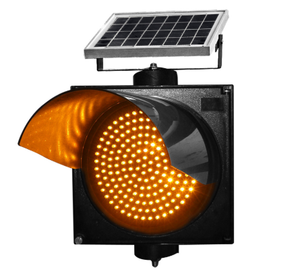
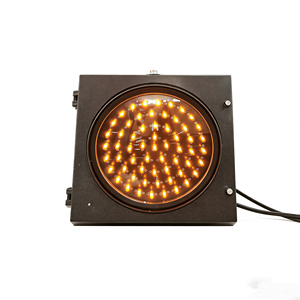
Deployment on long-distance trans-desert trunk roads connecting Tashkent to Samarkand, Navoi, and Bukhara, providing continuous solar amber flashing at unmanned rural junctions, median cut-throughs, and sharp high-speed deceleration bends.
Kamchik Mountain Pass
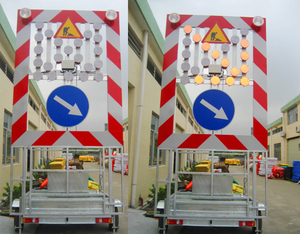
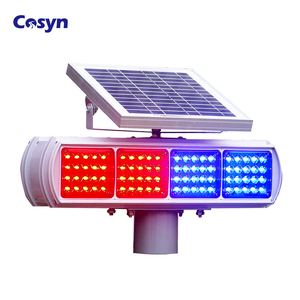
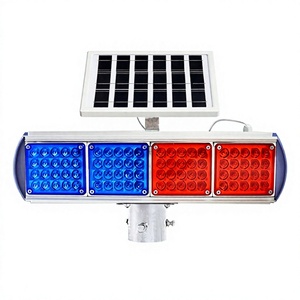
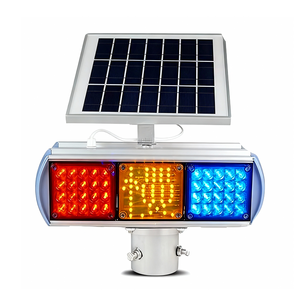
The critical A373 route connecting Tashkent with the Fergana Valley requires high-intensity red/blue strobe flashers, fog-penetrating LED warning signs, and robust snow-load rated cantilever arrays engineered to endure extreme mountain blizzards.
Urban Pedestrian Crossings (Tashkent & Regional Hubs)
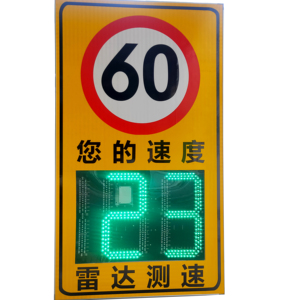
Dynamic pedestrian-activated solar blinkers and dual-color radar speed feedback boards deployed around schools, medical centers, and broad boulevards to mitigate pedestrian accidents without trenching asphalt for grid cables.
Trends & Market Dynamics: Modernization of Uzbekistan Traffic Safety Systems
The Ministry of Internal Affairs of Uzbekistan, alongside the State Committee of Roads (Avtomobil Yo'llari Qo'mitasi), has progressively overhauled national road safety protocols, moving away from passive reflective sheetings to active LED photovoltaic warning infrastructure. Several macroeconomic and regulatory dynamics underpin this rapid procurement transition:
Alignment with GOST and Eurasian Intergovernmental Protocols
Uzbekistan infrastructure projects strictly evaluate adherence to regional GOST requirements (GOST R 52289, GOST R 52290, and equivalent intergovernmental standard protocols). Modern procurement guidelines dictate exact photometric luminous intensities, minimum angle of divergence, and specific optical chromaticity coordinates (CIE 1931) for amber, red, and white LED sign flashers. Chinese export manufacturers leading the sector now maintain specialized GOST testing reports and ISO certification matrices, dramatically accelerating project sign-offs for state engineering contractors.
Integration of Smart Radar & Telematics IoT
Static warnings are being superseded by responsive sensor-driven systems. Doppler radar speed flasher displays that notify drivers in real time of speed violations have demonstrated over 40% incident reduction in pilot urban implementations across Tashkent and Namangan. The integration of low-power 4G/LoRa modules within solar flasher control circuits permits centralized municipal traffic control centers to monitor battery levels, ambient illumination, and operational uptime remotely.
Sustainable Energy Mandates for Infrastructure
In accordance with Uzbekistan's presidential initiatives for transitioning to a 'Green Economy', public works tenders increasingly award score bonuses to self-sustaining solar infrastructure. Deploying off-grid solar sign flashers eliminates costly utility transformer connections, prevents trenching damage to newly surfaced highways, and ensures zero operating electricity bills for regional municipalities.
100% In-House Production
Complete control over SMT electronic assembly, precision optical lens tooling, CNC metal fabrication, and final photometric calibration ensures zero defects.
Tender-Mapped Engineering
We configure solar panel wattage, battery storage depth, flashing frequency, and bracket dimensions directly against your official tender specifications and CAD files.
Export & Overland Logistics
Specialized export crating and direct rail freight shipping (CR Express) to Tashkent, Chukursay, and Samarkand logistics nodes with comprehensive customs clearance dossiers.
Rigorous Quality Assurance
Every unit undergoes 72 hours of uninterrupted burn-in flash testing, environmental thermal chamber cycling (-40°C to +70°C), and water-ingress immersion testing.
Q: How do your solar flashers perform during winter fog and heavy overcast periods?
Our systems are engineered with a 1:4 power ratio reserve. Monocrystalline silicon modules are paired with low-internal-resistance LiFePO4 battery banks sized to maintain autonomous flashing for 5 to 7 continuous days (over 120 hours) even without direct sunlight.
Q: Can the flashing patterns and rates be customized to regional traffic codes?
Yes. Our microcontrollers can be programmed for standard single-flash (40-60 flashes/min), double-strobe, alternate left-right flashing, or custom duty cycles complying precisely with national and municipal road requirements.
Q: What documentation is provided for customs clearance in Uzbekistan?
We supply complete commercial documentation including Certificates of Origin (Form A or general CO), factory quality compliance certificates, bill of lading/CMR for rail/truck freight, and detailed bilingual technical data sheets.
Q: Is hybrid solar/mains AC power available for city center installations?
Yes. We manufacture hybrid units that draw power from a 220V municipal grid while maintaining a backup solar panel and internal battery that guarantees fail-safe operation during grid power outages or blackouts.
Q: What is the typical transit lead time from Chinese factories to Tashkent?
Standard production lead times range from 10 to 15 business days depending on volume. Rail or multimodal road shipping to Tashkent typically takes 12 to 18 days via Alashankou/Khorgos border crossings.
Q: How do the optical lenses resist desert sandstorms and scratch haze?
Our lenses utilize injection-molded optical-grade Polycarbonate with a surface-hardened, anti-static coating that repels sand friction scratching and prevents static dust adhesion, maintaining original photometric candela output.