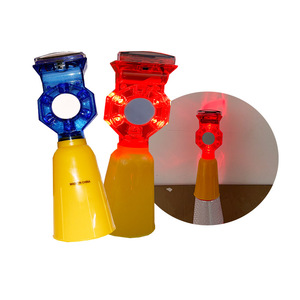
Precision-manufactured for civil engineering contractors, concessionaires, and public tenders overseen by Luxembourg’s Administration des Ponts et Chaussées. Complete configurations supporting dual-voltage grid inputs and autonomous photovoltaic setups.
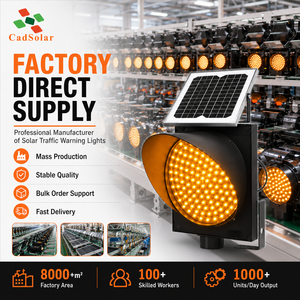
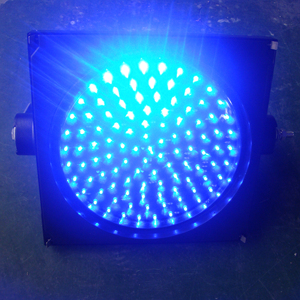
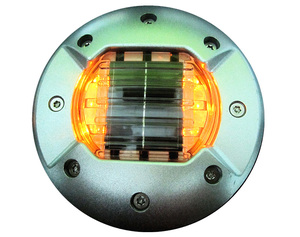
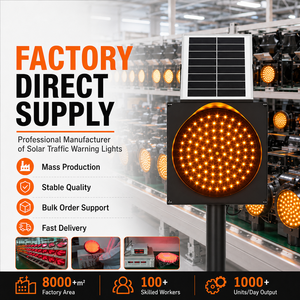
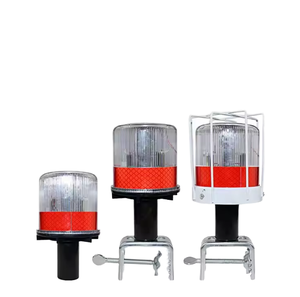
Positioned at the geographical and logistical core of Western Europe, the Grand Duchy of Luxembourg experiences high daily freight volumes combined with dense North-Atlantic fog, de-icing chemical exposure, and rigorous European Union traffic safety directives.
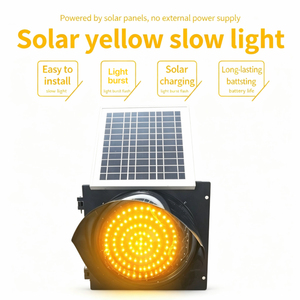
Luxembourg averages under 1,500 hours of sunshine annually, with deep winter irradiance falling below 0.8 kWh/m²/day in November–January. Our factory incorporates Grade-A N-type monocrystalline solar cells paired with Maximum Power Point Tracking (MPPT) micro-controllers operating at 98.4% efficiency. This ensures stable lithium cell replenishment even under heavy cloud cover, rain, or overcast conditions in the Oesling (Éislek) hills.
European standard EN 12352 classifies warning light systems based on effective luminous intensity, beam aperture, and active operational hours. For Luxembourg’s motorways (Autoroutes A1, A3, A6, A7), our 300mm warning blinkers surpass Class L8H specifications, outputting over 1,500 candelas during day mode and automatically throttling via optical ambient sensors to avoid debilitating driver glare at night.
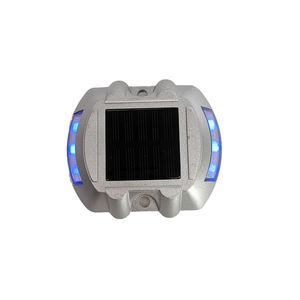
Winter road maintenance across Luxembourg requires aggressive calcium chloride and sodium chloride spreading. Our enclosures utilize ADC12 marine-grade die-cast aluminum treated with electrostatic fluorocarbon powder coatings, verified through a 1,000-hour ASTM B117 salt spray test. In-road studs feature domed bevels engineered to allow heavy snowplow clearing blades to pass without surface shearing.
| Performance Parameter | Typical Market Standard | Our Luxembourg-Export Standard | Compliance Benefit |
|---|---|---|---|
| Optical Classification | EN 12352 Class L2H / Non-certified | EN 12352 Class L8H / L8M Certified | Mandatory for Ponts et Chaussées |
| Battery Chemistry | Lead-Acid (SLA) or ternary lithium | Lithium Iron Phosphate (LiFePO4) | -20°C to +65°C stable operation |
| Ingress Protection | IP65 standard gasket | IP68 Hermetically Sealed (Laser Welded) | No moisture ingress during pressure wash |
| Autonomy Without Sun | 48–72 Hours | 120–168 Hours (5 to 7 Continuous Days) | Survives persistent Ardennes fog |
| Synchronization | Cabled or hardwired only | Wireless GPS / 433MHz Mesh Sync | Zero road-cutting or cabling cost |
| Enclosure Impact | IK07 / Standard ABS Plastic | IK10 Heavy-Duty Aluminum + Polycarbonate | Vandal and heavy vehicle impact proof |
Deploying robust, self-powered flashing traffic signals directly aligns with Luxembourg’s Plan National de Mobilité 2035 (PNM 2035) and national Vision Zero road safety objectives.
Over 200,000 cross-border workers enter Luxembourg daily from France, Belgium, and Germany. Highways like the A3 (Dudelange towards France) and A6 (Arlon towards Belgium) experience extreme peak congestion. Our amber sync blinkers warn fast-approaching freight drivers of sudden tailbacks and variable speed lane mergers.
Connecting Luxembourg City with the northern region, the A7 passes through major geological tunnels (such as Gousselerbierg and Grouft). Solar and mains-powered amber/red blinkers are installed at portal advance zones to provide unmistakable warning during maintenance closures or cross-ventilation emergency stops.
Winding mountainous regional roads through Clervaux, Vianden, and Wiltz encounter thick winter rime frost and sudden fog blankets. Standalone solar pole-mounted warning flashers provide uninterrupted visual guidance without the expense of trenching power lines through rock formations.
Urban density along Avenue John F. Kennedy in Kirchberg and around the Cloche d'Or business district requires crisp, synchronized caution lights. Our low-profile blue and amber flashers safeguard tramway crossings and pedestrian crosswalk priority lanes during wet autumn evenings.
Highway widenings (such as the long-term A3 2x3-lane expansion) demand rapidly deployable, portable directional arrow blinkers and cone-mounted strobes. Contractors can configure flashing sequences wirelessly via tablet or local PLC, keeping highway maintenance crew safe.
The Eurohub South intermodal terminal in Bettembourg-Dudelange handles thousands of containers daily. High-durability IP68 embedded solar road studs and chevron flashers direct internal heavy truck flows, eliminating forklift collision hazards at blind cross-dock loading bays.
By cutting out intermediate trading agents, European infrastructure projects achieve full batch-traceability, direct engineering customization, and substantial budgetary optimization.
We do not outsource critical sub-assemblies. From high-speed SMT placement of OSRAM / Epistar high-flux LEDs to optical collimator mold injection, all production lines follow ISO 9001:2015 and ISO 14001 environmental frameworks, guaranteeing batch-to-batch photometric uniformity across tens of thousands of units.
Every batch destined for European motorways undergoes stringent validation in our environmental chambers: thermal shock testing (-40°C to +80°C), UV aging, salt mist corrosion, high-pressure IPX8 water submergence, and vibration tests mimicking heavy axle rumble near highway viaducts.
We supply exhaustive documentation required for public infrastructure bids in Luxembourg: Certificates of Conformity (DoC), CE marks, RoHS material declarations, REACH compliance, and third-party lab photometric test certificates ready for immediate submission to municipal administrations.
Straightforward answers addressing tender compliance, logistics to Luxembourg, customs clearance, and electrical integration.
We size all systems intended for Northern Europe using custom solar-to-battery capacity coefficients. Instead of basic lead-acid batteries, we employ Grade-A LiFePO4 cells paired with oversized 18V monocrystalline modules. Combined with dimming software that operates during twilight and nocturnal hours, our systems guarantee a minimum of 120 to 168 hours (5–7 days) of autonomous flashing with zero direct sun exposure.
Yes. We deliver complete engineering submission packages including photometric curves (candela output vs. viewing angle), Class L8H / L2H declarations under EN 12352, dimensional CAD drawings, raw material anti-corrosion certifications, and warranty documentation formulated in English, French, or German.
We offer flexible shipping terms including FOB, CIF (Port of Antwerp / Rotterdam), and door-to-door DDP directly to contractor warehouses or consolidation sites in Luxembourg (such as Contern, Bettembourg, or Capellen). Sea freight takes approximately 28–35 days to Antwerp, followed by 24–48 hours customs transit directly to Luxembourg.
Absolutely. Our dual-power hybrid models incorporate a certified internal 230V AC to 12V DC power transformer with automatic seamless failover. If mains power drops or is disconnected during roadworks, the battery-backed solar module immediately assumes total power delivery without a single missed flash.
Yes. Standard flash rate is preset at 50–60 flashes per minute (FPM) to conform with European highway codes. On request, duty cycle, strobe double-flashing, or sequential directional chasing can be programmed via hardware DIP switches or wirelessly synchronized using internal RF modules across consecutive road gantries.
We supply universal heavy-duty 304/316 stainless steel mounting bands and cast aluminum brackets engineered to clamp onto standard European tubular poles (Ø60mm, Ø76mm, Ø89mm, and Ø114mm) as well as overhead cantilever gantries, protecting poles from galvanic corrosion.
Whether you require standard 300mm pole-mount solar amber flashers for motorway off-ramps or custom IoT-synchronized cat-eye road studs for high-traffic logistics corridors, our engineering team provides customized proposals, full photometric compliance files, and rapid factory-direct pricing.