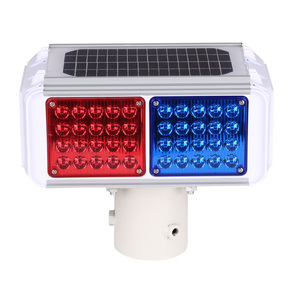

Designed to withstand the harsh freezing cycles and diffuse winter solar irradiance of Central and Northern Europe. Every unit features optimized MPPT charging algorithms, high-grade prismatic optometrics, and UV-stabilized housings.
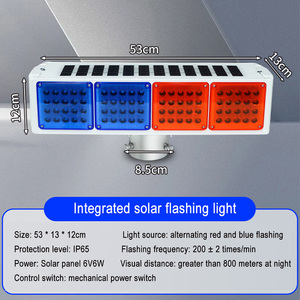
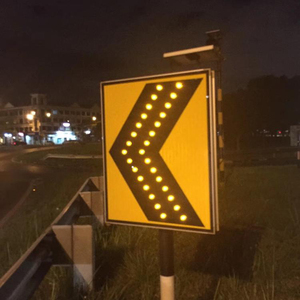
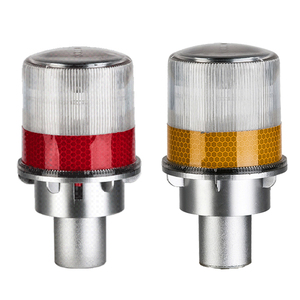
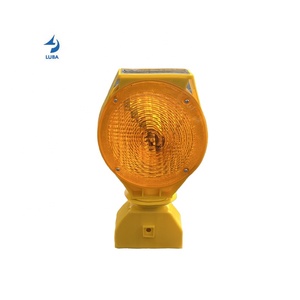
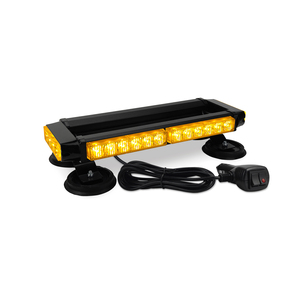
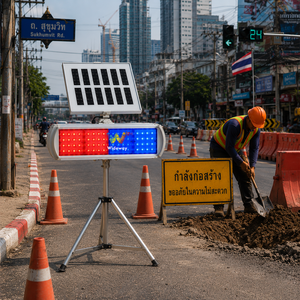
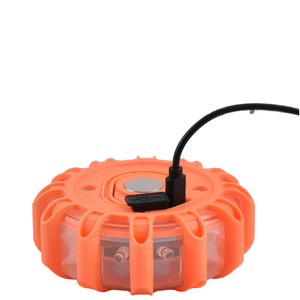
Securing technical approvals across Germany requires strict adherence to European norms and domestic road safety directives. Standard off-the-shelf warning lights consistently fail German field auditions due to battery degradation during prolonged sub-zero fog conditions (Inversionswetterlagen) and inadequate luminous intensity under direct low-angle solar glare.
Under the revised Richtlinien für die verkehrsrechtliche Sicherung von Arbeitsstellen an Straßen (RSA 21), visual warning elements deployed on federal highways must eliminate ambiguity. Our amber warning systems produce certified monochromatic yellow (589 nm to 593 nm) matching the spectral chromaticity mandates of the German Straßenverkehrs-Ordnung (StVO).
Germany averages less than 1.2 peak sun hours (PSH) per day throughout November to January in regions such as Bavaria and North Rhine-Westphalia. Our solar blinkers utilize oversized monocrystalline panels with an anti-reflective nano-coating paired with MPPT logic that initiates charging at low threshold voltages (0.8V differential).
Lithium-ion cells experience rapid dendrite degradation and catastrophic capacity drop-offs when charged below 0°C. We integrate industrial-grade Lithium Iron Phosphate (LiFePO4) or low-temperature nickel-metal hydride batteries equipped with integrated PCB thermal run-down controls to guarantee uninterrupted operation in freezing conditions.
A granular technical comparison detailing how our highway solar blinker light units are structured to pass municipal Baustellen and Autobahn acceptance tests.
| Performance Criterion | Typical Market Offering | Our German Export Configuration | Compliance Reference |
|---|---|---|---|
| Luminous Intensity | 150 - 300 cd (Unclassified) | > 500 cd (Daytime) / Auto-dimmed > 100 cd (Night) | DIN EN 12352 Class L8H / L8M |
| Enclosure Degradation | Standard ABS or rec-PP plastic | Bayer Makrolon® UV-Stabilized Polycarbonate | ISO 4892-2 Accelerated Weathering |
| Optical Beam Angle | Wide circular diffuse pattern (±10°) | Narrow horizontal elliptical dispersion (H 15° / V 10°) | BASt Testing Directives for Warning Lights |
| Winter Autonomous Run | 72 hours maximum (3 days) | 240 to 360 hours continuous flash (10–15 days) | VDI 4630 Solar Sizing Guidelines |
| Electromagnetic Interf. | Non-shielded low-frequency pulse | EMC suppression circuit (CISPR 25 Class 3) | CE Marking / UNECE Reg 10 compliant |
Key technological and regulatory shifts accelerating the procurement of autonomous solar signaling equipment across German Bundesstraßen and communal thoroughfares.
Municipal tenders in metropolitan clusters like Berlin, Hamburg, and Munich increasingly penalize small diesel generators traditionally used to power mobile road warning systems. Self-sustaining solar blinkers remove localized NOx and carbon emissions while eliminating refueling trips, cutting operating overheads for civil contractors by up to 35%.
German transport agencies are moving aggressively toward Car-to-X communication under the auspices of Die Autobahn GmbH des Bundes. Our newest generation of solar blinkers offers optional LoRaWAN and Narrowband IoT (NB-IoT) microcontrollers that broadcast real-time operational telemetry and beacon status to traffic command centers.
Nearly 60% of traffic fatalities in Germany occur on rural single-lane roads due to unexpected bends and animal crossings. District road authorities (Landkreis Straßenbauämter) are systematically replacing passive reflective chevrons with synchronized flashing solar chevrons to lower accident frequencies at high-risk black spots.
With a modern automated production campus and multi-decade domain expertise, we bridge heavy-duty engineering with direct industrial supply.
We machine our own injection moulds for Fresnel polycarbonate lenses, ensuring internal reflection coefficients that surpass standard EN 12352 requirements.
Every LED diode, battery cell, and solar module undergoes stringent incoming electrical inspection. Serial numbers ensure complete material audit clarity.
Custom crating, moisture-barrier packaging, palletization optimized for European standard EUR-boxes, and ready export clearance documents for the port of Hamburg.
Mounting brackets tailored to standard European round posts (Ø 60mm, 76mm, 89mm) or specialized gantry clamps used by German road authorities.
Direct technical answers addressing the core regulatory questions posed by Bauleiter, technical purchasers, and municipal road management agencies.
Yes. All exported units carry an authentic CE Declaration of Conformity verified against the Low Voltage Directive (LVD) 2014/35/EU, Electromagnetic Compatibility (EMC) Directive 2014/30/EU, and RoHS Directive 2011/65/EU. Complete technical construction files (TCF) are available for engineering review.
Our optical arrays match the strict luminous class criteria (such as Class L8H with dynamic daytime intensity > 500 cd, and automatic nocturnal step-down to prevent glare). Photometric evaluations follow European goniometer measurement procedures for beam angle distribution and uniform chromaticity.
We calculate our battery and photovoltaic sizing based on historical irradiance data for Central Europe. By employing high-capacity LiFePO4 chemistry and high-efficiency low-loss pulsing drivers, our solar blinkers maintain continuous operation for 10 to 15 overcast days without direct sunlight.
Yes. We supply hot-dip galvanized and stainless steel (V2A/V4A) clamp brackets designed specifically for standard German post diameters (Ø 60 mm, Ø 76 mm) as well as square profiles used in temporary mobile road barricades (Absperrschrankengitter).
We support standard Incoterms including FOB, CIF (Hamburg or Bremen), and DAP directly to your logistics depot. Standard production cycles run 15–20 business days, with air freight options available for expedited infrastructure tenders requiring delivery within 5–7 days.
Every commercial export consignment includes the Commercial Invoice, Packing List, Certificate of Origin (COO), CE Declaration of Conformity, photometric test summaries, and battery UN 38.3 transport safety clearance certificates.