

From port container-handling equipment to national highway expansions, our optical warning solutions are built to exceed the stringent photometric, mechanical, and solar charging requirements across Central America.
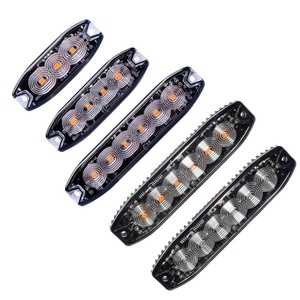
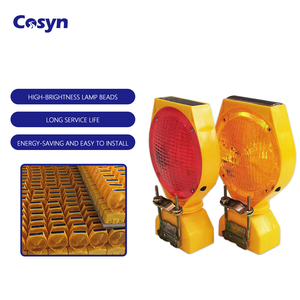
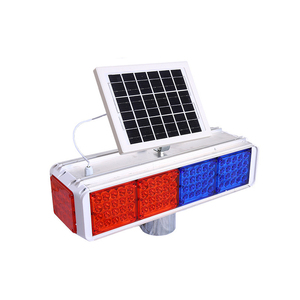
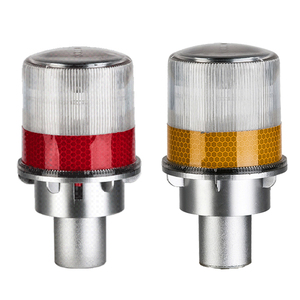
Panama sits at the intersection of extreme equatorial maritime humidity and massive global transit hubs. Commercial-grade amber warning lights must withstand constant exposure to saltwater air, heavy cloudbursts, and uninterrupted fleet service.
At Balboa, Cristobal, and PSA Panama International Terminal, amber strobes and perimeter flashers operate 24/7 on rubber-tired gantry cranes (RTGs), container top-loaders, and terminal tractors. Marine salt mist requires IP68 housing and chemically passivated polycarbonate lenses to eliminate premature fogging and corrosion.
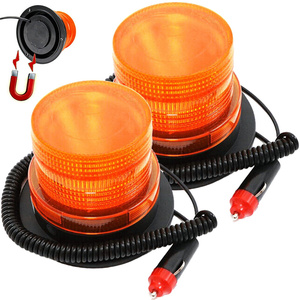
As Latin America’s largest redistribution center, the high-density trucking corridors in Colón require SAE Class 1 low-profile amber grille lights and rooftop rotating beacons. These systems alert warehouse workers, forklifts, and line-haul haulers during peak cross-dock transfers and overnight freight dispatches.
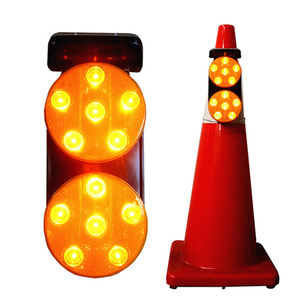
Highway infrastructure upgrades executed under the supervision of the Ministry of Public Works (MOP) require ATTT-compliant solar barricade lights and sequential LED directional arrow boards. These devices manage single-lane diversions across high-precipitation zones like the Darién Gap corridor and provincial Chiriquí routes.
Panama experiences average relative humidity levels ranging from 80% to 95% alongside high annual rainfall exceeding 3,000 mm in coastal provinces. Standard off-the-shelf warning lights frequently fail due to internal condensation, short-circuiting printed circuit boards (PCBs), and UV degradation of plastic housings. Modern industrial procurement specifications now require pressure-equalizing waterproof breather valves (such as ePTFE membrane vents), IP67/IP68 ingress ratings, and aerospace-grade polycarbonate treated against yellowing from intense tropical UV-A/UV-B spectrums.
Expanding rural electrification along national arterial roads has driven a decisive shift toward autonomous photovoltaic warning solutions. Trenching and running mains 110V/220V grid lines across remote mountain passes or temporary work diversions introduces unsustainable CAPEX and labor delays. State-of-the-art amber blinkers now integrate monocrystalline solar panels with high photoelectric conversion rates (≥21.5%) coupled with LiFePO4 (Lithium Iron Phosphate) battery chemistry. This battery profile provides thermal resilience up to 65°C without the risk of thermal runaway, delivering 5 to 7 days of complete cloudy-day autonomy during severe tropical depressions.
Panama's Transit and Land Transportation Authority (Autoridad de Tránsito y Transporte Terrestre - ATTT) aligns closely with US Manual on Uniform Traffic Control Devices (MUTCD) and SAE J845/J595 optical class requirements. Concessionaires, international EPC consortiums, and public utility teams in Panama are systematically phasing out incandescent and early-generation low-power halogen beacons in favor of SAE Class 1 certified high-power LEDs. Compliance demands minimum candela output across a 360-degree horizontal field, ensuring visibility from a distance exceeding 1,000 meters in dense fog, sea spray, or equatorial torrential downpours.
With advanced precision manufacturing facilities, we deliver fully verified, documented, and custom-engineered warning lighting arrays for mission-critical infrastructure projects globally.
Our engineering team specializes in configuring optical patterns, structural aluminum housings, and heavy-duty brackets to meet the rigorous physical and environmental conditions demanded by international engineering contractors.
Direct factory contact ensures eliminate intermediary markups and guarantees rapid component traceability for multi-year civil works.
Selecting the ideal power platform ensures project reliability while controlling installation and long-term lifecycle maintenance expenses.
Solar Units: 120+ hours continuous flash reserve without direct sunlight using advanced LiFePO4 cells.
Mains AC: Uninterrupted 110V-240V supply designed for permanent installations.
Constructed using die-cast aluminum alloys or high-impact polycarbonates with silicone seals, delivering certified IP65 to IP68 water and dust ingress resistance against tropical storms.
Engineered with high-flux Epistar/Osram LEDs outputting 60 to 90 flashes/min. Photometrics comply with MUTCD Type A, B, and C warning standards for daytime and night visibility.
Universal clamping hardware, magnetic vehicle mounts, and unistrut brackets fabricated from hot-dip galvanized or stainless steel to resist salt-fog oxidation across Panamanian ports.
Essential technical and commercial information for purchasing managers, safety supervisors, and project contractors sourcing amber warning systems.
Yes. Our amber strobe systems, barricade flashers, and directional arrow signs comply with the colorimetric (590-595 nm amber wavelength) and flash-rate frequencies designated under ATTT standards and the US Federal Highway Administration's MUTCD guidelines, widely referenced throughout Central America.
We configure our solar models with oversized high-efficiency monocrystalline panels and industrial-grade LiFePO4 batteries designed to supply 5 to 7 continuous days of operation even with persistent zero-sun overcast skies. Built-in smart MPPT microcontrollers automatically adjust LED pulse width to preserve operational life during extended tropical depressions.
Absolutely. We regularly process commercial shipments through international freight hubs. We provide full documentation packages—including Certificate of Origin, detailed Commercial Invoices, Packing Lists, and Bill of Lading (B/L)—for tax-exempt or duty-free entry directly into the Colon Free Zone or the Pacific/Atlantic terminal zones.
We supply universal multi-purpose brackets: adjustable steel clamps for standard 2-inch to 4-inch traffic poles, specialized base brackets for jersey barriers and road drums, and heavy-duty neodymium magnetic bases with 120 km/h wind shear ratings for service trucks and escort vans.
Units designated for marine and port environments utilize marine-grade ADC12 aluminum housings coated with electrostatic thermoset epoxy powders. Exposed fasteners and clamps are produced in 304 or 316 stainless steel to prevent electrolytic galvanization breakdown from salt-saturated coastal breezes.
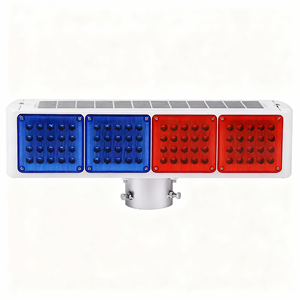
Yes. In addition to pure amber safety flashers, we manufacture dual-color and split-head fixtures (Amber/Red, Red/Blue) for emergency responder units, highway toll plazas, and security checkpoints operating under Ministry of Public Security (MINSEG) criteria.