
Engineered for rapid deployment at high-speed expressways, construction diversions, urban arterial intersections, and un-electrified rural corridors. Every unit utilizes ultra-bright Epistar/Osram LEDs with optical Fresnel dispersion lenses and UV-stabilized GE Lexan polycarbonate casings.

High-lumen Chevron/Arrow configuration, 220V AC mains or 12V/24V DC input. Ideal for toll plaza canopies and lane merges.

Impact-resistant cone/barricade top beacon. Integrated mono-crystalline solar cell with 360° omnidirectional visibility.
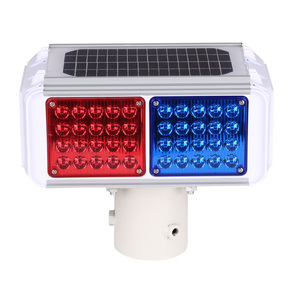
Police-spec alternating red-blue high-intensity pulse. Pre-programmed multi-flash patterns for accident blackspots.
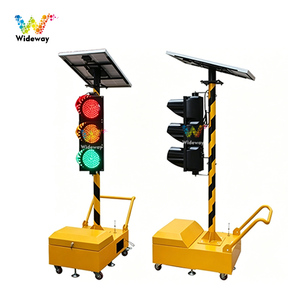
RF wireless linkage spanning 200-800m. Trailer/trolley mounted with integrated battery bank for temporary diversions.
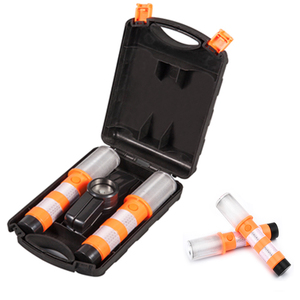
Heavy-duty ABS body with high-reflectivity prism core. Rechargeable lithium battery with magnetic tail base for emergency marshals.
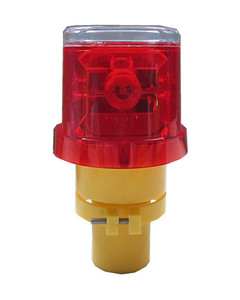
Sealed UV-stabilized housing engineered for maritime and torrential rain conditions. Over 500m nocturnal chromatic recognition.
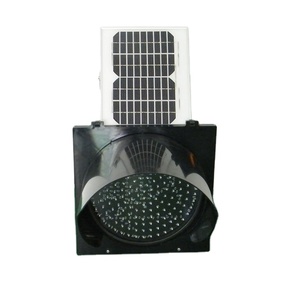
Compact single/dual-aspect warning flasher. Intelligent dusk-to-dawn photosensor with 7+ days cloudy autonomy reserve.
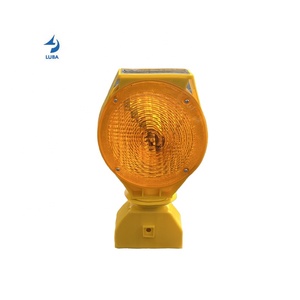
Highway concessionaire standard 300mm/200mm diameter housing. Designed for pole or gantry clamping with vibration dampening.
Enpowers International operates an integrated design, molding, SMT assembly, and optical testing manufacturing complex at Plot No. 140, Pushpak Industrial Estate, GIDC Phase-1, Vatwa, Ahmedabad. Operating in strict adherence to the Make in India initiative, we engineer industrial-grade traffic signaling equipment completely in-house.
Unlike commercial traders or system integrators, we retain 100% intellectual property control over driver topology, optical lens tooling, solar charge controller firmware, and environmental enclosure design. This enables infrastructure concessionaires and EPC contractors across North America, the European Union, the Middle East, Southeast Asia, and Africa to obtain fully certified, tender-compliant traffic alert devices directly from the source.
Zero intermediary margins, factory-level price protection, and guaranteed lot-to-lot color coordinate consistency under CIE 1931.
Tailored engineering deliverables mapped to NHAI, PWD, BRO, ASTM D4956, and European EN 12352 / EN 12368 specifications.
Our precision-engineered traffic blinkers and caution signal heads are rigorously tested inside simulated environmental stress chambers replicating salt spray corrosion, -40°C sub-zero cold, and +80°C desert heat conditions.
Trusted by elite infrastructure developers including Tata Projects, NCC, L&T Concessions, GVK, IRB Infrastructure, Patel Engineering, Sadbhav, and Simplex.
Get a QuoteModern traffic safety engineering has moved beyond basic incandescent flashing lights. Discover how Enpowers International integrates precision optics, solid-state power conditioning, and IoT connectivity into rugged caution lighting systems.
Using Bayer Makrolon or Sabic Lexan optical-grade polycarbonate, our injection-molded lenses incorporate micro-structured Fresnel rings and internal diamond prisms. This maximizes horizontal luminous intensity (producing over 500 candela in amber/yellow) while maintaining a strict 30° horizontal by 15° vertical viewing corridor that eliminates driver glare and phantom sun reflection.
Off-grid caution signals rely on integrated Maximum Power Point Tracking (MPPT) micro-controllers operating at 96% conversion efficiency. Paired with grade-A Lithium Iron Phosphate (LiFePO4) battery packs rated for >3,000 deep discharge cycles, the power core operates reliably between -20°C and +70°C, guaranteeing up to 10 days of continuous overcast autonomy without grid back-feed.
In step with Cooperative Intelligent Transportation Systems (C-ITS), Enpowers blinker lights can be equipped with optional NB-IoT or LoRaWAN wireless modules. This enables real-time battery voltage monitoring, remote flash-rate synchronizing across work-zone corridors, automated fault reporting to traffic management centers, and roadside beacon broadcasting to V2X-equipped autonomous vehicles.
How modern transportation ministries and public works departments are shifting asset specifications to reduce Total Cost of Ownership (TCO) and achieve zero-fatality Vision Zero road corridor objectives.
Electrification of rural road signs through underground trenching and conduit laying carries a capital expenditure of $15,000–$40,000 per kilometer. Procuring self-contained solar LED caution lights eliminates trenching, civil permits, wire-theft risk, and monthly utility overheads, dropping operational break-even below 6 months while lowering carbon emissions.
Procurement agencies are transitioning from fragmented regional standards to consolidated durability metrics: IK09 mechanical impact resistance, IP65/IP66 ingress seals against monsoon typhoons, and retroreflective sheeting incorporating micro-prismatic ASTM Type IV/XI vinyl backplates to guarantee visibility even during unexpected primary driver failures.
Contractors are phasing out stationary static barriers in favor of lightweight, quickly deployable solar barricade strobes, magnetic-mount arrow beacons, and portable wireless-linked signals. This modularity reduces highway lane-closure staging times by up to 65% while significantly diminishing work-zone intrusion collision risks.
| Performance Parameter | Enpowers Solar LED Blinker | Conventional Grid-Tied Light | Low-Cost Unbranded Units |
|---|---|---|---|
| Luminous Source | Epistar / Osram High-Flux SMD LEDs (100,000 hrs) | Halogen / Early generation DIP LEDs (15,000 hrs) | Unrated generic DIP LEDs (<10,000 hrs) |
| Optical Efficiency | Dual-layer Fresnel optical collimator (>500 cd) | Reflector bowl with smooth glass (<250 cd) | Flat untreated plastic cover (<120 cd) |
| Casing & Weatherproofing | UV-treated GE Lexan Polycarbonate (IP66, IK09) | Cast iron / Sheet steel (Rust-prone, IP54) | Recycled ABS / Polystyrene (IP44, fades in 1 yr) |
| Continuous Autonomy | 7 to 10 rainy days (Lithium LiFePO4 battery) | Zero autonomy (Blackouts halt operation) | 1 to 2 days (Undersized lead-acid battery) |
| Installation Cost & Civil Work | Zero Trenching (15 min setup) | Extensive trenching, cabling, meters required | Zero trenching, but frequent field repair needed |
To prevent delivery delays and inspection rejections, infrastructure project engineers should specify these key technical parameters when preparing global tender bids.
Answers to questions raised by project directors, concessionaire managers, and international importers.
Connect directly with our senior application engineers in Ahmedabad to obtain formal tender compliance sheets, photometric lux diagrams, CAD dimensional drawings, and export price schedules.