
Tested under rigorous climate cycling and accelerated photobleaching, our primary signaling beacons combine high-efficiency monochromatic diodes, micro-prismatic optical lenses, and intelligent MPPT power harvesting.
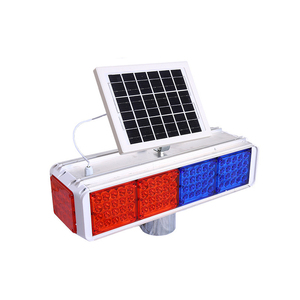
Compact high-flux red/blue dual strobing beacon with omnidirectional magnetic mounting, high-impact polycarbonate casing, and self-contained monocrystalline solar module.
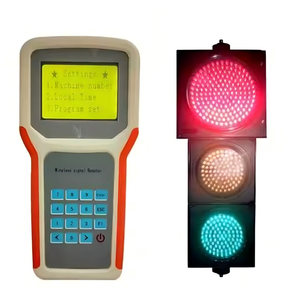
Industrial RF-enabled signal beacon allowing dynamic phase modulation up to 800m. Ideal for tactical work-zone traffic calming, detour control, and variable dispatch staging.
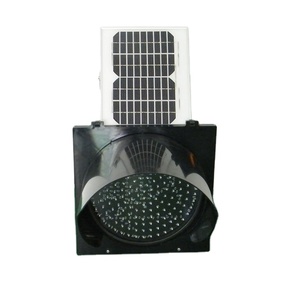
Engineered for intersection approaches and median heads. Features dual-input automatic power arbitrage between AC 110-240V grid lines and auxiliary solar panels.
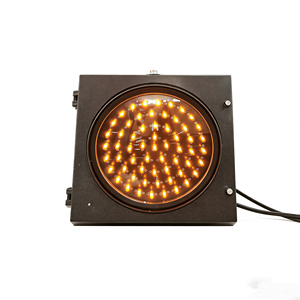
Continuous amber flash profile with ultra-wide beam distribution, hermetic silicone sealing (IP65), and high anti-UV stabilization designed for equatorial desert conditions.
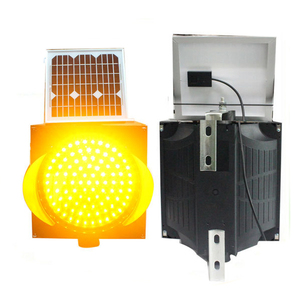
Standard 300mm geometric diameter aspect fulfilling IRC, NHAI, and MUTCD guidelines. Features precision Fresnel optics delivering >800 cd on-axis luminous intensity.
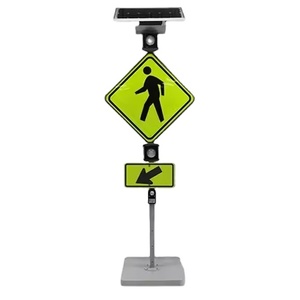
Rapid rectangular flashing beacon (RRFB) style cadence integrated into engineered diamond-grade fluorescent yellow-green backing with passive infrared motion activation.
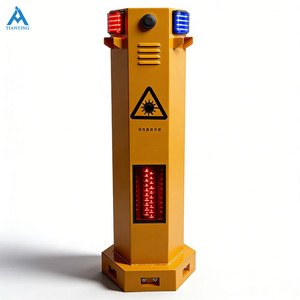
Architectural-grade die-cast aluminum beacon integrating volumetric laser curtain projection to eliminate nighttime pedestrian blind zones at complex arterial crosswalks.

High-speed expressway curve delineation chevron equipped with synchronized wireless cascading flash triggers, ensuring coherent optical guidance through sharp radius geometry.
A technical guide for civil contractors, transportation departments, municipal concessionaires, and international infrastructure procurement executives.
Flashing LED beacons represent the first critical tier of visual telemetry in contemporary traffic architecture. Deployed predominantly at un-signalized intersections, horizontal curve approaches, mid-block pedestrian crosswalks, school zones, and high-risk construction corridors, these warning lights mitigate collision incidence by modifying human driver deceleration profiles. Unlike ambient architectural luminaires, an industrial traffic warning beacon operates under acute stress profiles: wide ambient thermal deltas (-30°C to +65°C), continuous UV solar irradiance causing photodegradation of polymeric enclosures, abrasive airborne particulate erosion, and electrical micro-surges.
Sourcing engineers must evaluate prospective suppliers against internationally harmonized optical performance benchmarks. In the United States, MUTCD (Manual on Uniform Traffic Control Devices) Section 4L establishes luminous distribution standards aligned with ITE (Institute of Transportation Engineers) Vehicle Traffic Control Signal Heads (VTCSH). In European domains, EN 12352 categorizes warning devices into Classes L2H, L8H, and L9M based on aperture size, effective luminous intensity (cd), and angular uniformity.
Premium OEM/ODM factories execute photometrics via optical-grade UV-stabilized polycarbonate (PC) or impact-modified polymethyl methacrylate (PMMA) outer lenses mated with micro-structured internal Fresnel concentric rings. This architecture controls beam dispersion, typically collimating light into a narrow vertical spread (±10°) and broad horizontal fan (±30° to ±45°). This deliberate directivity maximizes visual lux at the driver's eye level while suppressing scattered upward luminous spill that creates nighttime visual pollution and depletes system battery capacity.
Off-grid solar traffic beacons demand stringent mathematical sizing rather than off-the-shelf guesswork. A beacon specifying a 5-day continuous autonomy backup must be modeled around the local winter solstice peak sun hours (PSH), not annual averages. The factory must integrate an MPPT (Maximum Power Point Tracking) microprocessor controller capable of multi-stage charging (Bulk, Absorption, Float) coupled with temperature compensation sensors.
The standard energy equilibrium equation applied by competent engineering exporters is formulated as:
Exporters utilizing consumer-grade Lead-Acid AGM batteries suffer chronic premature sulfation when deployed in high-heat equatorial regions. Conversely, Tier-1 manufacturing facilities incorporate dedicated Lithium Iron Phosphate (LiFePO4) or high-temperature Lead-Gel architectures featuring internal BMS (Battery Management Systems) providing over-voltage, deep-discharge, and short-circuit protection across >3,000 thermal cycles.
The transition toward Smart City cyber-physical networks is converting standalone flashers into intelligent, edge-computing telemetry nodes. Sourcing officers must prepare for four tectonic shifts in product specification:
Next-generation beacons integrate 5.9 GHz DSRC / C-V2X transceivers, simultaneously emitting visible optical pulses and digital warning packets decoded by connected vehicles.
Expressway chevron signs and lane-divergence signals deploy low-power 2.4 GHz RF or Sub-GHz (LoRa) mesh protocols to trigger synchronized linear flash cascades.
Moving beyond monochromatic light heads, smart beacons project high-contrast visual laser boundaries on wet or dark road asphalt, delineating clear crossing spaces.
Integrated 24 GHz Doppler radar heads trigger activation only upon detecting approaching vehicles exceeding pre-set speed thresholds, tripling battery endurance.
Centralized fleet dashboards enable municipal concessionaires to track battery voltage, solar array efficiency, and LED open-circuit errors across thousands of miles.
Advanced PV collectors provide up to 28% conversion efficiency under heavy overcast and twilight conditions, paired with solid-state non-flammable battery cells.
Procurement practices across North America, Europe, the Middle East, and Asia-Pacific have shifted decisively away from lowest-initial-bid acquisitions toward Total Cost of Ownership (TCO) matrices. Municipal tenders increasingly mandate complete life-cycle analyses spanning 7 to 10 years of unattended continuous deployment.
Key procurement evolution patterns include:
To eliminate discrepancies during tender compilation and factory acceptance testing (FAT), procurement officers should benchmark critical metrics using this engineering specification matrix:
| Performance Parameter | Commercial Grade (Low-End) | Export Engineering Standard | NHAI / European High-Spec Standard |
|---|---|---|---|
| Optical Lens Material | Recycled Polystyrene / Standard PC | Virgin GE/Bayer UV-Stabilized PC | Ultra-Hardened Optical Grade Polycarbonate + Anti-Graffiti |
| On-Axis Intensity (300mm Amber) | < 350 candela (cd) | 500 – 750 candela (cd) | > 800 – 1,200 candela (cd) Class L8H |
| Photocell Autodimming | Fixed Day/Night Resistor | Integrated Multi-Level LDR | Microcontroller Pulse-Width Modulation (PWM) Stepless Dynamic |
| Battery Chemistry | Standard VRLA / Flooded Lead-Acid | Deep-Cycle Gel / Li-ion Ternary | LiFePO4 (>3,000 cycles) or Extreme Temp Gel (-30°C to +65°C) |
| Autonomy Without Sunlight | 2 – 3 Days Maximum | 5 – 7 Days Continuous | 10 – 14 Days (Engineered for Monsoon/Alpine Winters) |
| Enclosure Protection Rating | IP54 Dust/Splash | IP65 Total Dust & Water Jet | IP67 Hermetic Submersible & IK09 Impact Rated |
| Standards Compliance | None / Self-Declared | CE, RoHS, Standard IRC | NHAI, PWD, BRO, MUTCD Type-B, EN 12352 Certified |
Operating from our heavy-industrial facility located at GIDC Phase-1, Vatwa, Ahmedabad, Gujarat, India, Enpowers International operates as a dedicated manufacturer, not an export broker. We maintain complete vertical control over component assembly: high-speed SMT pick-and-place lines for high-flux LED emitters, precision thermoplastic injection molding for signal visors and housing shells, CNC sheet metal fabrication, and computerized optical goniophotometer testing.
Every batch destined for highway authorities (NHAI, PWD, BRO) or international project sites undergoes 48 hours of continuous thermal stress burn-in and simulated monsoon spray validation. Our export supply infrastructure packages units with military-grade desiccants, anti-corrosion VCI liners, and shock-absorbent wooden pallets compliant with ISPM 15 phytosanitary regulations.

Our road safety beacons protect motorists on projects executed by government road agencies and premier civil engineering firms:






Key technical and logistics inquiries answered directly by our chief optical engineers and export compliance officers.
Submit your tender requirements, project site coordinates, or photometric specifications. Our senior optical and electrical engineering staff will prepare an exact technical compliance sheet, solar autonomy simulation, and competitive factory-direct commercial proposal.