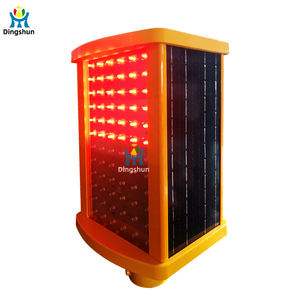

Explore our precision-engineered warning flashers designed to operate completely off-grid or via industrial mains, delivering uncompromising visibility under zero-light and severe meteorological conditions.
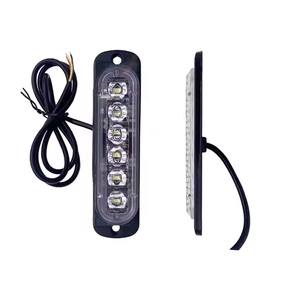
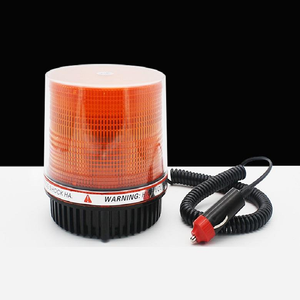
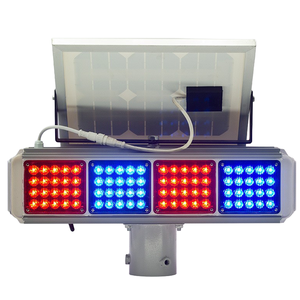
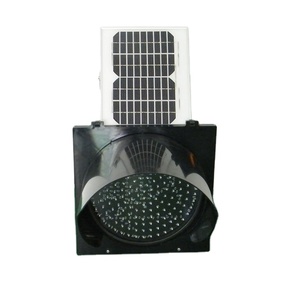
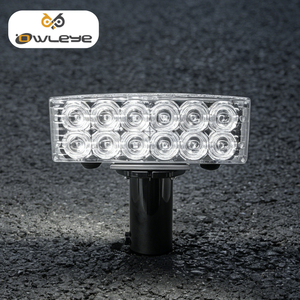
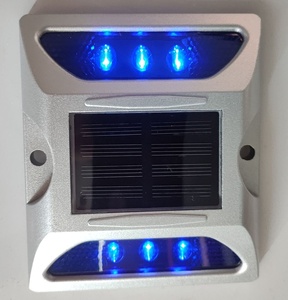
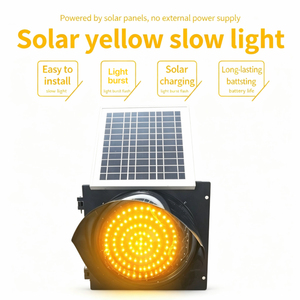
Headquartered in GIDC Phase-1, Vatwa, Ahmedabad, Gujarat, India, Enpowers International operates an integrated, high-capacity industrial plant delivering mission-critical roadside electronics built to rigorous global tenders.
Procuring flashing warning lights for infrastructure and heavy industry demands verified build provenance. Unlike trading intermediaries that re-badge consumer-grade plastics, our dedicated manufacturing facilities in Ahmedabad control every layer of production: from high-dielectric aluminum casting and UV-stabilized polycarbonate lens molding to surface-mount SMT circuitry and automated pulse-width-modulation (PWM) flash calibration. Our lights are fully certified to withstand high wind shear, salt-mist corrosion, monsoon deluge, and extreme ambient temperature ranges (-20°C to +70°C).
Fabricated directly to strict statutory frameworks including Indian NHAI, PWD, and BRO criteria, with full configurability to American (MUTCD / ITE) and European (EN 12352) specifications on enterprise demand.
We reject generic solar-battery matching. Each solar blinking luminaire is dimensioned mathematically according to geographical Peak Sun Hours (PSH), guaranteeing 5 to 7 days of continuous autonomy during torrential monsoon or prolonged overcast spells.
Every production batch undergoes complete environmental stress tests: IPX6/IPX8 ingress immersion, optical spectrophotometer lux profiling, thermal chamber cycling, and vibration load verification before dispatch.
Factory Direct Traceability: Eliminate supply chain margins and technical ambiguities. Enpowers International works directly with government EPC contractors, civil concessionaires, and port authorities, supplying comprehensive test certificates and factory acceptance documentation with every consignment.
How digital infrastructure, advanced battery chemistries, and smart optical designs are reshaping global road safety tender requirements through 2030.
Legacy procurement models historically favored Valve Regulated Lead-Acid (VRLA) or Gel batteries due to lower initial purchase price. However, global municipal and highway authorities are universally pivoting toward LiFePO4 chemistry. With over 2,500 charge-discharge cycles (compared to 400-500 in lead-acid), high thermal tolerance up to 60°C without runaway, and an integrated Battery Management System (BMS), LiFePO4 slashes total lifecycle replacement costs by over 62% across a typical 7-year road concession.
Standard unsynchronized flashing lights in work zones often create visual disorientation for motorists driving at high speeds. Emerging safety protocols mandate RF-synchronized sequential flashing along road diversions and chevron curves. Using 2.4 GHz low-power mesh networks or GNSS synchronization, warning lights flash in a sweeping, directional wave that guides driver visual trajectory with scientific clarity, lowering deceleration reaction times by up to 34%.
Optical efficiency is transitioning from brute lumen force to advanced light redirection. Modern specifications demand engineered polycarbonate lenses with micro-Fresnel prisms. This ensures uniform optical distribution along target driver horizontal viewing angles (up to 30 degrees) without spilling useless light skyward, reducing solar panel footprint while achieving over 800-meter daytime visibility.
Next-generation highway warning signals are no longer isolated hardware. Leading infrastructure tenders specify IoT integration via NB-IoT or LoRaWAN. Operational centers receive automated alerts on battery state-of-charge, LED failure, or physical impact vandalism. Furthermore, warning beacons are being designed to broadcast short-range Dedicated Short-Range Communications (DSRC) warnings directly to autonomous and connected vehicles.
| Evaluation Parameter | Standard Commercial Grade | Enpowers Industrial Infrastructure Grade | Strategic Advantage for Buyers |
|---|---|---|---|
| Enclosure Construction | Recycled ABS / Thin Polycarbonate | Die-cast LM6 Aluminum / Heavy UV Polycarbonate | Superior impact resistance (IK08-IK10), no thermal warping |
| Ingress Protection | IP54 to IP65 | IP66 to Certified Submersible IP68 | Total protection against driving monsoon rain & fine desert dust |
| Battery Chemistry | Standard Sealed Lead-Acid (SLA) | LiFePO4 with Intelligent Micro-BMS | 5x operational lifespan, maintenance-free performance |
| Photometric Compliance | Uncertified generic LEDs | Automotive-grade Epistar/Osram LEDs with Chromaticity bins | Guaranteed daytime contrast, no color fade after 3 years |
| Autonomy Rating | 24 to 48 hours | 120 to 168 hours (5–7 days overcast) | Continuous operation during extended storms and winters |
Our road safety warning beacons and traffic signals are actively deployed across critical national highways, defense corridors, and heavy civil projects.
















Technical, contractual, and environmental considerations addressed by our Senior Application Engineering team.
Solar-powered blinkers are universally recommended for greenfield expressways, highway medians, rural intersections, toll plaza approaches, and work zones where grid connection requires costly trenching and cabling. Mains-powered (110V/230V AC) blinkers are ideal for dense urban junctions where high canopy coverage or neighboring buildings obstruct direct sunlight exposure.
Yes. While standard highway caution blinkers are calibrated to 50–60 flashes per minute with a 50% duty cycle per standard IRC and MUTCD practices, our micro-controller firmware can be custom-programmed for single flash, double pulse, pseudo-strobe, or alternating red/blue patterns to match local law enforcement and civil safety codes.
Every export consignment includes a comprehensive compliance dossier: Factory Acceptance Test (FAT) records, photometric intensity test certificates, material grade reports for cast aluminum and polycarbonate housings, Certificate of Origin (COO), and detailed electrical schematics for structural pole mounting.
Units engineered for marine environments and coastal highways receive high-grade chromate conversion pre-treatment followed by thermoset architectural powder coating. All fasteners are SS304 or SS316 stainless steel, and housing joints utilize vulcanized neoprene gaskets rated for continuous IP66 or IP68 immersion resistance.
Consult with our engineering team directly to obtain complete technical datasheets, dimensional drawings, and tender-compliant quotations tailored to your exact delivery schedule.