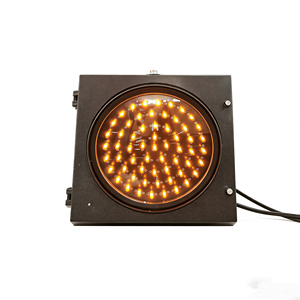
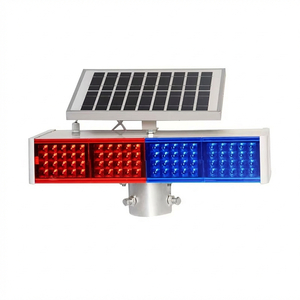
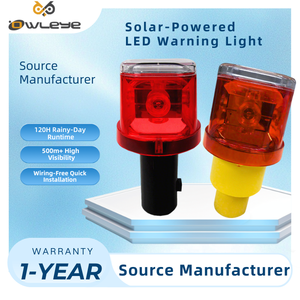
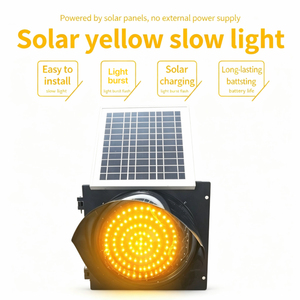
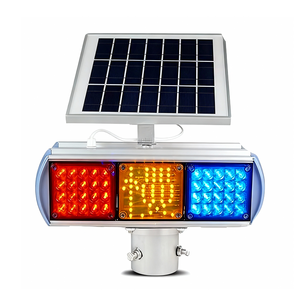
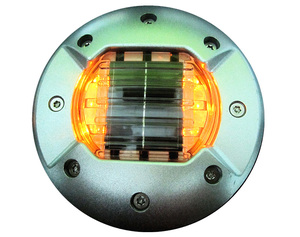
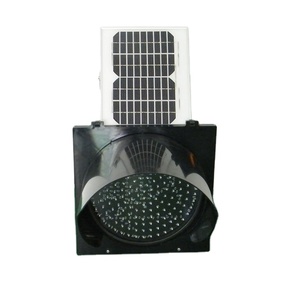
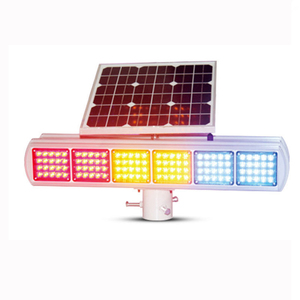
Factory-direct optical systems constructed with ultraviolet-stabilized polycarbonate lenses, aerospace die-cast aluminum alloys, and multi-stage pulse width modulation (PWM) controllers.
Civil road authorities require hazard flashers to maintain 100% operational uptime despite severe environmental stressors like monsoon cloud coverage, intense UV radiation, and vibrational load from continuous heavy vehicle traffic.
Standard commercial warning lights frequently suffer from premature optical shutdown after 48 hours of continuous rain or cloud cover due to inadequate module sizing and resistive circuit losses. Industrial-grade China manufacturers overcome this through multi-busbar monocrystalline cells rated at >21.5% conversion efficiency, coupled with micro-controller-driven PWM/MPPT firmware.
By shifting LED drive circuits to low-forward-voltage pulsing (20ms–50ms duty cycles), luminous intensity is maintained above 800cd while reducing power draw by 62%. This enables continuous 120-hour (5-day) autonomy on reserve battery storage alone.
Highway signal blinkers face significant moisture condensation cycles and thermal throttling when exposed to direct desert or tropical solar radiation. High-specification housings utilize die-cast ADC12 aluminum with finned back-chambers that act as direct heat sinks for constant-current drivers, keeping junction temperatures below 65°C.
Lenses are pressed from optical-grade Bayer Makrolon polycarbonate with anti-yellowing UV stabilizers. Injected silicone gaskets combined with ePTFE hydrophobic breather membranes allow air exchange while locking out fine road dust and driving rain (IP65 to IP68 certified).
Compare mechanical, electrical, and optical standards to verify project conformity against national highway engineering requirements.
| Evaluation Parameter | Infrastructure Class (Enpowers Standard) | Commercial Grade (Low-Cost Units) | Engineering Benefit |
|---|---|---|---|
| Battery Chemistry | LiFePO4 (Lithium Iron Phosphate) | Ternary Li-ion or Lead-Acid | 2,000+ deep cycles, thermal stability up to +65°C without thermal runaway. |
| Housing Material | ADC12 Die-Cast Aluminum / Bayer PC | Recycled ABS / Polystyrene | IK09 impact strength against gravel impacts; zero degradation under UV. |
| Luminous Intensity | > 800 cd (Daylight Visible 1000m+) | 150 - 300 cd (Dim in sunlight) | Driver reaction distances extended by 4.2 seconds at 100 km/h cruising speeds. |
| Flash Synchronization | Optional RF / GPS Pulse Locking | Independent Free-Run Flash | Prevents visual clutter; creates organized wave lighting at toll lanes and work zones. |
| Continuous Autonomy | 120 to 168 Hours (5-7 Cloudy Days) | 24 to 36 Hours | Eliminates flashing failures during sustained rainy seasons and monsoon cycles. |
Government transport bodies and engineering procurement contractors (EPCs) are transitioning from isolated passive safety signals to connected, intelligent roadside hardware.
Next-generation solar blinkers are embedding NB-IoT (Narrowband IoT) and LoRa modules. Instead of only visual alerting, these fixtures transmit real-time hazard coordinates directly to vehicle navigation systems and central highway traffic control management systems, warning autonomous and connected vehicles well before the physical beacon enters line-of-sight.
Procurement specifications increasingly mandate energy-conserving dual-mode beacons. Internal micro-power microwave doppler radar modules monitor oncoming vehicle speed. Beacons remain in low-frequency standby (30 flashes/min) until an overspeed vehicle is detected within 150m, immediately triggering high-intensity rapid strobe (120 flashes/min) to snap driver attention back to braking.
While LiFePO4 remains the primary battery selection, sodium-ion cells are undergoing trial deployments for cold-climate sub-zero highway tenders (-40°C to +50°C). Unlike traditional batteries that lose up to 50% capacity under freezing mountain conditions, sodium-ion technology retains over 85% energy density, eliminating seasonal solar blinker blackout periods in northern territories.
Bypassing middle trading entities, our manufacturing infrastructure delivers verified traceability, certified photometric compliance, and custom mechanical designs tailored to project blueprints.

Direct answers addressing tender qualifications, custom parameters, logistics, and quality assurance protocols.
Connect directly with our senior application engineers to receive comprehensive CAD dimension drawings, photometric verification files, and customized bulk factory quotations for your upcoming infrastructure bids.
Inquire Now