
Precision-engineered, off-grid traffic warning beacons designed for severe ambient heat, monsoonal moisture, and high-vibration work zones.
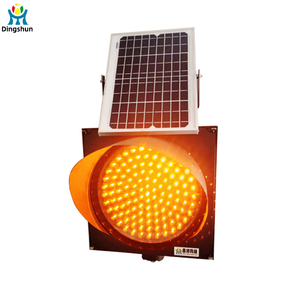
Engineered for high-speed highway junctions and hazardous road curves. Features an integrated monocrystalline PV panel and a sealed deep-cycle lithium pack ensuring 5-7 days continuous cloudy-weather autonomy.
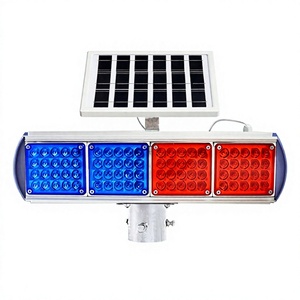
Designed for law enforcement checkpoints, median dividers, and toll plaza approach lanes. High-impact ABS shell with UV protection, featuring high-candela alternating red-blue police strobes visible beyond 1,000 meters.
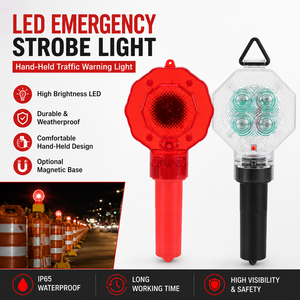
Ultra-rugged handheld and barricade-mountable strobe unit. Constructed for rapid emergency response, nighttime utility repairs, and accident zone cordoning with intuitive one-touch tactical flash mode toggling.

Engineered for high-speed mountain bends and expressway interchange off-ramps. Combines 3M diamond-grade microprismatic reflective film with synchronized high-lumen Epistar LED directional arrays.

Wireless mesh-networked warning beacon utilizing RF synchronization algorithms to create continuous visual guiding corridors through extended highway repair zones, eliminating driver disorientation.
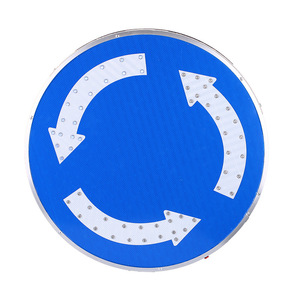
Combines standard regulatory speed limit signage with solar-powered ultra-bright LED perimeter flashers. Integrates optional microwave radar to trigger flashing only when speeding vehicles approach school zones.
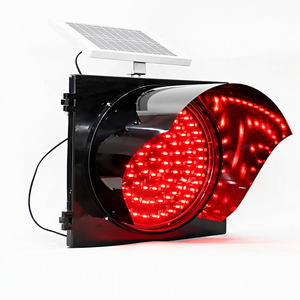
Commercial-grade 360-degree omnidirectional warning beacon. Fitted with an ultra-thick polycarbonate fresnel lens dome and hermetically sealed against corrosive marine environments, industrial docks, and rail junctions.
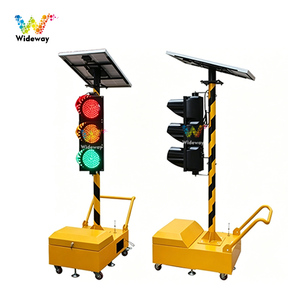
Turnkey temporary traffic management workstation featuring master-slave wireless RF synchronization across 200-800 meters. Includes collapsible mast, directional shade hoods, and solar-charging lithium reserve.
Solar flasher beacons deployed along international corridors operate in extreme thermal cycles ranging from sub-zero Alpine highways to high-heat Middle Eastern desert expressways. Reliability requires an uncompromising approach to solid-state lighting and power conservation.
Our Tier-1 manufacturing facilities implement proprietary pulse-width modulation (PWM) constant-current drivers operating at 50–60 flashes per minute with an engineered duty cycle of 12.5%. This maintains maximum human retinal persistence (Broca-Sulzer effect) while reducing battery energy draw by up to 73% compared to conventional continuous-flash drivers.
| Subsystem | Standard Market Spec | China Industrial Grade |
|---|---|---|
| PV Panel | 15-17% Polycrystalline | 21.8% Mono-PERC / Shingled |
| Battery Cell | AGM VRLA (1-2 Year Life) | Automotive LiFePO4 (7-10 Year Life) |
| Housing Enclosure | Recycled ABS / Sheet Iron | Virgin UV-Stabilized PC / ADC12 Alloy |
| Optic Compliance | Generic Diffuser | ITE / MUTCD Section 4L / EN 12352 |
| Continuous Autonomy | 48–72 Hours | 120–168 Hours (7 Full Cloudy Days) |
How transport ministries, concessionaires, and general contractors are updating their B2B tender requirements for intelligent solar traffic warning infrastructure.
Procurement bids now actively disqualify isolated, unsynchronized flashing beacons for roadwork zones. Modern tenders demand RF 2.4GHz or sub-1GHz LoRa mesh modules that automatically discover neighboring beacons and synchronize flash sequences within ±2 milliseconds. This creates an organized, moving light pattern that prevents spatial disorientation during adverse night driving conditions.
B2B buyers are enacting stringent life-cycle costing (LCC) requirements. Lead-acid and AGM batteries suffer irreversible sulfation in high-heat geographies (+50°C surface temperatures inside metallic housings). Global exporters are transitioning entirely to modular LiFePO4 and next-generation Sodium-ion batteries, extending maintenance intervals from 14 months to over 8 years.
The standard "always-on" amber flashing beacon is being replaced by demand-responsive warning systems. Integrated 24GHz K-band Doppler radar units monitor upstream traffic velocity. Flasher beacons remain in ultra-low quiescent sleep modes (consuming <0.05W) until an over-speed vehicle is detected, instantly triggering high-frequency bursts that yield 300% greater driver compliance.
Highway concessionaires are mandating rapid-swap mechanical designs. Field service crews can no longer spend 45 minutes on elevated cherry-pickers disassembling signal housings. Current China manufacturing best practices feature hinged, spring-latched poly enclosures that allow battery pack and optical engine replacements in under 90 seconds without specialized hand tools.
Multinational EPC contractors bidding for World Bank, Asian Development Bank (ADB), and European infrastructure tenders must now submit verified Product Carbon Footprint (PCF) reports. Tier-1 Chinese manufacturers provide ISO 14067 life-cycle carbon tracking, certifying the net-zero operational profile of self-sustaining solar beacon assets over their service lifetime.
Municipal departments are consolidating flasher maintenance into centralized SCADA platforms. Using 4G NB-IoT or satellite telemetry chips, modern solar beacons transmit real-time battery voltage curves, panel degradation data, LED circuit continuity, and tamper/knock-over alerts directly to city maintenance dashboards, shifting road safety from reactive to predictive maintenance.
Use this technical comparison matrix to qualify supplier proposals, prevent vendor undersizing, and verify critical photometric metrics.
| Engineering Parameter | Type A: 200mm / 300mm Round Beacon | Type B: Chevron Directional Sign | Type C: Radar Activated Speed Sign |
|---|---|---|---|
| Primary Target Application | Unsignalized intersections, mid-block crossings, median noses | High-speed expressway curves, off-ramps, roundabouts | School zones, industrial work sites, steep descents |
| Luminous Intensity (Daytime) | ≥ 800 cd (Class L8H per EN 12352) | ≥ 400 cd per arrow vertex cluster | ≥ 1,200 cd high-output flashing halo |
| Dominant Wavelength | Amber: 590nm ± 3nm; Red: 625nm ± 4nm | Amber: 590nm; White: 6500K | Red: 625nm; Amber: 590nm; Ultra-bright |
| Solar PV Module Rating | 10W – 20W Monocrystalline (Grade A) | 15W – 30W Integrated / Remote Mast | 30W – 50W High-Capacity Mono-PERC |
| Energy Storage Capacity | 12.8V 6Ah – 12Ah LiFePO4 | 12.8V 12Ah – 18Ah LiFePO4 | 12.8V 24Ah – 36Ah Automotive Grade |
| Viewing Distance & Angle | > 800m (Clear Atmosphere) / 30° Cone | > 1,000m / Horizontal 60°, Vertical 25° | > 600m / Horizontal 45° Cone |
| Ingress Protection & IK Rating | IP65 (Silicone Sealed) / IK08 | IP65 (Aluminum Encapsulation) / IK09 | IP66 Enclosure / Polycarbonate Face IK10 |
| Operating Temperature | -35°C to +75°C (-31°F to +167°F) | -40°C to +80°C (-40°F to +176°F) | -30°C to +70°C (-22°F to +158°F) |
| International Compliance | MUTCD Section 4L, EN 12352, CE, RoHS | MUTCD Section 2C.09, ASTM D4956 Type IX | MUTCD Section 2B.13, CE, FCC Part 15 |
Direct-from-factory engineering control delivering verified consistency, strict quality assurance, and tender-compliant customization.
In-house high-speed Yamaha SMT lines place high-flux automotive-grade LED chips on heavy copper immersion-gold PCBs with 100% Automated Optical Inspection (AOI).
Every production batch undergoes 48-hour continuous burn-in at +60°C, extreme salt-spray chambers (ASTM B117 240h), and rigorous IP68 sub-aquatic pressure immersion validation.
Whether matching Indian NHAI/PWD specifications, American AASHTO/MUTCD manuals, or European CE/EN 12352 regulations, our engineering team custom-calibrates flash rates and housings.
Experienced in container-load and project-palletized consolidations to 80+ nations, featuring UN38.3, MSDS, and CE battery air/sea transit certifications with zero customs friction.
Direct technical answers addressing the key procurement challenges faced by transport authorities, MEP consultants, and international safety equipment distributors.
Proper sizing is governed by solar insolation data (Peak Sun Hours, PSH) specific to the target latitude. We calculate the daily watt-hour (Wh) consumption of the LED driver circuit operating at nominal duty cycle: Edaily = Vsys × Iavg × 24h. In temperate or monsoon climates where PSH drops below 2.0 kWh/m²/day in winter, we configure an energy autonomy factor (A) of 7 to 10 days.
Battery capacity is specified such that 7 days of non-charging operation consumes no more than 70% of total LiFePO4 nameplate capacity, completely preventing deep-discharge low-voltage disconnect (LVD) events. Solar PV wattage is sized with a 1.6x–2.0x oversizing factor relative to daily consumption to enable complete battery recharging within 4 hours of direct solar exposure following prolonged inclement weather.
The US Manual on Uniform Traffic Control Devices (MUTCD) Section 4L primarily governs flashing beacons used at intersections, pedestrian crossings (RRFBs), and hazard markers, mandating a flash frequency of 50 to 60 flashes per minute with continuous visibility of at least 400 meters under normal daytime atmospheric conditions.
European Standard EN 12352 categorizes warning devices into specific performance classes (such as L2H, L8H, and L8M). EN 12352 establishes strict mathematical thresholds for luminous intensity (cd), effective light area (Aeff), beam distribution angles, and phantom light resistance (the ratio of emitted signal to reflected ambient sunlight). Our factory calibrates LED driving currents, Fresnel refractive lens matrices, and sun visors to ensure full compliance with either standard based on project tender specifications.
Lead-acid (AGM and Gel) batteries have an extremely low cycle life (300–500 cycles at 50% DOD) and exhibit severe capacity degradation under elevated ambient temperatures. For every 10°C increase above 25°C, lead-acid service life is halved. Under harsh highway conditions where enclosure internal temperatures often exceed 55°C, lead-acid batteries frequently fail within 12 to 18 months, requiring expensive bucket-truck dispatches.
In contrast, Lithium Iron Phosphate (LiFePO4) chemistry offers over 3,000 cycles at 80% DOD, operates stably up to +65°C without thermal runaway, has a 4x higher gravimetric energy density (reducing pole top-heavy wind-load stress), and maintains a flat discharge voltage curve, ensuring steady LED luminous intensity until the battery is depleted.
Our synchronized warning beacons utilize low-power 2.4GHz ISM-band RF transceivers or sub-GHz LoRa modules arranged in a self-healing mesh topology. Rather than requiring continuous line-of-sight to a single master controller, each beacon acts as both a receiver and repeater, hopping communication packets across distances of up to 1,500 meters along a construction corridor.
The units exchange time-synchronization micro-beacons every 10 to 60 seconds, maintaining clock sync within ±2 milliseconds. This enables sequential chase modes (guiding drivers through diversions) or simultaneous flash modes (commanding absolute intersection attention) without any inter-connecting cables.
Low-cost solar beacons made from uninhibited general-purpose styrene or cheap PMMA resin turn yellow and brittle within 18 months under intense solar ultraviolet radiation, causing transmission losses of up to 45%. We construct all optical domes and signal lenses using virgin, optical-grade Bayer Makrolon or Sabic Lexan polycarbonate formulated with chemical UV-stabilizers.
Additionally, lenses undergo a secondary thermo-cured silicone hard-coating process that provides ASTM D1003 haze ratings below 1.0% after 3,000 hours of accelerated Xenon-arc weatherometer testing, while increasing surface scratch resistance to protect against windborne desert sand abrasion.
Because solar flasher beacons contain internal lithium energy storage, air and sea freight forwarding falls under UN 3481 (Lithium ion batteries contained in equipment) or UN 3171. We provide a comprehensive compliance dossier with every export shipment, including:
Yes. Our commercial OEM/ODM product lines support cellular IoT expansion boards (NB-IoT / LTE-M). The beacons communicate via open-standard lightweight protocols such as MQTT, JSON, or CoAP over TLS encryption. Real-time telemetry exposes data points including battery state-of-charge (SOC), PV array input current, ambient temperature, LED forward-voltage health, and tilt/impact accelerometer alerts if a vehicle strikes the support mast.
For standard catalog configurations (200mm/300mm solar beacons in standard amber or red), our baseline Minimum Order Quantity (MOQ) is 10 units, with typical production dispatch within 7 to 10 business days. For customized projects requiring tender-specific mounting brackets (universal banding, 76mm pole clamp, square tube adaptors), custom stencil sheeting (3M DG3), non-standard flash rates, or bespoke branding, the MOQ is 50 to 100 units with a production lead time of 15 to 25 calendar days.
Standard lithium cells cannot be charged below 0°C without causing irreversible metallic lithium plating on the anode, which leads to internal short-circuits. For high-latitude tenders (Nordic countries, Canada, Northern China, Hokkaido), we engineer our beacons with low-temperature LiFePO4 cells or integrated ultra-thin self-heating polyimide films.
The Battery Management System (BMS) continuously monitors internal cell temperatures. When solar power is detected at sub-zero conditions, the controller directs PV power to the heating element until cell temperatures reach +5°C, at which point normal charging resumes. High-grade closed-cell aerogel insulation surrounds the battery enclosure to retain internal heat throughout the night.
All export-grade solar flasher beacons are backed by a standard 3-year factory warranty, extendable to 5 years for major public infrastructure tenders. The overall system Mean Time Between Failures (MTBF) exceeds 80,000 continuous hours. In the rare event of a component failure, our modular sub-assembly design enables field maintenance crews to swap out pre-calibrated LED optical engines or modular BMS controller pods within minutes.
We supply a mandatory 2% to 5% critical spare parts package (swappable controller drivers, silicone seals, and mounting clamps) alongside all major container shipments to eliminate project operational delays.