
High-luminous output modules built to stringent European EN 12352, US MUTCD, and international civil infrastructure requirements for unshaded reliability.
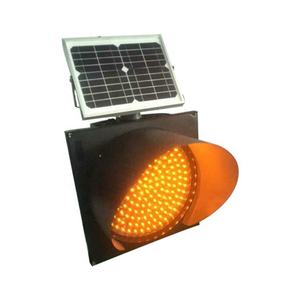
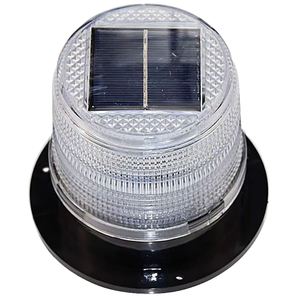
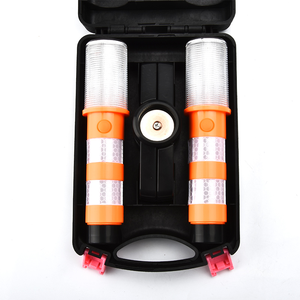
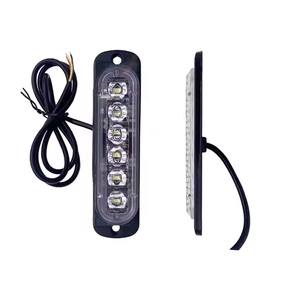
Sourcing solar beacon lights directly from tier-1 original equipment manufacturers eliminates distributor margins and enforces structural integrity. Designed to bridge extreme geographic conditions—from searing Middle Eastern deserts to humid coastal corridors and freezing alpine roads—our industrial warning luminaires satisfy rigorous operational criteria.
We deploy high-efficiency mono-crystalline solar panels (conversion rate >21.5%) coupled with automotive-grade LiFePO4 battery modules equipped with micro-BMS circuits to prevent thermal runaway and sub-zero depletion.
Utilizing high-intensity prismatic polycarbonate Fresnel lenses engineered with Bayer UV-stabilized resins, our beacons guarantee up to 1,200 meters of optical range in dense fog, rainstorms, and intense daytime glare.
All production runs are backed by factory-issued test certificates, photometric distribution charts, IP68 immersion data, and complete documentation aligned with ASTM, EN 12352, and national highway directives.
Detailed electrical, optical, and physical specifications to assist municipal project engineers, EPC highway contractors, and procurement officers.
| Beacon Category | Optical Architecture | PV & Power Configuration | Autonomy (Cloudy Days) | Typical Procurement Use Case |
|---|---|---|---|---|
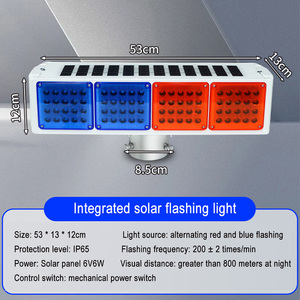
| High-Speed Highway Strobe | Ultra-bright Epistar LEDs (Amber/Red), >12,000 mcd per diode, 360° Fresnel lens | 10W–18W Integrated Mono-Si Panel, 12V 12Ah LiFePO4 battery bank | > 7–10 Consecutive Days | Expressway exit approaches, median divides, bridge parapets, sharp mountain bends. |
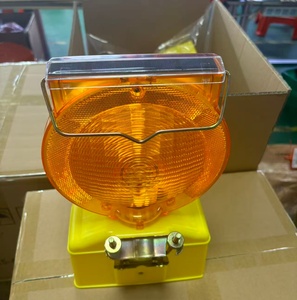
| Work Zone Barricade Light | Bi-directional dual-LED array with optical reflective prismatic border | 3W–5W Integrated Poly/Mono PV, 3.2V 3000mAh Lithium cell | > 120 Hours Continuous Flash | Temporary urban roadwork, construction delineators, lane shifts, jersey barriers. |
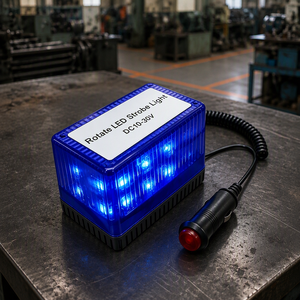
| Emergency Vehicle Beacon | Synchronized SMD 3535 LED clusters with multi-flash frequency controllers | High-absorption top-mount solar array with secondary 12/24V magnetic DC jack | > 36 Hours Active Strobe | Utility service fleets, highway maintenance trucks, heavy escort vehicles. |
| Chevron / Directional Diverter | Microcontroller-governed arrow sequence, amber/yellow high-contrast aspect | 15W–30W Independent adjustable solar module, sealed gel/LiFePO4 battery | > 5–7 Days Full Load | Toll plaza bottlenecks, high-speed divergence ramps, acute horizontal curves. |
How intelligent connectivity, next-gen lithium chemistry, and smart transportation systems (C-V2X) are reshaping global traffic safety bids.
Traditional Lead-Acid and early-generation Ternary Lithium batteries have fallen out of favor for large-scale international infrastructure tenders. Future procurement mandates specify LiFePO4 (Lithium Iron Phosphate) or emerging Sodium-ion batteries, which maintain exceptional capacity retention even across ambient operating limits of -30°C to +75°C without the risk of thermal runaway.
This eliminates site visits for battery replacements, cutting the total cost of ownership (TCO) across 5- to 8-year concession periods.
Randomly blinking warning lights cause cognitive overload and sensory fatigue for high-speed motorists. Advanced municipal road contracts now require GPS or Sub-1GHz RF synchronized flash patterns.
A string of consecutive chevron lights or median beacons can pulse sequentially—creating a dynamic runway-style guidance effect that reduces run-off-road collisions by an estimated 37% along unlit rural corridors.
With the global rise of autonomous driving and connected roadways, solar beacons are no longer isolated passive hardware. Modern procurement tenders evaluate beacons equipped with NB-IoT telemetry modules that transmit real-time battery voltage, photovoltaic generation, and LED burnout alerts to centralized municipal control rooms.
Future models will integrate short-range radar triggers that switch the flash profile from low-power caution mode to ultra-intense strobe mode upon vehicle detection.
When evaluating China solar beacon light factories, overseas distributors frequently struggle to separate genuine ISO 9001-certified manufacturing plants from intermediary trading desks. Low-cost tenders often cut corners by installing recycled 18650 lithium cells, non-UV treated styrene housings that turn brittle and yellow within 90 days, and substandard low-efficiency solar cells.
Always request a certified Bill of Materials (BOM), verifying that the optical shell utilizes virgin SABIC Lexan Polycarbonate and genuine Cree, Osram, or Epistar LED dies.
Standard off-the-shelf catalog models often fall short when submitting bid binders to public works bodies such as India's NHAI, the UK Highways Agency, or American state DOTs. A competitive direct exporter must provide rapid tooling adjustments: from dual-tone custom flash rhythms to localized pole-clamp bracket fabrication (e.g., 76mm, 89mm, or 114mm steel uprights).
Direct factory collaboration allows you to modify firmware, integrate dusk-to-dawn photocells, and tailor optical diffusion to match any region-specific road safety codex.
Straightforward, technical answers regarding specifications, MOQ, testing protocols, and export logistics.
Eliminate middleman costs, secure turnkey compliance documentation, and receive tailored technical quotations for your road safety and infrastructure projects.