
Precision-manufactured solar and electricity blinker units engineered for municipality-grade pedestrian protection, roundabouts, median divergences, and active work zones.
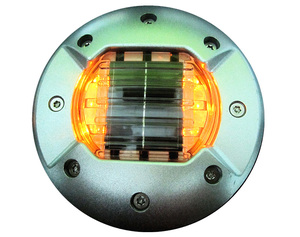
Heavy-duty cast aluminum housing engineered for crosswalk boundaries and lane delineations. Delivers over 30 tons compressive resistance with integrated high-output micro-prismatic LED optics.
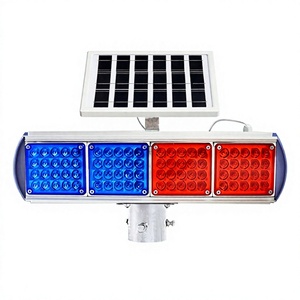
Dual-color optical flasher with UV-stabilized engineering polymer shell. Optimal for non-signalized crosswalk warning posts, school zones, and emergency rapid-deployment barriers.
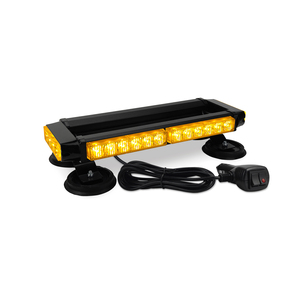
Industrial-grade 72W luminous strip utilizing neodymium magnetic retention for vehicle and structural mounting. High candela pulse arrays overcome harsh meteorological interference.
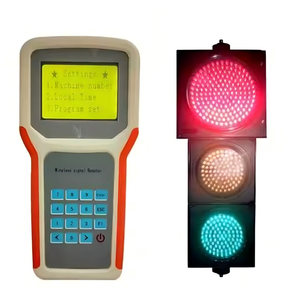
Programmable optical signal head with integrated wireless RF remote command receiver. Allows traffic operators to trigger pedestrian warning and vehicle halt sequences remotely.
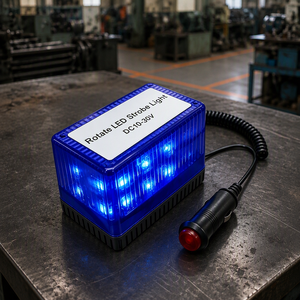
Targeted sign illumination matrix combining static traffic sign graphics with ultra-bright peripheral LEDs. Multiplies driver reaction buffer times by up to 300% in twilight environments.
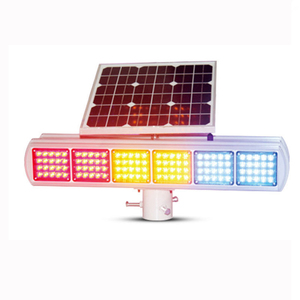
Bidirectional multi-chromatic rapid warning flasher. Features high-efficiency mono-crystalline photovoltaic charging tailored for median refuge islands, roundabouts, and pedestrian refuges.
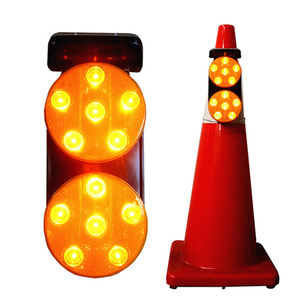
Intelligent cascading synchronized flasher matrix. Wireless inter-unit synchronization creates visual continuous wave patterns that safely guide traffic past crosswalk workzones and shifts.
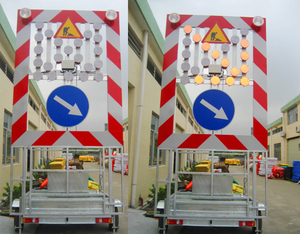
Heavy industrial trailer-mounted active diversion array. Full matrix flashing arrow and regulatory cross patterns deliver definitive lane control at major urban crosswalk overhauls.
Direct factory supply chain eliminating trading markups, anchored by complete in-house testing, strict specification compliance, and end-to-end international homologation.
Built directly to municipal and national road authority standards including NHAI, PWD, BRO, and fully customizable to European EN12368 and American MUTCD Class I specifications.
We do not guess solar capabilities. Photovoltaic panel wattage and LiFePO4 battery storage are mathematically matched to your site’s historical sun hour data to ensure 5–7 continuous rainy days backup.
Engineered flexibility across optical lens diameters (200mm, 300mm), housing materials (extruded aluminum, UV polycarbonate), flashing patterns, and bespoke mounting brackets.
Eliminate mid-tier supply chain costs. Direct delivery with protective internal shock foam, export-compliant palletization, and exhaustive technical dossiers for rapid port clearance.
Pedestrian fatalities represent one of the most critical structural challenges in modern municipal traffic engineering. According to global road safety statistics, crosswalk locations account for over 30% of non-motorized urban casualties, primarily during low-illumination dawn, dusk, and inclement weather periods. Traditional static reflective signage relies solely on vehicle headlights, which fail to deliver adequate reaction windows when headlights are obscured, misaligned, or when motorists are traveling at elevated corridor velocities.
Active crosswalk warning lights—including in-pavement bidirectional flashing studs, overhead Rectangular Rapid Flashing Beacons (RRFB), and synchronized peripheral sign strobe lights—transform passive junctions into high-visibility safety zones. By incorporating optical beam dispersion lenses and intense pulse duty cycles (typically 50–60 flashes per minute), active systems increase motorist yielding rates from under 20% to over 85%, fundamentally mitigating rear-end collisions and pedestrian impacts.
A frequent procurement dilemma faced by EPC contractors and municipal roadway bureaus is deciding between off-grid photovoltaic architectures and hardwired AC 110V/220V grid infrastructure. The decision is primarily dictated by trenching costs and site topology.
| Evaluation Parameter | Solar-Powered DC Systems | Hardwired Electricity (AC) Systems |
|---|---|---|
| Installation Cost | Low: Zero pavement trenching, trench restoration, or conduit laying. | High: Heavy excavation required for underground cabling across lanes. |
| Deployment Speed | Rapid: Units can be erected and operational within 2–4 hours per pole. | Moderate to Slow: Requires civil electrical permits, coordination, and sub-meters. |
| Operational Reliability | Dependent on battery sizing; requires 5–7 days autonomy reserves. | 100% steady, subject only to municipal electrical grid up-time. |
| Ideal Application | Highways, rural junctions, isolated crossings, suburban boulevards. | Dense CBD corridors with continuous tree canopies or high-rise shading. |
| Maintenance Cycle | LiFePO4 battery renewal every 5–8 years; panel surface dusting. | Periodic surge suppressor and step-down power supply checks. |
To withstand brutal thermal cycles, abrasive road salt, UV degradation, and localized atmospheric corrosion, professional crosswalk lights must adhere to exacting manufacturing thresholds. Housing bodies constructed from high-pressure die-cast aluminum alloys (such as ADC12) provide superior mechanical shock protection and efficient thermal heat dissipation for solid-state LED arrays, maintaining optical efficiency across extreme ambient windows (-40°C to +80°C).
Optical diffusers must feature UV-stabilized polycarbonate with cobweb anti-glare prisms. Glare mitigation is critical: the warning signal must shock driver vigilance without inducing temporary retinal blindness, which would endanger the pedestrian crossing the corridor. Strict adherence to photometric standards—such as chromaticity coordinates for traffic amber (589–593nm) and signal red (620–630nm)—guarantees universal driver comprehension and rapid recognition across varying visual conditions.
Where urban mobility is heading: examine the transition from disconnected flashing hardware to integrated, intelligent, and interactive edge-sensing crosswalk ecosystems.
The procurement landscape is pivoting toward automated activation. Next-generation systems eliminate physical push buttons in favor of integrated thermal sensors, millimeter-wave (mmWave) radar, and AI cameras. These sensors detect pedestrian approach trajectories, dynamically triggering crosswalk flashers and adjusting pulse intensity based on approaching vehicle speeds.
Modern municipality bids increasingly mandate Vehicle-to-Everything (V2X) readiness. Warning lights are transitioning into connected edge nodes. Embedded C-V2X transceivers communicate directly with autonomous vehicles and in-car infotainment dashboards, broadcasting localized pedestrian hazard alerts up to 300 meters upstream before direct optical sightlines are established.
Environmental longevity expectations have doubled. Lead-acid and traditional ternary lithium cells are entirely obsolete in premium project tenders, replaced by Lithium Iron Phosphate (LiFePO4) and supercapacitor arrays. Integrated ambient light sensors automatically scale LED lumen outputs between blinding daytime sunlight and sensitive night-time environments.
Procurement errors generally stem from underspecified technical parameters. When submitting tenders or requesting quotations from Chinese manufacturing facilities, ensure your engineering RFQ incorporates the following mandatory criteria:
Clear answers addressing production minimums, custom engineering, regulatory compliance, and worldwide logistical fulfillment.
Our cast aluminum embedded studs utilize an automated vacuum potting process with high-grade structural epoxy resin. This eliminates air pockets and hermetically seals the PCB, batteries, and LED leads within an impermeable block, ensuring continuous IP68 ingress protection under continuous immersion and up to 30 tons of dynamic vehicular wheel loading.
Yes. For high-latitude regions (e.g., Scandinavia, Canada, Northern UK) experiencing short winter daylight, we custom-engineer the system architecture. We scale up the mono-crystalline solar collector surface area, utilize high-density LiFePO4 cells rated down to -40°C, and implement specialized ultra-low-power microcontrollers with intelligent adaptive PWM dimming.
Our production lines produce traffic control heads fully conformant with international standards. We supply units with verified photometric compliance for class 1 and class 2 luminous intensities under EN 12368, and configured with Rapid Flashing Strobe patterns satisfying US Federal Highway Administration MUTCD Section 4L.03 requirements.
We exclusively integrate automotive-grade A-tier Lithium Iron Phosphate (LiFePO4) battery packs, which deliver over 2,000 to 3,000 complete charge-discharge cycles at 80% depth of discharge (DoD). This translates to a maintenance-free field operating life of 6 to 8 years, outlasting traditional lead-gel alternatives by more than 300%.
Yes. Our signals feature integrated 433MHz / 868MHz / 915MHz industrial ISM-band wireless transceivers. Dual warning signs across multi-lane highways or pedestrian refuge islands synchronize their strobe intervals with microsecond precision up to 500 meters without requiring physical interconnect cables.
We supply complete documentation packs required by civil contractors, including photometric IES test files, IP ingress test certificates, CE/RoHS declarations of conformity, mill material test reports for cast aluminum components, electrical schematics, and comprehensive factory warranty statements.