
Precision-engineered strobe beacons and optical warning arrays tested to harsh environmental, solar autonomy, and vehicular vibration parameters.
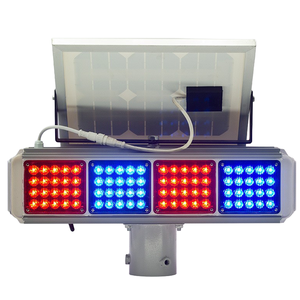
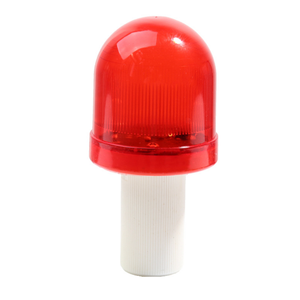
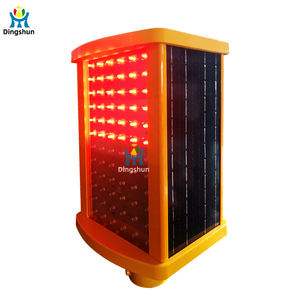
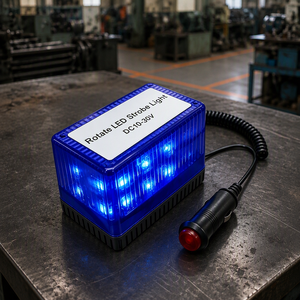
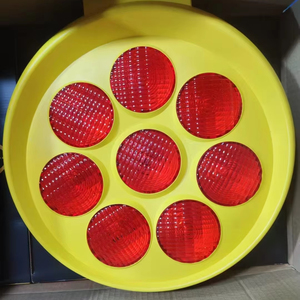
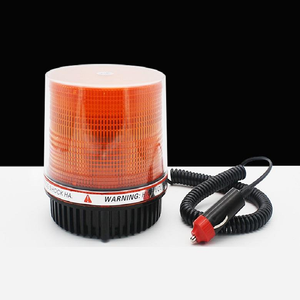
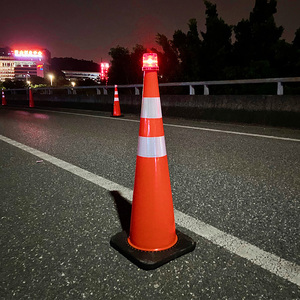
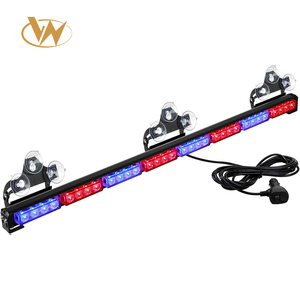
Industrial comparison of tier-1 production hubs across photometric precision, materials endurance, certification velocity, and end-to-end supply chain traceability.
Top-tier factories employ goniophotometer darkrooms to ensure strict adherence to CIE 1931 chromaticity coordinates (Amber 589–593nm, Red 620–630nm, Blue 460–470nm).
Industrial strobes face continuous exposure to torrential monsoon rains, saline maritime winds, sandstorms, and thermal swings from -30°C to +75°C without dielectric breakdown.
True off-grid safety mandates military-grade Maximum Power Point Tracking (MPPT) micro-controllers paired with chemical batteries capable of over 3,000 deep discharge cycles.
Leading exporters manufacture strictly aligned with target sovereign engineering manuals rather than delivering generic consumer-grade novelty blinkers.
Lens yellowing degrades luminous output by up to 60% within 18 months under tropical UV exposure. Exporters of repute utilize virgin Makrolon/Lexan optical resins.
Global infrastructure contracts require serialized production tracing, automated SMT component placement, clean-room optical assembly, and batch-level burn-in reports.
Quantitative B2B evaluation comparing factory profiles, price-to-performance ratio, and tender compliance viability.
| Manufacturing Cluster | Core Specialization | Optical Class Compliance | Battery Chemistry | Lead Time (B2B Tenders) | TCO Ranking |
|---|---|---|---|---|---|
| India (Ahmedabad Hub) | Heavy Infrastructure Solar Blinkers, NHAI/BRO Grade Sets | EN 12352 L8H, IRC:67-2012, MoRTH | Grade-A LiFePO4 / Advanced Gel | 2–4 Weeks (Fast-Tracked) | Top Tier (Best Value/ROI) |
| Germany (Bavaria Hub) | High-Speed Autobahn Warning Arrays, C-V2X Strobes | EN 12352 Class L9H, DIN EN 50293 | Lithium Titanate (LTO) / LiFePO4 | 8–14 Weeks | High Initial CapEx |
| United States (Texas/Ohio) | DOT / MUTCD Type A, B & C High-Intensity Beacons | FHWA MUTCD, ITE VTCSH Spec | Absorbent Glass Mat (AGM) / Lithium | 6–10 Weeks | Premium Pricing |
| China (Shenzhen/Zhejiang) | High-Volume Commodity Mini Strobes & Vehicle Lightbars | CE, RoHS (Varying Optics) | Standard Ternary Li-ion / NiMH | 3–5 Weeks | Low CapEx / Moderate MTBF |
| Taiwan (Hsinchu Cluster) | High-CRI LED Packaging, Advanced Optics & TIR Lenses | JIS, CE, SAE J595 Class 1 | Industrial Grade LiFePO4 | 5–7 Weeks | Moderate-High |
Analysis of breakthroughs revolutionizing optical luminous efficacy, remote telematics telemetry, and autonomous microgrid resilience.
Traditional convex lenses bleed up to 45% of emitted photons into non-critical angular planes. State-of-the-art strobes employ computer-optimized Total Internal Reflection (TIR) optical chambers. By redirecting horizontal dispersion precisely along the driver sight-line, these lenses achieve a 300% boost in perceived lux while cutting battery amp-hour draw in half.
Work-zone safety is shifting from uncoordinated flashing to synchronized traveling-wave beacons. Integrated 2.4GHz RF mesh controllers allow arrays of 20+ strobes to flash in sequential directional waves without interconnecting cables. Furthermore, embedded Doppler radar modules activate rapid-strobe warning modes only when approaching vehicles exceed speed thresholds.
Next-generation highway strobe assemblies integrate dual-sided bifacial photovoltaic arrays that harness albedo bounce-back from concrete pavement and vehicle light reflections. Paired with wide-voltage MPPT circuitry, system charging efficiency improves by 28% during heavy fog, dense monsoons, and extreme northern winter solstices.
The phaseout of heavy Sealed Lead Acid (SLA) cells is accelerating due to environmental mandates and poor thermal resilience. Modern strobe assemblies standardize on LiFePO4 and Lithium Titanate (LTO) cells boasting 3,500+ operating cycles, integrated Battery Management Systems (BMS), zero maintenance outlays, and thermal stability up to 75°C.
Strobes are no longer purely visual warnings. Forward-looking factories are piloting Cellular Vehicle-to-Everything (C-V2X) transmitters inside the strobe housing. When the strobe fires, it concurrently broadcasts an SAE J2735 emergency alert directly into vehicle heads-up displays (HUD) and ADAS systems up to 1 kilometer away.
High-brightness LEDs driven at high pulse currents generate concentrated junction heat. Modern strobe light fixtures eliminate stamped sheet metal in favor of high-conductivity die-cast aluminum or magnesium alloy housings that double as structural chassis and thermal radiators, extending junction lifetimes beyond 100,000 hours.
Key economic, regulatory, and supply-chain developments governing institutional tender decisions over the next 5 years.
Procurement directors are aggressively shifting away from low-bid purchasing models that result in premature battery failure, clouded lenses, and recurring crane truck maintenance costs. Tenders now mandate 5-to-10 year warranted field readiness, favoring heavy-duty industrial housings with modular, field-replaceable sub-assemblies.
Geopolitical friction and single-region freight vulnerabilities have led multinational EPC contractors to diversify supply lines. India's world-class manufacturing corridor—led by hubs in Gujarat—has surged as the premier exporter of solar road signaling systems, combining European engineering tolerances with rapid maritime freight access to EMEA and APAC.
Infrastructure concessionaires face rigorous ESG audits. Deploying zero-emission solar blinkers over grid-tied AC infrastructure eliminates copper trenching, underground conduits, and grid transformer draws. Contractors report quantifiable Scope 1 and Scope 2 carbon offsets on national highway construction projects.
Headquartered in Ahmedabad, Gujarat, India, Enpowers International operates precision production lines delivering road safety lights across 20+ countries worldwide.
Fabricated at GIDC Phase-1, Vatwa, Ahmedabad. Complete internal ownership of LED placement, precision potting, and end-of-line testing.
Engineered and verified to strict National Highways Authority of India, Public Works Department, and Border Roads Organisation requirements.
Global supply chain compliance: custom voltages (12V, 24V, 110V, 230V), tailored lens sizes (200mm, 300mm), and seaworthy palletized packaging.
Our direct engineering team analyzes tender documents, delivering certified test reports, CAD mounting drawings, and exact photometric simulations.
Technical, regulatory, and logistics answers for traffic engineers, highway concessionaires, and procurement officers.
Under standard EN 12352, Class L8H designates high-intensity lights with an effective daylight luminous intensity of at least 1,500 Candelas on-axis, mandatory for high-speed expressways and highway lane tapers. Class L2H specifies lower intensity (typically 50 to 100 Candelas), designed strictly for night-time urban delineations, pedestrian refuges, and lower-speed city intersections.
Sizing uses the formula: [Daily System Current Consumption (Ah) x Required Autonomy Days] / [Peak Sun Hours (PSH) x Depth of Discharge (DoD) x System Derating Factor (~0.85)]. In equatorial or arid zones with 5 PSH, a standard 300mm strobe typically requires a 15W–20W solar module and an 11.1V 12Ah–18Ah LiFePO4 battery pack to ensure uninterrupted 10-day dark-sky autonomy.
While SLA batteries offer a lower initial purchase price, they suffer from short operational lifespans (300–500 cycles), extreme capacity loss under ambient temperatures exceeding 45°C, and heavy weight that strains pole brackets. LiFePO4 provides >3,000 cycles, operates reliably up to 65°C without sulfation, weighs 70% less, and maintains flat voltage discharge curves for consistent optical output.
Yes. While our domestic baseline aligns with Indian Road Congress (IRC:67 / MoRTH) and NHAI technical circulars, our export engineering lines configure flash rates, duty cycles, chromaticity bins, and electrical inputs to FHWA MUTCD Section 4L or EN 12352 / EN 50293 standards based on project tender documentation.
Traffic strobe lights, solar blinkers, and LED signal assemblies are generally exported under HS Code 8530.80.00 (Electrical signaling, safety or traffic control equipment for roads/highways) or HS Code 9405.42 (LED luminaires). Enpowers International issues certified Bills of Lading, Certificates of Origin, UN 38.3 battery safety compliance reports, MSDS, and commercial inspection test sheets.
All road safety strobe heads undergo a minimum 72-hour automated continuous thermal cycling burn-in and optical lux attenuation measurement. Standard warranty terms span 2 to 5 years depending on the specified battery chemistry and contract stipulations. Replacement LED light engines and electronic driver boards are cataloged for guaranteed long-term spare-parts availability.
Connect directly with our senior application engineering team in Ahmedabad to receive compliance matrices, tender documentation, photometric files (.IES), and competitive factory-direct pricing for your project.
Inquire Now