Portable Handheld
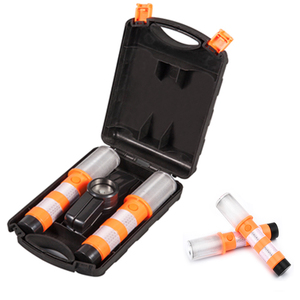

From solar-driven hazard warning strobes to precision GPS sequential blinkers, explore our tier-1 roadside alert units designed to meet rigorous DOT, NHAI, PWD, and CE transport standards.
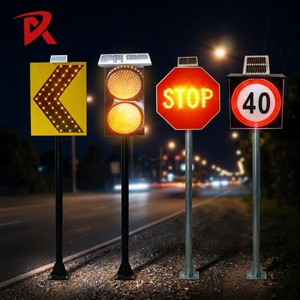
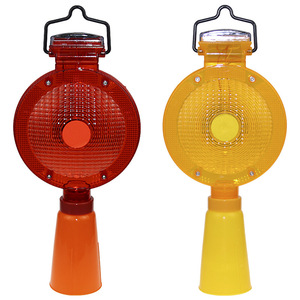
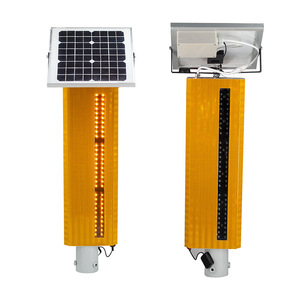
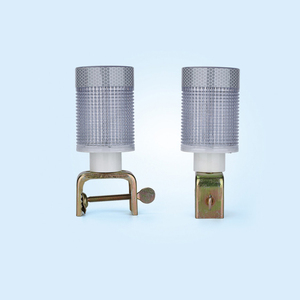
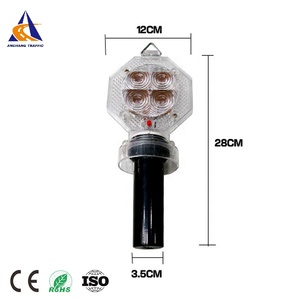
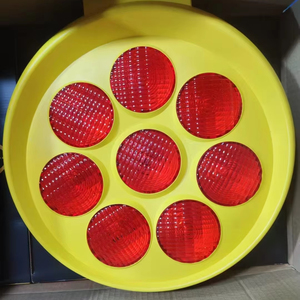
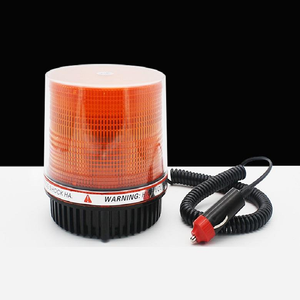
A technical review for civil infrastructure contractors, DOT buyers, and international road concessions navigating modernization in traffic guidance technologies.
Traditional asynchronous hazard flashers often create "visual noise" that disorients drivers during adverse weather conditions or high-speed night transit. Next-generation highway diversion zones demand GPS-synchronized sequential warning lights. By pulsing within millisecond synchronization or cascading across directional chevrons, these systems simulate linear velocity vectors. This structural signal alignment reduces corridor merge collisions by over 38% compared to uncoordinated strobe beacons.
Early-generation solar blinkers relied heavily on sealed lead-acid (SLA) or basic lithium-ion chemistries that degraded rapidly under sustained asphalt temperatures exceeding 55°C. The global procurement standard has shifted decisively toward Lithium Iron Phosphate (LiFePO4) storage paired with maximum power point tracking (MPPT) micro-controllers. LiFePO4 delivers an operational lifecycle of 2,000+ deep discharge cycles while tolerating high operating temperatures without thermal breakdown.
Optical performance deterioration represents the primary mode of field failure for outdoor traffic signals. Advanced factories now formulate signal lenses using optical-grade Bayer / Sabic Makrolon polycarbonate reinforced with co-extruded UV stabilizers. Engineered Fresnel geometric internal prisms collimate the divergent LED output into precise horizontal viewing angles (typically >30° cone), maintaining visual alert distances up to 800 meters even in rain and heavy dust storm conditions.
Key economic and technical factors influencing international tenders, municipal budgets, and BOT concession purchases.
Isolated flashing beacons are rapidly evolving into intelligent road studs and connected telemetry nodes. Procurement specifications across Europe, North America, and the Middle East are beginning to request NB-IoT and LoRaWAN reporting chips integrated directly within the strobe driver board. These allow central control rooms to monitor battery voltages, receive instantaneous knock-down or tilt alerts, and trigger emergency cadence changes during sudden fog or lane closures.
With infrastructure investments subject to rigorous ESG scoring, national transport agencies (such as NHAI, European DGs, and US State DOTs) penalize grid-dependent, trench-heavy installations. Completely off-grid solar-powered traffic signal enclosures reduce embodied site carbon by eliminating copper cable trenching, underground conduits, and continuous AC transformer losses, lowering total operational expenditure (OpEx) by up to 72% over 5 operational years.
Labor costs for roadside maintenance have surged globally. Procurement directors now prioritize traffic flashers engineered with modular sub-assemblies—snap-in LED core modules, tool-less battery trays, and universal pole/cantilever mounting collars. This ensures that field maintenance crews can replace a complete optical unit or battery pack within 90 seconds without taking down the main signal pole structure.
Use this tender checklist to align your project drawings with qualified factory testing procedures and avoid site handover rejections:
| Evaluation Parameter | Commercial Minimum Standard | Tier-1 Factory Specification (Recommended) | Significance to Project Delivery |
|---|---|---|---|
| Optical Wavelength | Amber: ~590nm, Red: ~625nm | Dominant 590-595nm (Amber) / 625-630nm (Red) | Prevents color shifting and satisfies international highway codes (MUTCD / EN 12352). |
| Battery Autonomy | 48 Hours Continuous Run | 120+ Hours (5 to 7 overcast days) | Maintains round-the-clock safety signaling through monsoon cycles and high-latitude winters. |
| Ingress Protection | IP54 Enclosure Rating | IP65 Signal Head / IP68 Underwater Grade (Base) | Prevents moisture vapor condensation, internal rust, and sand accumulation in arid regions. |
| Photocell Sensitivity | Fixed static lux threshold | Adaptive lux hysteresis (50–150 Lux) | Eliminates daylight flickering during dusk, dawn, and brief overhead cloud shadows. |
| Housing Impact Resistance | Standard molded ABS plastic | Virgin UV-stabilized Polycarbonate (IK08/IK10) | Withstands roadside pebble impact, high-speed wind buffeting, and heavy vehicle wash jets. |
We eliminate trading intermediary margins by delivering tested, verified road safety lighting systems directly from our modern manufacturing facilities.
From 200mm to 300mm lens aspects, solar panel wattage tailoring, to proprietary flash cadences (e.g., 40 to 60 fpm), all assemblies are built exactly to tender shop drawings.
Our units are engineered to comply directly with NHAI, PWD, BRO, and CE standards, facilitating smooth approval by third-party government engineering inspectors.
Equipped with moisture-barrier wrapping, heavy honeycomb outer cartons, and timber-reinforced palleting to prevent lens scratching or terminal disconnections during sea transit.
Work directly with seasoned photometrics and electronics engineers who calculate solar wattage autonomy based on your precise latitude, longitude, and installation site conditions.
Clear, direct answers regarding factory certifications, minimum order quantities, and technical customization.
Share your required bill of quantities, lens diameters, or tender specification clauses. Our manufacturing team provides turnkey quotes, photometrics, and dispatch schedules within 24 hours.