Precision-fabricated traffic safety warnings verified for intense climatic fluctuations, high-tonnage impacts, and zero-grid utility corridors.
Analyzing solid-state photovoltaic harvesting, optical refraction indexes, and mechanical load dissipation for global transport infrastructures.
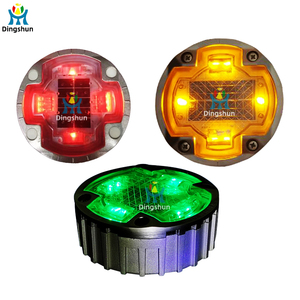
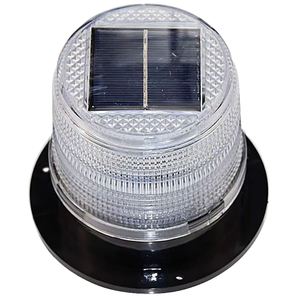
The global road safety ecosystem is transitioning from passive retro-reflective infrastructure toward active luminous road beacons and self-sustaining solar studs. In harsh highway environments, traditional delineators rely entirely on vehicle headlamp throw, which degrades exponentially in severe meteorological disruptions such as dense radiation fog, tropical downpours, or desert sandstorms. As a Tier-1 solar road beacon manufacturer and exporter, our engineering paradigm addresses the physics of visibility: high-intensity solid-state light-emitting diodes (LEDs) coupled with omnidirectional Fresnel lenses project visual warnings up to 1,000 meters, granting drivers an estimated 12 to 15 seconds of additional cognitive reaction time at highway velocities.
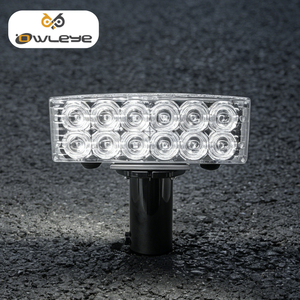
Achieving prolonged field survival necessitates robust mechanical packaging. Our heavy-duty aluminum road beacons and embedded studs, such as the IP68-rated 30-ton load-bearing models, utilize die-cast aviation-grade ADC12 aluminum enclosures sealed via vacuum resin potting. This level of physical integration ensures zero internal moisture condensation, complete ingress prevention against pressurized water jets, and resilience under dynamic axial compression caused by heavily loaded multi-axle freight vehicles. Microcontroller-driven pulse width modulation (PWM) governs the flashing duty cycles, mitigating thermal runaway in the LED junction while prolonging autonomy during prolonged solar deficits.
Key technical shifts procurement directors and EPC concessionaires must evaluate during infrastructure project bidding.
Global highway departments are systematically disqualifying legacy nickel-metal hydride (Ni-MH) and lead-acid chemistries. Sourcing is shifting toward LiFePO4 cells offering >3,000 thermal cycles and uncompromised depth-of-discharge from -20°C to +75°C.
Tender stipulations increasingly mandate micro-second synchronization across successive highway curve beacons. Utilizing 2.4GHz RF or GNSS pulse-per-second triggers, sequential flashing visually guides motorists along sharp geometric deviations, lowering curve rollover incidence.
Next-generation solar warning beacons are functioning as edge nodes in Cooperative Intelligent Transportation Systems (C-V2X). Built-in short-range wireless modules report battery health, ambient lux levels, and localized fog warnings back to central SCADA network consoles.
Essential parameters benchmarked across international standards (NHAI, AASHTO, EN 12352).
| Evaluation Parameter | Engineering Specification | Operational Significance for Infrastructure |
|---|---|---|
| Compressive Resistance | ≥ 30 Metric Tons (Cast Aluminum / Cast Steel) | Guarantees structural survival against repeated high-speed axle impacts from commercial trucking. |
| Ingress Protection | IP68 (Hermetically Sealed with Optical Resin) | Prevents subterranean water seepage during prolonged submersions in tropical monsoon flash floods. |
| Photovoltaic Conversion | Monocrystalline Silicon (≥ 21.5% Efficiency) | Ensures efficient charging current recovery even on heavily overcast, rainy, or dusty operating days. |
| Luminous Output & Throw | Ultra-bright Epistar LEDs (≥ 5000 mcd per node) | Achieves chromatic penetration exceeding 800m to 1000m through heavy precipitation and nocturnal conditions. |
| Autonomy Duration | ≥ 120 to 168 Hours continuous flashing without sun | Maintains round-the-clock safety signaling throughout protracted seasonal storms and monsoons. |
Direct-from-plant fabrication ensuring precision quality control, tender compliance, and scalable production capacity.
Headquartered in Ahmedabad, Gujarat, India, with production at GIDC Phase-1, Vatwa. Every unit undergoes automated optical bench testing and pressure validation prior to dispatch.
Configured strictly to specifications mandated by NHAI, PWD, and BRO. Flexible engineering allows custom compliance with American AASHTO and European EN benchmarks.
Exporting to over 20 countries worldwide. Providing complete ocean palletization, phytosanitary fumigation, customs documentation, and engineering verification certificates.
Bespoke modification of LED color wavelength (Amber, Red, Blue, Green, White), mounting brackets, solar wattages, and housing finishes to match exact tender drawings.
Addressing critical considerations in design lifecycle, environmental resilience, and project delivery schedules.
Enpowers International is an engineering-driven manufacturer headquartered in Ahmedabad, Gujarat, India, with localized production at GIDC Phase-1, Vatwa. We handle raw casting, surface coating, SMD LED assembly, potting, and photometric QC testing entirely in-house without trading intermediaries.
Our optical and battery subsystems are engineered for balanced current consumption. Utilizing smart pulse circuitry and high-efficiency monocrystalline solar panels, our beacons maintain between 5 to 7 days (120–168 hours) of complete operational autonomy under zero-sunlight conditions.
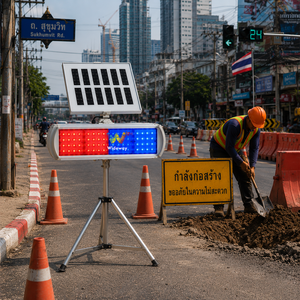
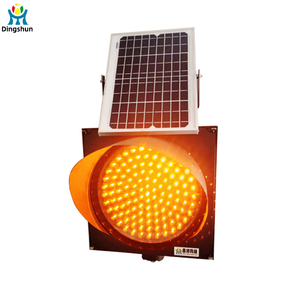
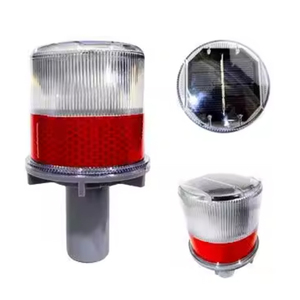
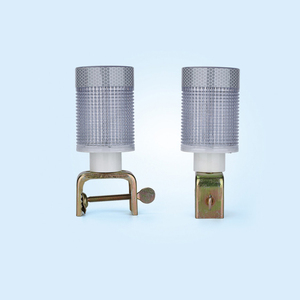
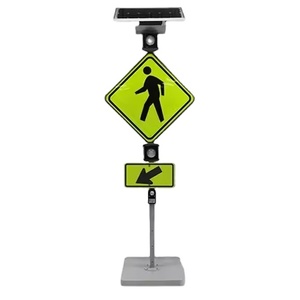
Embedded aluminum/steel road studs are applied within the carriageway, lane split lines, and median edges to manage continuous tire-overrun loads up to 30 tons. Elevated solar strobe beacons are deployed along safety islands, toll canopies, work zone barricades, and sharp curves where long-distance line-of-sight elevation is critical.
Yes. We offer fully customizable LED configurations including amber caution flash, alternating red/blue police strobe patterns, directional arrows, and green status indicators. Flash rates are adjustable between 40 to 60 flashes per minute or tailored to exact regional traffic codes.