
Precision-molded polycarbonate lenses, intelligent micro-controllers, and integrated photovoltaic harvesting modules designed for zero-maintenance highway safety.
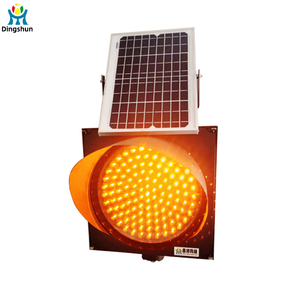
Heavy-duty transportable beacon engineered with a reinforced ABS polymer chassis, integrated monocrystalline harvesting array, and multi-angle 360-degree yellow optic modules for immediate incident management.
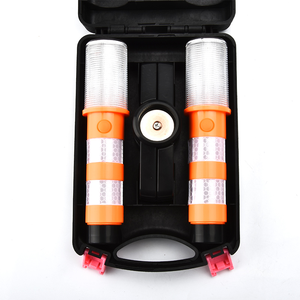
Dual-color optical signaling device featuring high-intensity prismatic reflective collars and industrial neodymium magnetic clamping for rapid attachment to construction vehicles, guardrails, and metallic barrier walls.
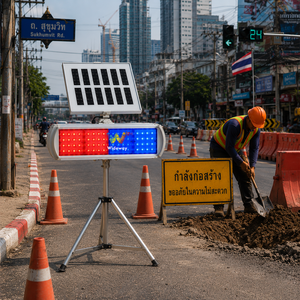
Ultra-intense emergency strobe configuration utilizing synchronized red and blue pulsing diodes to penetrate severe atmospheric fog and nocturnal conditions along high-speed expressway rehabilitation corridors.
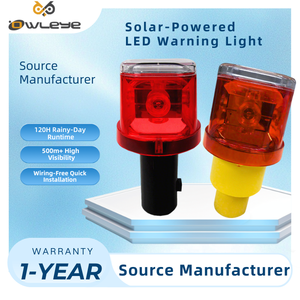
Engineered for extended cloud-cover operation with a proprietary low-drain driver circuit, yielding 120 continuous hours of operational buffer across commercial parking lots and construction boundary zones.

Ruggedized equipment indicator built for heavy civil machinery, pavers, excavators, and temporary barricading, complete with rapid USB/DC charging and multi-pattern flash selection.
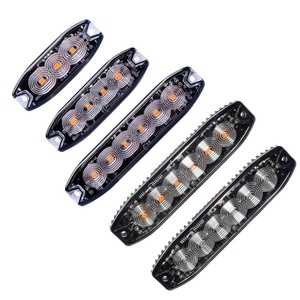
Flush-mount perimeter strobe warning modules encased in extruded aluminum heat sinks, delivering intense perimeter alert signatures on escort vehicles, attenuator trucks, and permanent roadside barriers.
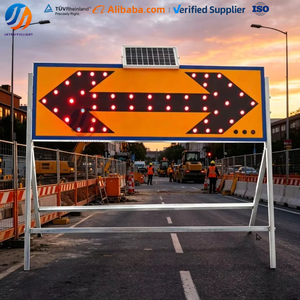
Illuminated chevron guidance system providing synchronized dynamic arrow indication to mitigate run-off-road collisions on hazardous highway curvatures, detour ramps, and flyover diversions.
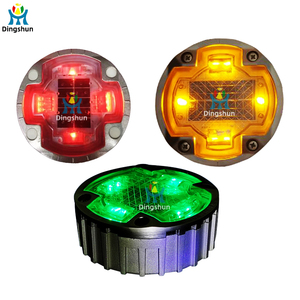
Die-cast aircraft aluminum pavement markers engineered to withstand 30 tons of dynamic vehicular wheel loading, featuring dual-direction ultra-bright diodes for continuous delineation through wet darkness.
Evaluating the manufacturing capabilities, photometric standards, and supply chain reliability of leading production clusters across India, East Asia, and North America.
In modern intelligent transportation systems (ITS) and high-speed highway construction, the humble barricade warning light has transformed from a rudimentary incandescent flasher into a sophisticated, micro-engineered photonic asset. Procurement authorities—including the National Highways Authority of India (NHAI), the Border Roads Organisation (BRO), state Public Works Departments (PWD), and North American Department of Transportation (DOT) agencies—enforce stringent mandates covering optical visibility distance, angular chromaticity coordinates, ingress protection, and power autonomy cycles.
When engineering and sourcing directors compile evaluations for the Top 10 LED Barricade Light Factories & Suppliers, performance metrics cannot be assessed purely on initial purchase cost. Instead, technical procurement relies on four critical pillars of verification: luminous efficacy (candela per watt), photometric distribution across horizontal and vertical viewing planes, electrochemical cycle life under extreme ambient temperatures (-25°C to +65°C), and structural survivability under severe aerodynamic buffeting and kinetic impacts.
| Evaluation Parameter | Tier 1 Manufacturing Standard (e.g., Enpowers International) | Conventional Commercial Grade | Project Risk & Impact Analysis |
|---|---|---|---|
| Optical Lens Material | Virgin Optical-Grade Polycarbonate with UV 400 Stabilizers | Recycled Polystyrene or Low-Grade Acrylic (PMMA) | Low-grade polymers degrade, yellow, and craze within 6 months, causing up to 68% candela loss and failing DOT/NHAI visibility audits. |
| Photometric Output | High-Intensity >25 to 55 Candela (Compliant with MUTCD Type A, B, C & ITE) | Standard 1.5 to 4.5 Candela | Insufficient intensity fails to trigger timely driver deceleration at high approach speeds (100+ km/h), elevating crash risk in transition zones. |
| Battery Chemistry | Industrial LiFePO4 (2,000+ Cycles) or Sealed Deep-Cycle Solar NiMH | Lead-Acid or Low-Tier Lithium-Ion (300–500 Cycles) | Thermal runaway in tropical climates and premature sulfation in freezing conditions lead to rapid blackout and frequent replacement costs. |
| Solar Harvesting Efficiency | Monocrystalline Silicon (21.5%–23.5% conversion) with Anti-Reflective Glass | Polycrystalline or Amorphous Thin-Film (<14% efficiency) | Failure to charge during prolonged monsoon, overcast, or winter seasons causes catastrophic roadside light failure without utility backup. |
| Ingress Protection | IP65 to IP68 hermetically sealed silicone/EPDM dual-gaskets | IP44 to IP54 snap-fit housings without compression seals | Internal moisture ingress results in galvanic corrosion on printed circuit boards (PCBs), electrical shorts, and voided warranties. |
| Synchronization | RF (Radio Frequency) or Multi-Channel GNSS/GPS Synchronization | Asynchronous / Independent Flash Pattern | Chaotic, unsynchronized flashing creates the "moth effect" and visual disorientation; synchronized chaser lighting creates clear navigational channels. |
The global supplier landscape is stratified into distinct tiers. At the upper tier of international manufacturing, modern factories maintain complete in-house vertical integration: surface-mount technology (SMT) pick-and-place lines, computerized goniophotometer darkrooms, automated thermal cycling chambers, and high-pressure water-jet test stations. Facilities such as Enpowers International's manufacturing plant in GIDC Vatwa, Ahmedabad, have established global benchmark positions by pairing heavy-gauge fabrication with high-precision optoelectronics, catering directly to complex infrastructure tenders across more than 20 countries.
How edge IoT, advanced solid-state optics, and next-generation energy storage are reshaping active roadway hazard mitigation.
The transition from traditional omnidirectional dome diffusion toward precision-engineered 3D Fresnel TIR (Total Internal Reflection) optics. These collimating micro-lenses concentrate radiant flux directly into critical driver eye-level vectors, maximizing target visibility over 1,000 meters while cutting battery power draw by 40%.
Phase-out of toxic, heavy lead-acid cells in favor of Lithium Iron Phosphate (LiFePO4) and emerging sodium-ion chemistries. Offering upwards of 3,000 discharge cycles and operating securely between -30°C and +70°C, these modern cells eradicate thermal swelling risks and ensure an operational lifespan exceeding 7 to 10 years.
Autonomous wireless synchronization over Sub-1 GHz mesh protocols or embedded satellite clock receivers. Synchronized barricade beacons flash in rhythmic sequence, establishing an unmistakable visual runway through complex detours, bridge work zones, and high-speed expressway lane reductions.
Integration of low-quiescent-current micro-controllers running algorithmic MPPT charging. By dynamically tracking panel voltage variations caused by partial shading, morning dew, or accumulated highway dust, modern beacons harvest up to 30% more energy compared to basic PWM charging shunts.
Cellular NB-IoT and LTE-M embedded sensor nodes delivering real-time battery voltage, solar input telemetry, GPS location, and impact detection alerts back to municipal traffic management software, eliminating costly manual drive-by site inspections.
Global highway agencies now demand sustainable procurement. Modern designs use mono-material housings (100% recyclable polycarbonate and high-purity aluminum alloys) coupled with modular snap-in electronics that allow field replacement of battery packs without scrapping the optical head.
A data-backed framework for infrastructure concessionaires, highway authorities, and prime EPC contractors.
Historically, barricade warning light procurement was treated as a disposable, low-bid commodity line item. Subcontractors frequently acquired the cheapest battery-operated flashers that utilized dry-cell D-batteries or rudimentary 6-volt lantern packs. However, rigorous forensic accounting and lifecycle asset studies conducted by leading civil contractors have exposed the flawed economics of low-tier sourcing.
A standard 6V lantern battery flasher costs approximately $12 upfront. However, in continuous 24/7 or heavy night operation, battery replacements are required every 3 to 4 weeks. Over a 3-year highway widening project, replacement batteries and dedicated maintenance labor elevate the cumulative unit operating expense beyond $160 per light—excluding environmental hazardous waste disposal fees.
High-grade solar-powered LED barricade beacons require a higher initial investment ($35–$75 depending on optical aspect and telemetry). However, because fuel and disposable battery costs are zero, the break-even ROI threshold is achieved within 4 to 7 months of continuous field deployment. Beyond this window, maintenance costs approach zero, freeing operational budgets.
Global procurement teams are shifting away from single-source reliance, actively partnering with premier manufacturing ecosystems in India. Leveraging robust domestic manufacturing under the Make in India initiative, Indian exporters like Enpowers International supply certified highway infrastructure products engineered to international standards without the freight volatility and tariff exposures of other markets.
Headquartered in the vibrant industrial center of Ahmedabad, Gujarat, India, Enpowers International operates an integrated design, engineering, and manufacturing facility located in GIDC Phase-1, Vatwa. We are an authentic original equipment manufacturer dedicated to eliminating intermediate trading markups while upholding uncompromising quality control across every solar blinker light, LED barricade flasher, and highway signal enclosure.
Every lighting system is engineered from the ground up to comply with the stringent structural and photometric norms of the National Highways Authority of India (NHAI), the Public Works Department (PWD), and the Border Roads Organisation (BRO). For our international engineering partners across 20+ countries, we configure bespoke units compliant with European EN 12352 and North American MUTCD standards.
Every production batch undergoes automated goniophotometric profiling to confirm luminous distribution, beam divergence angles, and candela output against international standards.
Housings are subjected to high-pressure continuous hydraulic spray, dust chambers, and 72-hour thermal stress testing (-20°C to +70°C) to eliminate field failure risks.
Direct supply history to elite contractors including BRO, NHAI, CPWD, Tata Projects, IRB Infrastructure, Sadbhav, GVK, NCC, and JMC Projects across international corridors.
Direct answers for EPC procurement managers, highway consultants, and safety directors.
Under the Manual on Uniform Traffic Control Devices (MUTCD), Type A is a low-intensity flashing warning light designed exclusively for nighttime operation (minimum 2 candela). Type B is a high-intensity flashing warning light operating 24 hours a day with severe candela requirements (minimum 35 candela) to command attention in bright sunlight. Type C is a steady-burn warning light used to delineate the edge of the travel way during nighttime channelization.
For mission-critical infrastructure projects, highway tenders must specify a minimum of 5 to 7 days (120 to 168 hours) of continuous operational autonomy without solar irradiance. This guarantees uninterrupted operation during extended seasonal monsoons, deep cloud covers, or blizzards. In our Ahmedabad manufacturing plant, battery capacities and panel wattages are dynamically calculated against the target geographic solar insolation values.
Lithium Iron Phosphate (LiFePO4) chemistry offers superior thermal and chemical stability, completely preventing thermal runaway even when ambient temperatures on tarmac surfaces exceed 55°C. Furthermore, LiFePO4 delivers 2,000 to 3,000 full depth-of-discharge (DoD) cycles compared to only 300 to 500 cycles for standard lithium-ion or lead-acid, drastically reducing long-term lifecycle replacement costs.
Yes. We engineer and manufacture bespoke structural mounting hardware including hot-dip galvanized anti-theft bolts, universal pipe clamps, heavy-gauge steel perimeter brackets for concrete Jersey barriers, and high-strength neodymium magnetic bases tailored to metallic crash barriers and bridge decks.
Uncoordinated random flashing across long stretches of highway work zones creates visual clutter and driver disorientation, particularly under wet or foggy conditions. Wireless synchronized flashing (using GNSS or RF mesh networks) creates a clear, directional visual wave that intuitively guides driver eye paths away from hazardous work zones and into clear travel lanes.
All international consignments leave our Ahmedabad facility accompanied by Certificate of Origin (COO), Ingress Protection (IP65/IP68) Test Certificates, Photometric Goniophotometer Test Reports, RoHS Compliance Statements, and Factory Acceptance Test (FAT) sign-offs. We supply comprehensive documentation ensuring smooth customs clearance and client engineering approval.