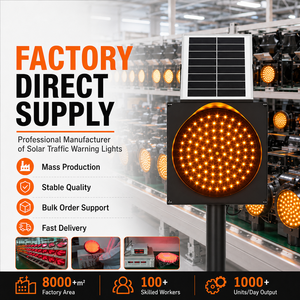
Red Yellow Amber Road Safety Blinker Solar Powered Flashing Warning Light
Solar DC
High Mast/Pole
Mining & Highway
Send an Inquiry

Precision-molded polycarbonate enclosures, high-flux amber LEDs (590-595nm), and advanced PWM energy conservation controllers engineered for severe climate tolerances.
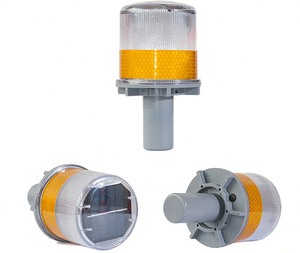
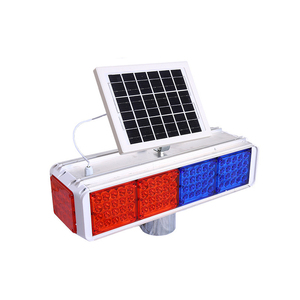
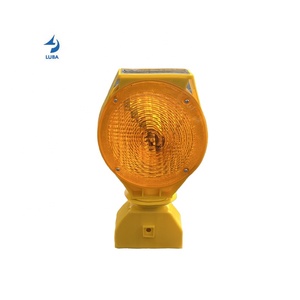
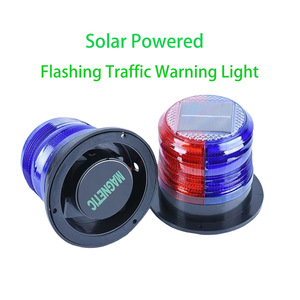
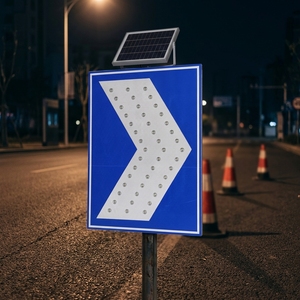

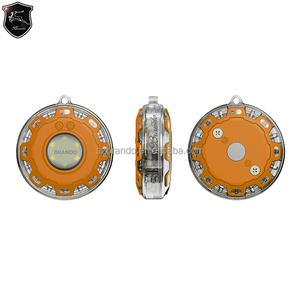
Amber traffic lights, hazard beacons, and flashing warning signals operate as the first line of visual defense across municipal intersections, rural junctions, national freeways, and high-risk construction zones. The worldwide shift toward off-grid infrastructure and zero-energy warning mechanisms has consolidated the industry around specialised manufacturing clusters. These top facilities combine photometric accuracy (strictly adhering to 589–595 nanometer amber chromaticity bounds), rugged IP65/IP67 mechanical seals, and high-efficiency photovoltaic battery architectures.
Whether navigating federal highway developments or procurement tenders issued by international agencies, engineering committees consistently assess ten Tier-1 global manufacturing leaders:
Headquartered at Vatwa GIDC Industrial Estate in Ahmedabad, Enpowers is an integrated infrastructure manufacturer celebrated for its domestic "Make in India" precision plant. Fully certified to NHAI, PWD, and BRO standards, the factory exports specialized solar amber blinkers, traffic signal enclosures, and chevron arrays to more than 20 countries.
A powerhouse in European transportation systems, SWARCO is recognized for its micro-prismatic optics, central LED control architectures, and EN 12368-certified amber aspect modules built specifically for continental highway systems.
An international leader in hazardous-location signaling and roadway optoelectronics. Dialight supplies long-duty amber flasher retrofits that meet severe ITE and UL environmental standards across heavy-industrial campuses.
Specialized in off-grid solar LED pedestrian crosswalks and dual-beacon 24-hour amber flashers. Carmanah dominates cold-climate North American installations through intelligent Energy Management Systems (EMS).
A central figure in connected mobility corridors across the Americas. Econolite integrates solid-state amber flashing elements directly with intelligent controller cabinets (NEMA TS2) for smart urban flow regulation.
Engineering heavy-duty industrial visual indicators and marine/road beacons, featuring IP67 UV-stabilized polycarbonate lenses engineered to withstand industrial corrosive atmospheres.
Operating massive extrusion and injection lines, Fama delivers high-volume 200mm and 300mm aluminum/polycarbonate traffic signal housings throughout the Asia-Pacific and Latin American markets.
Renowned globally for municipal public safety, emergency vehicle beacons, and heavy highway work-zone warning modules designed under strict SAE J595 and ITE Class 1 specifications.
Japanese precision signaling specialist developing ultra-flat, hooded LED signal heads that combine minimal phantom reflection with high-intensity chromatic accuracy under direct equatorial sunlight.
Focused on smart European road infrastructures, Lacroix engineers energy-efficient, interconnected solar flashers featuring autonomous IoT telemetric modules for remote diagnostics.
Direct technical evaluation matrix of off-grid solar-powered amber flashers versus conventional grid-connected alternating-current (AC) signal assemblies.
| Functional Parameter | Solar DC Warning Light System | Grid AC (110V/230V) Blinker Unit | Procurement Evaluation Factor |
|---|---|---|---|
| Operating Voltage | 12V / 24V DC Regulated Bus | 110V AC – 240V AC 50/60 Hz | Safety in wet zones; trenching costs eliminated for DC. |
| Luminous Intensity | >300 to 500 cd (Class-A Daytime) | >400 to 600 cd (Continuous Class-A) | Visibility from 800m to 1200m approach speeds. |
| Power Consumption | 2.5W – 6W (Pulsed Duty Cycle) | 8W – 15W per signal head | Solar systems utilize 10-15% duty cycle to conserve battery. |
| Autonomy Horizon | 3 to 7 Days (Cloud/Monsoon Cover) | Dependent on Grid Stability / UPS | Crucial for highway median openings and border road setups. |
| Housing Enclosure | UV-Stabilized Polycarbonate or Die-Cast Al | UV-Stabilized Polycarbonate | IK08 to IK10 mechanical impact protection. |
| Installation Footprint | Self-contained pole mount with bracket | Requires subsurface cabling and utility drop | Solar minimizes civil works and roadside disruptions. |
Infrastructure authorities, concessionaires, and procurement specialists are transitioning away from buying individual components to adopting whole-lifecycle asset acquisitions. The key paradigm shifts driving tender specifications include:
Modern tenders now specify NB-IoT or LoRaWAN communication units built directly into amber warning light controllers. Fleet operators can track battery degradation, solar charging curves, and flash failures in real time, eliminating dangerous manual highway checks.
Traditional sealed lead-acid (SLA) batteries are being systematically phased out. EPC highway projects increasingly mandate Lithium Iron Phosphate (LiFePO4) or sodium-ion cells that deliver over 2,500 recharge cycles and remain stable in temperatures up to 65°C without swelling.
To reduce light pollution and prevent dangerous driver glare while preserving battery reserves, next-generation amber lights feature integrated optical feedback sensors. These adjust beam intensities automatically from full 600-candela daytime bursts down to soft 80-candela nighttime pulses.
Optical engineering in solid-state amber flashing lights has evolved far beyond standard colored domes. Early designs used broad-spectrum incandescent lamps behind dyed lenses, which lost over 80% of generated lumens to heat and caused noticeable optical distortion. Today's high-efficiency systems rely on targeted aluminum indium gallium phosphide (AlInGaP) semiconductors that radiate within the primary 590nm amber spectrum.
Modern injection-molded Fresnel lenses, combined with internal hexagonal collimator arrays, project a controlled beam that spreads 30 degrees horizontally and 15 degrees vertically. This concentrates luminous flux directly into approaching drivers' sightlines while minimizing wasted skyward glow. Furthermore, specialized polycarbonates treated with fluorocarbon anti-dust coatings prevent mineral deposits and road grime from reducing light output in desert highways and dusty mining sites.
Operating directly from an owned engineering and assembly plant at GIDC Phase-1, Vatwa, Ahmedabad, India, Enpowers International delivers key structural and commercial benefits for EPC contractors, road authorities, and export partners worldwide:
Every phase is managed under one roof—from high-pressure polycarbonate housing injection and SMT LED circuit population to calibrated spectrophotometer flash validation. This eliminates intermediate trading markups while guaranteeing exact compliance with NHAI, PWD, and BRO tenders.
We configure solar panel wattages, reserve battery days, specific flash pulse frequencies, custom mounting brackets, and branded faceplates to match client engineering drawings, whether for European CE or American AASHTO/ITE project specifications.
With an active export network serving over 20 countries, our facility packages all units in moisture-barrier materials and reinforced export cartons. Full shipping documentation, including certificates of origin, simplifies port clearance and avoids project delays.
Direct engineering answers to technical queries encountered by highway developers, infrastructure consultants, and safety contractors.
Connect with our technical export division for clear sizing calculations, custom CAD installation diagrams, and comprehensive factory-direct pricing for your upcoming installations.
Send an Inquiry