
Engineered for high-speed highway corridors, municipal choke points, marine berths, and remote heavy-construction work zones.
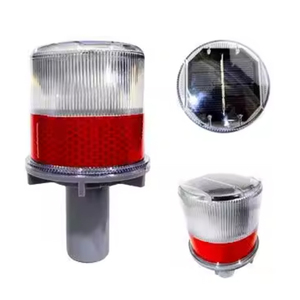
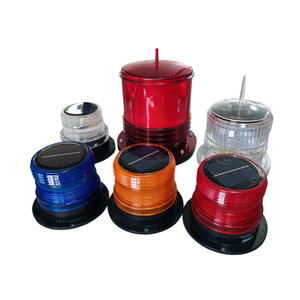
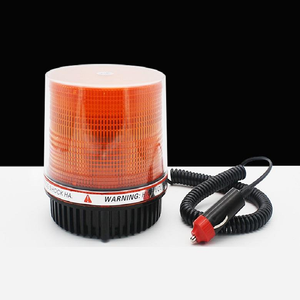
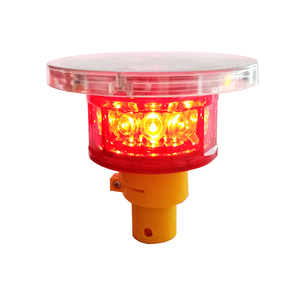
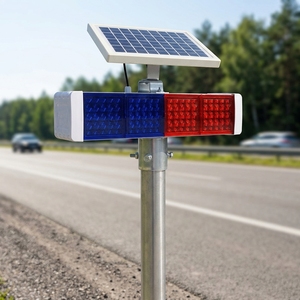
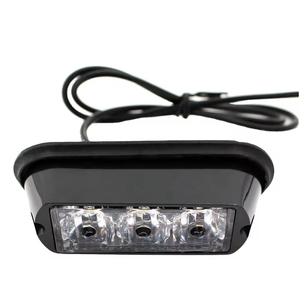
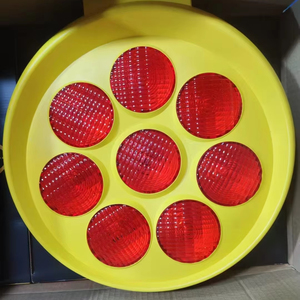

Key technical shifts procurement directors, infrastructure concessionaires, and highway engineers must factor into next-generation tenders.
Tenders are moving away from isolated, unsynchronized flashers toward Sub-1GHz LoRa and cellular NB-IoT mesh arrays. Synchronized flashing across continuous curves or work zones creates optical guide corridors, reducing driver confusion at high speeds. Modern requests require bidirectional telemetry reporting battery state of charge (SoC), solar yield, and diode integrity directly to Central Traffic Management Systems (ATCS).
Traditional valve-regulated lead-acid (VRLA) batteries are being replaced by Lithium Iron Phosphate (LiFePO4) storage in global civil engineering bids. Offering more than 3,000 deep discharge cycles (compared to 400–600 cycles for VRLA) and superior thermal stability up to 60°C, LiFePO4 systems minimize catastrophic roadside maintenance callouts while dramatically lowering 10-year total cost of ownership (TCO).
Modern sustainability mandates require blinkers to prevent nocturnal glare and preserve reserve power. Municipal tenders now specify autonomous photodiode ambient sensing with PWM output adjustment. By operating at full output (up to 1,200 cd) under midday sunlight and scaling to 30–40% at night, system efficiency improves by 45%, reducing the needed solar panel dimensions.
A look at the mechanical, electrical, and optical evolution driving field reliability over 10-year deployment windows.
Traditional flat diffusers often lose up to 35% of light through internal scattering. Our latest optical engines employ precision acrylic TIR lenses paired with automotive-grade Osram/Lumileds emitter diodes. This projects light forward into a tight horizontal cone (30° H x 15° V), meeting visibility benchmarks of over 1,000 meters while consuming less than 4 Watts of power.
Field installations face salt spray, chemical exhaust, and UV degradation. Our housings are injection-molded from Bayer Makrolon Polycarbonate or LM6 Grade Die-Cast Aluminum with specialized anti-static and anti-yellowing stabilizers. Rated to IP66 and IK09, they resist dust ingress, monsoon water jets, and roadside gravel impacts without structural failure.
Traditional PWM charges waste up to 25% of generated solar energy during cloudy conditions. Modern off-grid installations rely on Fast Sweep MPPT firmware algorithms that maintain over 97% energy conversion efficiency. This ensures continuous operation through monsoon periods, extended blizzards, or heavy smog without signal loss.
| Engineering Parameter | Standard Market Offering | Enpowers Industrial Standard | Tender & Operational Benefit |
|---|---|---|---|
| Battery Chemistry | Lead-Acid / AGM (1–2 yr lifespan) | A-Grade LiFePO4 (8+ yr lifespan) | Reduces roadside replacements, zero maintenance |
| Solar Tracking | Basic PWM / Direct Shunt | Intelligent MPPT Micro-Controller | 25–30% faster recharge under heavy cloud cover |
| Housing Build | Recycled ABS / Thin Polycarbonate | UV-Stabilized PC / LM6 Marine Alloy | Withstands IK09 impacts and extreme solar irradiation |
| Flash Synchronization | Manual dip-switch / None | Integrated GPS / 2.4GHz Wireless Mesh | Provides uniform linear optical sequencing for lane diversions |
| Ingress Rating | IP54 to IP55 | IP65 / IP66 Certified Gasketed Seal | Resists monsoonal downpours, desert dust, and pressure washing |
Key technical answers regarding manufacturing, export packaging, compliance, and international custom orders.
Built upon robust manufacturing practices and certified quality control, directly from Ahmedabad, India.
By producing components in-house at our GIDC Vatwa manufacturing center, we remove trading markups and ensure complete transparency over material selection, optical performance, and electronic durability.
Our traffic systems are deployed by major infrastructure operators and public bodies, including NHAI, PWD, BRO, CPWD, Tata Projects, and IRB Infrastructure, with proven performance across high-temperature, high-vibration environments.
With satisfied customers in over 20 countries, our logistics team manages shipping documentation, certificate-of-origin processing, and tender-compliant labeling for smooth customs clearance and quick site deployment.
Contact our technical engineering team for CAD drawings, photometric charts, and an official commercial quotation tailored to your highway or municipal specifications.