
Engineered for high-visibility warning parameters under diverse climatic environments, providing complete OEM/ODM flexibility for road infrastructure, maritime, and rapid emergency deployment.
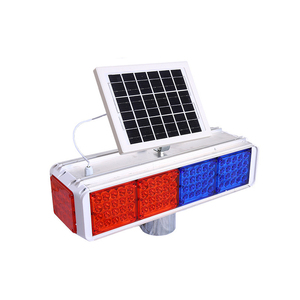
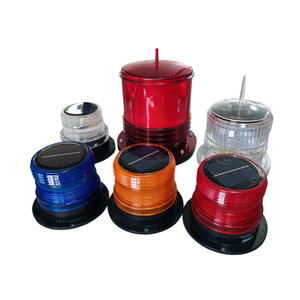
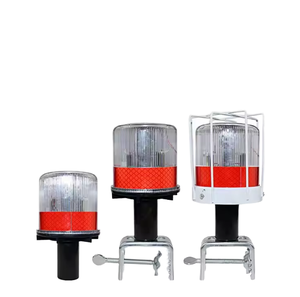
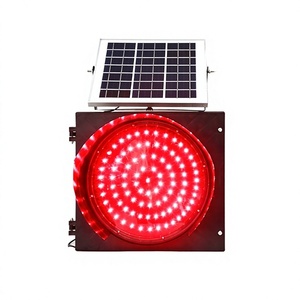
As dedicated manufacturers and direct exporters headquartered in industrial production facilities, we bypass secondary trading middlemen to provide engineered clarity, documented product origins, and comprehensive technical compliance.
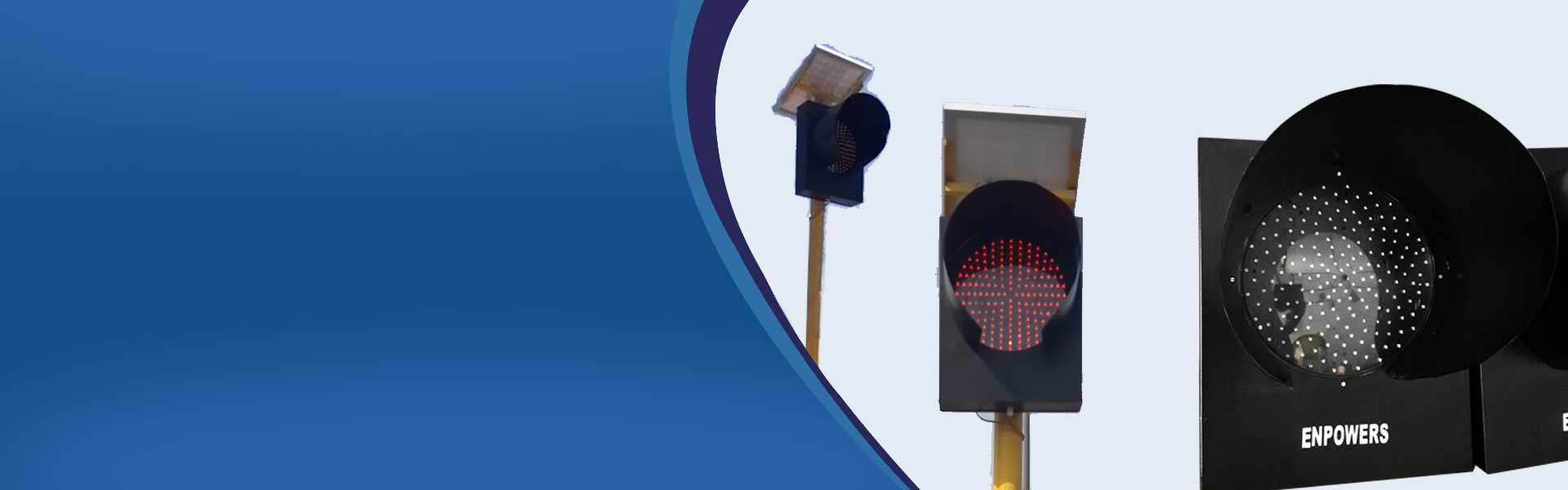
A strategic breakdown of technological shifts, international procurement guidelines, and long-term asset management protocols in roadway safety signals.
Traditional sealed lead-acid (SLA) batteries are rapidly phasing out across international municipal procurements. Engineering specifications now aggressively favor LiFePO4 chemistry due to its 2,000+ cycle life, thermal resilience in desert climates (+60°C), and reduced maintenance cycles on elevated roadside poles.
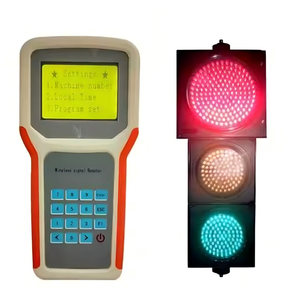
The standard standalone flasher is transforming into a networked node. Future procurement requirements for expressways specify wireless RF and 4G/NB-IoT synchronized flashing patterns. Wave-mode flashing allows approaching high-speed drivers to immediately perceive spatial directionality during sharp curves and blind junctions.
Infrastructure contractors have shifted metrics from Initial Capital Expenditure (CapEx) to long-term lifecycle metrics (TCO). Specifying UV-stabilized polycarbonate lenses with high color-rendering index (CRI) LEDs preserves optical transmission for over 7 years without catastrophic degradation or yellowing.
Specifying traffic warning lights and solar LED blinkers requires detailed technical vetting beyond external cosmetics. A safety light’s performance relies on three interconnected factors: photometric compliance, power autonomy budgeting, and environmental enclosure resilience.
A frequent error in low-tier sourcing is reliance on lumen output instead of candela rating and angular distribution. Highway specifications (such as NHAI standards in India and EN 12352 classes L2H or L8H) enforce luminous intensity profiles that guarantee visibility under high-noon ambient illumination while avoiding driver glare at night. High-grade OEM designs incorporate customized optical collimating lenses (Fresnel structures) that redirect horizontal divergence to ensure visibility from up to 1,000 meters away, even during dense fog, heavy monsoonal rain, or blowing sand.
A solar warning light must remain operational through extended cloud cover. Engineers calculate the System Autonomy Ratio (SAR):
Autonomy (Days) = (Battery Nominal Capacity [Ah] × Depth of Discharge [%]) / (Daily Load Consumption [Ah])
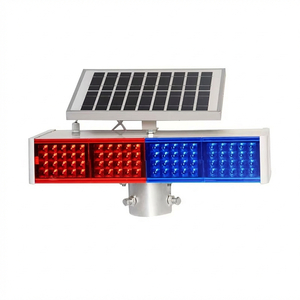
Where typical commercial setups collapse after 48 hours of overcast conditions, infrastructure-grade OEM solutions are customized with oversized monocrystalline solar panels and multi-stage MPPT (Maximum Power Point Tracking) controllers capable of yielding a minimum 5 to 7 days of complete off-grid autonomy.
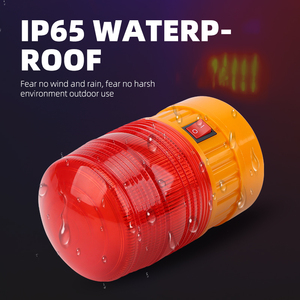
Environmental failures typically start at the ingress seals or hinges. Industrial units destined for marine or high-humidity regions utilize heavy-duty extruded aluminum or virgin polycarbonate with IP65 to IP68 ratings. Anti-UV additives prevent brittleness from relentless UV-A and UV-B exposure, preventing structural cracks and water infiltration that destroy delicate control PCBs.
Direct technical answers addressing the critical queries raised by project directors, civil engineering contractors, and government supply chain directors.
Our OEM/ODM engineering team accommodates diverse national standards including NHAI, PWD, and BRO in South Asia, MUTCD specifications in the Americas, and EN 12352 classes in Europe. We configure lens diameters (100mm, 200mm, 300mm), specific flash frequencies (50-60 flashes/min), duty cycles, and chromaticity coordinates according to regional tender documentation.
We configure systems using high-density LiFePO4 (Lithium Iron Phosphate) cells capable of delivering over 2,000 to 3,000 charge-discharge cycles at 80% Depth of Discharge (DoD), yielding a reliable 5-7 year field lifespan. Where projects demand traditional SLA batteries for specific regional compliance, we apply precision float-charging regulators to avoid thermal runaway.
Standard specification items ship within 7–10 business days. Custom OEM/ODM requests—such as bespoke housing colors, laser-etched agency logos, specialized directional arrow designs, or specialized bracket hardware—typically undergo prototype validation in 5-7 days and achieve full export dispatch in 15–25 business days depending on order size.
Yes. For marine and coastal road applications, our housings undergo anti-corrosion chemical passivations, marine-grade powder coating, and are fully sealed using vulcanized silicone gaskets. All internal electrical solder points and microcontrollers receive a moisture-proof conformal coating to resist oxidation and sustained roadway vibration.
All items are secured in reinforced export-grade honeycomb cartons or fumigated wooden crates. Solar modules are padded with high-density EPE foam, and batteries comply with UN38.3, MSDS, and drop-test packaging requirements for air and ocean freight, ensuring safe transit to over 20 global export destinations.
We supply complete Quality Assurance documentation including Factory Acceptance Test (FAT) reports, ingress protection (IP) validation, photometric lab readings, certificate of origin, warranty statements, and schematic connection diagrams to ensure quick administrative sign-offs on site.