
Explore our high-performance solar warning beacons, LED obstruction sticks, and hazardous roadway alert systems. Formulated with UV-stabilized polycarbonate lenses, impact-modified ABS bodies, and high-efficiency photovoltaic charging modules.
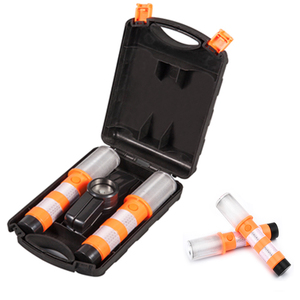
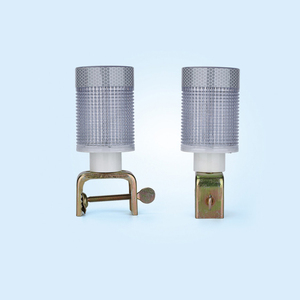
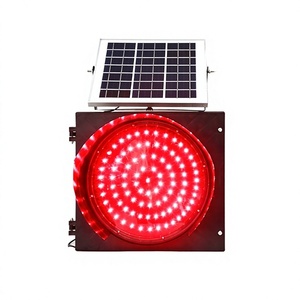
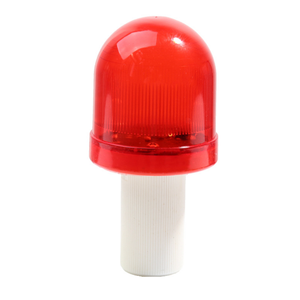
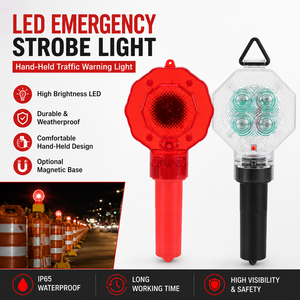
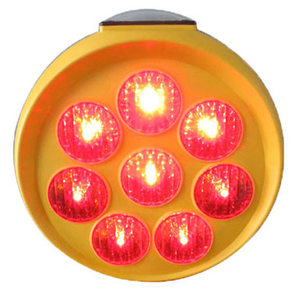
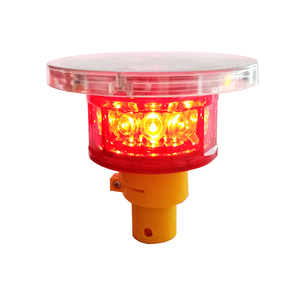
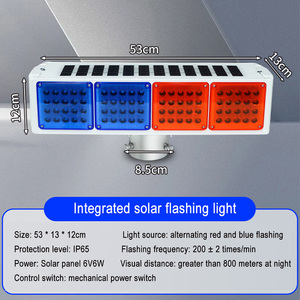
Modern highway infrastructure, bridge approaches, and high-risk work zones demand autonomous danger signaling systems capable of delivering superior luminous intensity without relying on vulnerable AC municipal power grids. The optical challenge lies in maintaining crisp 360-degree or directional conspicuity under direct solar glare (ambient sunlight exceeding 100,000 lux) while managing strict energy dissipation during prolonged overcast conditions.
Our OEM/ODM manufacturing facility integrates custom compound Fresnel optic lenses molded from high-impact, UV-stabilized Bayer Makrolon® polycarbonate. By refracting emitted flux through concentric annular prisms, optical efficiency increases by up to 38% compared to standard diffused housings. This enables our 590nm amber and 625nm danger-red LEDs to achieve acute retroreflection and high visible range (exceeding 1,000 meters) under severe meteorological interference including advection fog, heavy squalls, and desert dust storms.
From custom optic tooling and private-label firmware engineering to bulk intermodal container logistics, our manufacturing facility delivers end-to-end turnkey OEM/ODM export solutions certified to global transport authority criteria.
Equipped with computerized CNC electrical discharge machining (EDM) and high-tonnage injection presses, we develop customized beacon enclosures, specialized bracket configurations (pipe clamps, square tubes, barrier mounts), and branded mold inlays with low lead times.
Every hazard signal meets rigorous regional mandates: EN 12352 classes L2H/L8H across Europe, US Federal Highway MUTCD Type A/B/C/D flashing standards, and NHAI/PWD technical specifications for critical road barrier systems.
Units undergo accelerated weathering chamber testing, QUV ultraviolet degradation trials, and salt spray exposure (ASTM B117 standards) exceeding 500 hours to ensure non-yellowing lens longevity in coastal marine or equatorial desert installations.
Our engineers provide custom microcontroller programming: options for GPS or RF wireless mesh synchronised flashing across series barriers, variable ambient dimming curves to prevent night glare, and multi-pattern hazard warning triggers.
Every production lot is subjected to goniophotometer lumen distribution checks, dynamic drop impacts (IK08-IK10), vibration testing (simulating heavy haul road traffic harmonics), and full waterproof submersion leak verification.
We streamline import procedures with MSDS, UN38.3 battery flight/ocean safety reports, Certificates of Origin (COO), CE/EMC documentation, and custom crating that guarantees zero damage across intermodal transport corridors.
A rigorous side-by-side technical evaluation guide designed to assist tender boards, civil contractors, and municipal safety buyers in cross-referencing system specifications.
| Classification | Common Installation Environment | Luminous Intensity (Min) | Photovoltaic Module | Autonomy Benchmark | Compliance Reference |
|---|---|---|---|---|---|
| Type A Low-Intensity Barricade Light | Temporary construction barriers, urban work cones, utility trenches | 2.0 to 10.0 Candela (Flash mode) | 0.8W – 1.8W Monocrystalline | 120 Hours (Night-Only Trigger) | MUTCD 6F.83, EN 12352 L2L |
| Type B High-Intensity 24-Hour Hazard | High-speed freeway curves, gore points, advance warning signage | 35.0 to 100.0 Candela (Day/Night) | 3.0W – 8.0W High-Efficiency Glass | 160 Hours Continuous 24h | MUTCD Type B, EN 12352 L8H |
| Type C 360-Degree Steady-Burn Marker | Bridge abutments, channelizing drums, industrial loading docks | 2.0 Candela (Steady Omnidirectional) | 1.5W – 3.0W Poly/Mono Array | 90 Hours Full Steady Mode | MUTCD Type C, CE Marked |
| Heavy-Duty Directional Traffic Signal Blinker | Unsignalized intersections, highway toll plazas, pedestrian islands | 200.0+ Candela (Amber / Red 300mm) | 10W – 25W External Solar Panel | 180 Hours Heavy Monsoonal | NHAI/PWD, EN 12352 L8M/H |
| Emergency Multi-Color Roadblock Beacon | Law enforcement roadblocks, hazardous chemical transport, mining | 80.0 Candela (Strobe Burst Mode) | 2.5W Integrated Anti-Shatter | 140 Hours Variable Flash | ICAO Annex 14 / ECE R65 |
The global infrastructure sector is transitioning from disconnected, passive flashing lights toward synchronized, intelligent, and highly durable solid-state assets. Sourcing teams are optimizing RFQs around four key macro trends.
Civil tenders increasingly demand self-organizing 2.4GHz RF or Sub-1GHz wireless mesh synchronisation. Rather than chaotic random blinking, sequential warning lights create a dynamic light runway guiding motorists safely away from road closures, radically decreasing night-time taper crashes.
Hazardous, short-lived lead-acid and NiMH cells are being systematically phased out due to harsh thermal limitations. Tier-1 buyers require non-toxic Lithium Iron Phosphate (LiFePO4) or high-density EDLC supercapacitors capable of enduring -40°C to +80°C extremes with a 10-year design lifecycle.
Smart city initiatives are driving the adoption of NB-IoT and LoRaWAN embedded modules within solar danger beacons. Highway maintenance contractors can remotely monitor battery state-of-charge (SoC), photovoltaic charging current, and optical failure from centralized web dashboards.
Public procurement mandates in North America and the European Union are enforcing post-consumer recycled (PCR) polymer quotas for non-optical components, alongside modular repairability that allows fast replacement of lenses or battery packs without discarding the chassis.
Static high-intensity flashers risk blinding drivers during zero-ambient night conditions. Modern specifications call for dynamic dual-mode photodiode sensors that maximize output during blinding sunset/sunrise glares while automatically stepping down intensity after dark.
Off-grid highway hardware often suffers from metal theft and battery scavenging. Leading manufacturers incorporate internal tamper bolts, anti-tamper latching keys, and fully internal solar/battery architectures that leave no external cables accessible to vandals.
Comprehensive engineering insights for procurement officers, infrastructure contractors, and roadway safety distributors.
Autonomy is engineered through a rigorous formula matching system power consumption with available peak sun hours (PSH). For a typical 100mA peak flasher pulsing at a 10% duty cycle, average current draw is approximately 10mA. On a 3.2V platform, daily consumption equals 0.768 Watt-hours.
In high-latitude or monsoonal zones requiring 7 days of zero-sun autonomy (168 hours), we engineer a storage buffer of at least 5.37 Watt-hours, factoring in a 20% safety margin for depth-of-discharge (DoD) protection. Coupled with a 2W-5W monocrystalline panel, our systems achieve full recharge within 3.5 hours of indirect solar exposure.
Standard low-cost markers frequently use virgin or uninhibited polystyrene (PS) or low-grade polymethyl methacrylate (PMMA) that yellows, embrittles, and develops micro-crazing within 6 to 12 months under harsh UV radiation. We exclusively mold our optical lenses using optical-grade, virgin polycarbonate (PC) compounded with Hindered Amine Light Stabilizers (HALS) and UV-absorbers.
Our lenses undergo Xenon-arc weatherometer validation corresponding to 5 years of accelerated outdoor exposure in ASTM G155 protocols, ensuring light transmission remains above 88% over the multi-year lifecycle of the installation.
Yes. Our in-house firmware development team can program microcontrollers to any duty cycle, flash rate, or optical intensity profile required by your client's tender. Common presets include MUTCD 55-65 FPM (flashes per minute) single pulse, 120 FPM double rapid strobe for railway intersections, or specialized European EN 12352 dual-interval hazard pulses.
All our solar danger lights featuring integrated lithium energy storage are fully certified under UN 38.3 (T1-T8 testing: vibration, thermal shock, altitude simulation, external short circuit, and overcharge). Shipments include verified Safety Data Sheets (SDS) and official transport appraisal certificates.
We pack goods under IATA Section II (Packing Instruction 967) for air cargo and IMDG Code special provisions for full container ocean freight, utilizing reinforced drop-tested outer cartons with insulated internal partitions.
For custom housing profiles, lens geometries, or specialized bracket designs, our typical rapid tooling timeline is 25 to 35 calendar days from 3D CAD approval to First Article Inspection (FAI) physical samples. Tooling costs are frequently credited back against container-volume procurement milestones.
For standard models requiring custom color compounding (e.g., Highway Safety Orange, High-Visibility Yellow) and private labeling, standard MOQs range between 500 and 1,000 units, while catalogue items in standard colors are available at lower trial thresholds.
Internal condensation is a leading cause of premature circuit board corrosion in sealed solar units subjected to wide day-to-night temperature swings. To mitigate this without compromising our IP65/IP66 ingress ratings, we employ two key defense mechanisms:
First, critical electronics receive automated conformal coating using moisture-curing polyurethane resins. Second, selected heavy-duty enclosures integrate hydrophobic ePTFE (expanded polytetrafluoroethylene) breathable membrane vents that allow vapor equalization while permanently blocking liquid water, saline aerosols, and dust intrusion.