
Direct factory-engineered warning devices built for severe environmental resilience, high visibility optical performance, and seamless off-grid autonomy in heavy construction and highway corridors.
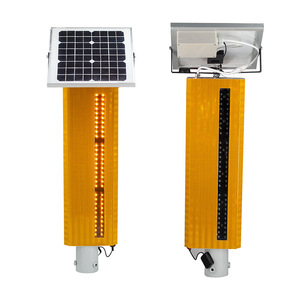
Integrated satellite timing module allows automated, dynamic cascading flash arrays across high-speed lane tapers and highway diversions without cable interconnection.
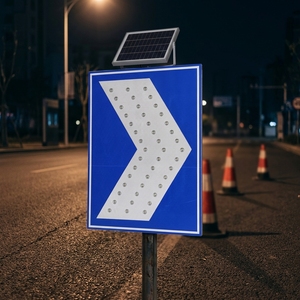
Heavy-gauge aluminum structural sign with class-leading fourth-grade reflective sheeting and active amber perimeter LEDs for high-risk mountain bends and interchanges.
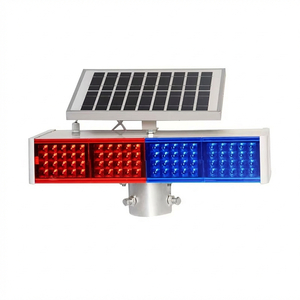
Rugged corrosion-resistant aluminum alloy housing featuring high-intensity optical dispersion lenses, built specifically for civil construction zones and wet road environments.
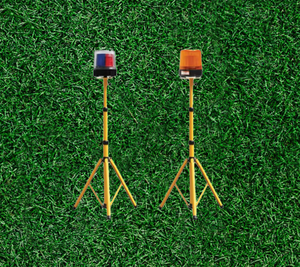
Magnetic and bracket-mountable strobe warning beacon offering selectable emergency flash rhythms for heavy machinery, emergency vehicle fleets, and mobile barricades.
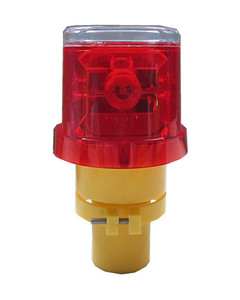
Polycarbonate optical chamber engineered with anti-UV stabilizers, delivering intense nighttime visibility reaching up to 500 meters across dense fog and rainfall.
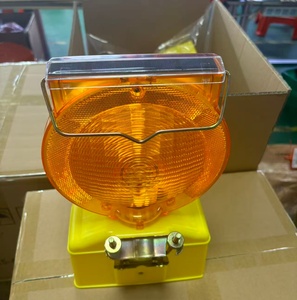
Universal mounting flange fits standard safety cones, A-frame barricades, and steel safety posts. Equipped with photocell automation for intelligent dusk-to-dawn actuation.
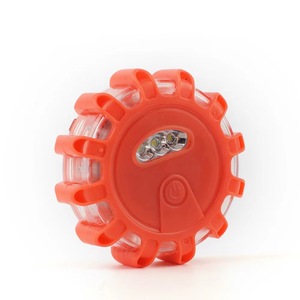
Compact tactical warning disk embedded with 12 ultra-bright red LEDs plus 3 SMD white flood emitters, encapsulated in high-impact crush-proof polymer elastomer.
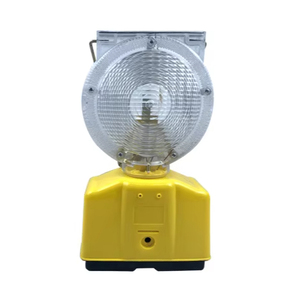
Two-tone optical beacon featuring an oversized monocrystalline solar collector, sealed deep-cycle storage, and 360-degree Fresnel magnification for roadwork channels.
Modern highway developments and civil work corridors demand zero-downtime hazard delineation. Discover how solar-driven solid-state optics eliminate reliance on fossil fuel generators while ensuring compliance with international traffic safety mandates.
Optical dispersion efficiency governs driver perception at speeds above 80 km/h. Our solar barricade lights utilize 360-degree multi-tiered Fresnel lenses crafted from Bayer Makrolon® UV-stabilized polycarbonate.
A solar delineator's service life depends on its electrochemical resilience. We integrate grade-A monocrystalline silicon wafers paired with dedicated lithium iron phosphate (LiFePO4) storage.
Irregular, asynchronous flashing creates sensory confusion for motorists navigating high-speed detours. Our smart barricade lights incorporate sub-microsecond GPS and 2.4GHz RF synchronization.
Traditional barricade flashers have historically relied on 6V spring-terminal alkaline batteries or sealed lead-acid (SLA) cells, which suffer catastrophic voltage drop below 0°C and succumb to thermal runaway above 45°C. By deploying specialized high-density Lithium Iron Phosphate (LiFePO4) architecture managed via custom PWM firmware, modern OEM solar warning beacons achieve a sustained 5 to 7 year maintenance-free operational cycle. This transition drives down labor intervention expenditures by up to 74% across long-span highway projects.
A standardized specification comparison outlining electrical, photometric, and housing benchmarks across domestic Indian and international infrastructure frameworks.
| Specification Metric | MUTCD Requirements (USA) | EN 12352 Standards (Europe) | NHAI / IRC Standards (India) | Enpowers OEM/ODM Factory Baseline |
|---|---|---|---|---|
| Luminous Intensity | Type A (Low-Int): 2 cd; Type B: 35 cd | Class L1 through L8 (up to 1,500 cd) | IRC:67 & SP:84 High Visibility | 5 cd to 85 cd (Configurable by application) |
| Flash Rate & Duty Cycle | 55 to 75 flashes/min (10% on-time) | 60 ± 10 flashes/min (Class F1-F3) | 50 to 60 flashes/min (Standard) | Microcontroller programmable (30–90 FPM) |
| Photovoltaic Type | Solid-state monocrystalline / polycrystalline | CE EN 61215 PV qualification | High-efficiency mono-crystalline | Anti-scratch tempered glass Monocrystalline |
| Battery Chemistries | Optional SLA or secondary Lithium | RoHS compliant Lithium / NiMH | Low-maintenance tubular or SLA | LiFePO4 (Grade-A) with integrated BMS protection |
| Enclosure Protection | NEMA 3R / NEMA 4X equivalent | IP54 minimum (IP65 recommended) | IP65 dust and moisture tight | IP65 to IP66 dual-gasket injection molded PC |
| Autonomous Resilience | 3 to 5 continuous overcast days | Calculated for regional solar radiation | Minimum 5 to 7 days autonomy | 7 to 10 overcast days standard (up to 15 days opt) |
Strategic analysis for EPC project directors, highway concessionaires, and governmental road authorities navigating safety asset procurement in an evolving technological landscape.
Global highway agencies are transitioning from passive safety markers to active, connected delineators. Upcoming tenders require integrated NB-IoT and LTE-M telemetry chips that transmit real-time state-of-charge (SoC), operational status, and knocked-over alerts directly to Central Highway Traffic Management Centers (HTMS).
Green public procurement (GPP) policies across Europe and North America enforce high recyclable content. Procurement mandates will increasingly disqualify non-repairable, sonic-welded barricade flashers in favor of modular snap-fit designs manufactured from regranulated, virgin-grade UV polycarbonate with easily swappable power packs.
Fixed-output flashers cause blinding glare in low-ambient lighting while fading under intense direct desert sunlight. Future procurement contracts explicitly stipulate adaptive photodiode control capable of self-modulating lumen output between 150% midday punch and 30% anti-glare midnight glow, preserving battery life.
Next-generation solar warning systems will blend high-efficiency perovskite-silicon tandem cells into compact curved housings, unlocking superior energy harvest in heavily shaded urban underpasses, tunnels, and dense forested mountain corridors without requiring separate bulky PV panels.
Operating directly from our advanced production facilities in Ahmedabad, Gujarat, India (GIDC Phase-1, Vatwa), we provide end-to-end OEM and ODM contract manufacturing services for road infrastructure stakeholders across 20+ export countries.
We provide full bespoke manufacturing services including 3D optical mold development, precision injection molding, private-label branding, customized microcode flash rhythms, and mounting bracket adaptors engineered to tender engineering drawings.
Engineered to withstand harsh road construction environments, every production lot undergoes simulated monsoon water ingress testing (IP65/IP66), photogoniometric intensity verification, and thermal shock chamber cycling from -25°C to +75°C.
Our products safeguard major expressways and border infrastructures executed by leading national authorities and civil conglomerates, including Border Roads Organisation (BRO), NHAI, CPWD, Tata Projects, GVK, IRB Infrastructure, and NCC Limited.
Direct technical answers addressing optical sizing, international import logistics, compliance verifications, and operational life expectancies.
Under the US Federal Highway Administration's Manual on Uniform Traffic Control Devices (MUTCD Section 6F.83):
Type A (Low-Intensity Flashing): Designed primarily for nighttime channelization and warning. Mounted on barricades and drums to guide motorists through work zones.
Type B (High-Intensity Flashing): Operates 24 hours a day (day and night). Features significantly higher candela output and is placed on advance warning signs to alert drivers of high-risk roadway closures or major diversions.
Type C (Steady-Burn): Emits continuous low-intensity illumination to delineate lane tapers and curves without creating strobe disorientation.
Type D (360-Degree Steady-Burn): Emits 360-degree omnidirectional constant light for all-around channelization. Our OEM plant can configure circuit logic to support any of these standardized modes.
We execute an insolation assessment based on NASA surface meteorology data for the client's deployment geography. The system autonomy formula is governed by:
Battery Capacity (Wh) = (Daily System Power Consumption in Wh / Depth of Discharge) × Desired Autonomy Days
For a flasher drawing 0.15A at 3.2V operating 12 hours a night with an 8-day rain autonomy mandate, we incorporate a high-grade 10Ah LiFePO4 cell paired with a 3W–5W monocrystalline solar collector, ensuring complete battery replenishment during partial daylight hours.
Yes. Our in-house metal fabrication and tooling division produces custom hot-dip galvanized and powder-coated mounting fixtures. We supply tamper-resistant anti-theft bolts, universal brackets for 3-inch pipe posts, concrete barrier brackets, spring-clamp mounts for traffic drums, and recessed top-caps tailored for standard polyethylene traffic cones.
Randomly flashing barricade lights on multi-lane highways create a chaotic "visual clutter" phenomenon, causing drivers to misjudge distance and tapers at night. Sequential synchronization establishes a fluid, linear chase wave (runway effect) that guides traffic intuitively into adjacent open lanes. Field studies indicate sequential systems reduce late lane mergers by over 38% and prevent taper crash incidents.
Every export consignment includes a comprehensive Factory Acceptance Test (FAT) dossier, consisting of: Third-party IP65/IP66 ingress protection certificates, chromaticity coordinate test reports, LM-80 LED lumen maintenance curves, photogoniometer luminous intensity data, raw material Certificate of Analysis (CoA) for UV polycarbonate, and Make-in-India origin certificates.
For standard models, our factory maintains rapid-dispatch stock with minimum order quantities starting from 50 to 100 units. For full OEM custom branding (custom molded housing colors, silkscreen contractor logos, and proprietary flashing algorithms), typical MOQs start at 500 units with an average tooling-to-production turnaround of 15 to 25 business days.
Whether you require tender-compliant solar warning flashers for national expressway construction, sequential runway lighting, or custom OEM manufacturing for overseas distribution, our engineering team is ready to assist with detailed specs and competitive tier-1 export pricing.