
Explore our certified range of high-candela red flashing strobes, solar hazard beacons, vehicular deck warning bars, and synchronized barricade indicators engineered for continuous 24/7 duty.
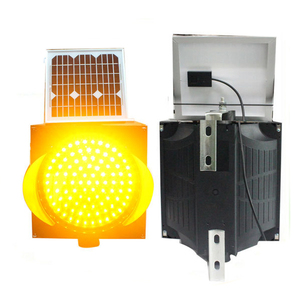
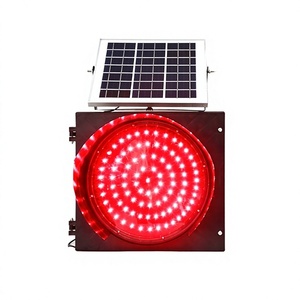
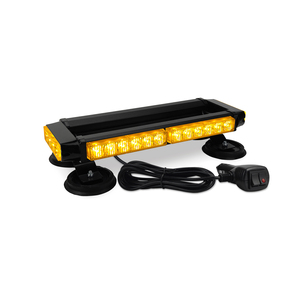
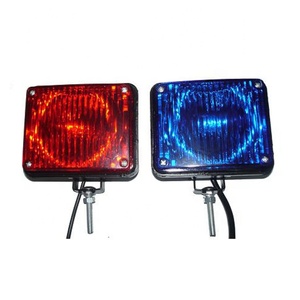
A rigorous examination of optical candela dispersion, chromaticity tolerances, human saccadic response times, and off-grid thermodynamic durability under extreme industrial exposures.
Red light within the narrow dominant spectral bandwidth of 620nm to 630nm triggers immediate neural hazard processing via the human eye's long-wavelength cone photoreceptors. Unlike diffuse ambient lighting, pulsed coherent red flashing activates peripheral retinal motion detectors.
Raw LED diodes disperse light spherical patterns that waste energy upward into the atmosphere. Our custom OEM/ODM tooling integrates optical-grade GE Lexan polycarbonate lenses engineered with concentric micro-stepped Fresnel ring geometries.
Under the Blondel-Rey formula, effective flash intensity ($I_{eff}$) directly governs perceived visual brightness over continuous illumination. Flashing at 50 to 60 cycles per minute (cpm) with a 20% to 30% duty cycle delivers peak sensory shock.
Cross-reference critical optical, electrical, material, and environmental metrics mandated by major highway authorities (NHAI, CPWD, BRO, FHWA, AASHTO, and CEN/CENELEC).
| Subsystem Metric | Specification Parameter | Tender Benchmark (NHAI / EN 12352 / MUTCD) | Engineering Justification |
|---|---|---|---|
| Luminous Intensity ($I_v$) | ≥ 400 cd (Class L8L) / ≥ 800 cd (Class L8H) | EN 12352 Class L8H; ITE VTCSH compliant | Guarantees brake response at 120 km/h expressway velocities during high-glare desert daylight. |
| Optical Lens Diameter | 200mm (8-inch) or 300mm (12-inch) Aspect | IRC:SP:84 / IRC:67 / FHWA MUTCD Section 4L | Optimal optical angular footprint for distant stopping sight distance (SSD) geometry. |
| Housing Ingress Protection | IP65 hermetically sealed (Optics up to IP68) | IEC 60529 / IS 12063 standard qualification | Prevents micron-scale dust, saline mist, and torrential monsoon water penetration into logic chips. |
| Solar PV Subsystem | 10W – 40W High-Efficiency Monocrystalline Cell | IEC 61215 / MNRE Certified Grade-A PV Modules | Harvests adequate charging current during overcast rainy seasons and low-winter sun angles. |
| Energy Storage Chemistry | LiFePO4 (Lithium Iron Phosphate) / VRLA Gel | > 2,500 Cycles @ 80% DoD; Thermal Cutoff BMS | Prevents thermal runaway in desert climates up to +65°C ambient temperatures while retaining cycle life. |
| Autonomous Operation | 7 to 10 Days Continuous Dark Autonomy | MoRTH / NHAI Section 800 Highway Mandate | Sustains flash operation throughout extended monsoon rain or dense winter Himalayan fog spells. |
| Housing Raw Material | UV-Stabilized Virgin Polycarbonate or Cast LM6 Al | ASTM D256 Impact ≥ 850 J/m; UL94-V0 Fire Class | Withstands flying gravel, UV photodegradation, wind-shear loads, and mechanical barrier strikes. |
How global infrastructure developers, EPC concessionaires, and municipal DOTs are transitioning from conventional isolated blinkers to intelligent, energy-resilient optical ecosystem arrays.
Global highway agencies are aggressively writing Lead-Acid and SLA batteries out of long-term tenders. Modern supply chains focus on Lithium Iron Phosphate (LiFePO4) chemistry featuring on-board Battery Management Systems (BMS) with high-temperature cutoffs, extending maintenance-free field survival from 2 years to over 7 years.
Isolated hazard flashers create confusing chaotic visual fields. Modern tenders mandate self-organizing sub-GHz or 2.4GHz RF auto-mesh synchronized beacons that flash in precise unison or sequential wave patterns, directing vehicle paths cleanly around construction diversions.
To eliminate blinding night glare while maintaining daylight penetration, procurement standards now demand closed-loop photo-sensor pulse-width modulation (PWM). Beacons autonomously run at 100% output in noon sunlight and step down to 25% after dusk, conserving battery power.
Forward-thinking DOTs are integrating NB-IoT and LTE-M telemetry cards directly into warning beacons. Remote dashboards monitor battery state-of-charge (SoC), LED array continuity, and tilt-sensor vandalism alerts, simultaneously feeding warning status to connected vehicles.
Rising labor and lane-closure costs have forced concessionaires to demand modular housings where lens caps, LED core engines, and power packs can be hot-swapped without dismounting the pole bracket or severing trunk wiring, slashing maintenance OpEx by up to 60%.
Procurement audits no longer accept self-declarations. Global buyers insist on batch-specific goniophotometer colorimetric and candela test reports certified by ISO/IEC 17025 accredited testing laboratories before export bills of lading are processed.
Based in the heavy manufacturing zone of Ahmedabad (GIDC Phase-1, Vatwa), Gujarat, India, Enpowers International operates an integrated optoelectronic manufacturing complex dedicated to solar and grid-tied road safety systems.
By controlling every step—from precision injection molding of UV-rated polycarbonate housings, high-speed SMT placement of high-candela diodes, to climatic chamber burn-in testing—we eliminate trading markups and guarantee tender compliance for EPC giants worldwide.
Global Footprint: Serving EPC contractors and national transport ministries across 20+ export territories throughout the Middle East, Southeast Asia, Africa, and the Americas.
Headquarters: Plot No. 140, Pushpak Industrial Estate, Nika Tube Compound, GIDC Phase-1, Vatwa, Ahmedabad 382445, Gujarat, India.
Comprehensive engineering guidance for highway project procurement directors, safety auditors, and EPC estimators.
We execute site-specific insolation calculations based on NASA surface meteorology data. We size the monocrystalline PV panel and LiFePO4 battery pack to supply 7 to 10 consecutive overcast days (no solar harvest) while maintaining constant 60 cpm peak flash frequency without optical candela drop.
Every production batch includes full spectrophotometer and optical bench test sheets verifying peak luminous intensity (cd), horizontal/vertical angular beam spread curves, dominant wavelength chromaticity coordinates (CIE 1931), and IP65/IP68 seal certificates to ensure rapid tender sign-off.
We provide comprehensive white-label and design-to-spec services including custom injection tooling, dual-aspect configurations (Red/Amber, Red/Blue), custom mounting clamps (for unistrut, octagonal, or tubular poles), selectable flash cadences, and client brand serialization directly on the mold.
LiFePO4 delivers 2,500+ deep cycles compared to 400-600 cycles in VRLA/Gel, performs reliably in desert temperatures up to +65°C without boil-off, charges at 95% efficiency even under partial shade, and contains no toxic lead or acidic liquid, significantly lowering total cost of ownership (TCO).
Our synchronized beacons utilize internal 2.4GHz ISM-band RF transceivers. Upon initial power-up, units establish a self-healing mesh network within 10 seconds. If a lead beacon is struck by a vehicle, the adjacent units automatically re-elect a master beacon, keeping perimeter flashing synchronized.
We mold our lenses using optical-grade, virgin GE Lexan polycarbonate formulated with integrated UV absorbers and benzotriazole light stabilizers. The lens retains over 92% optical clarity and impact resistance under extreme desert solar irradiation for beyond 10 operational years.
Yes. In urban intersections, tunnels, and toll plazas with available grid power, we configure our red flashing lights with wide-range universal switch-mode AC supplies (85V–265V AC, 50/60Hz) with integrated 4kV surge suppression, as well as hybrid AC-mains backup systems.
Standard catalog models maintain an MOQ of 20 units for international project logistics, with batch shipments ready in 7 to 14 business days. Bespoke OEM/ODM orders requiring custom tooling, private brand printing, or non-standard bracket engineering have lead times of 3 to 4 weeks.
For coastal highway and port projects, our cast aluminum housings undergo chromate conversion pre-treatment followed by marine-grade thermoset architectural powder coating (1,000+ hour salt spray test ASTM B117). All exposed fasteners are fabricated from 304 or 316-grade stainless steel.
We routinely dispatch shipments under FOB Mundra/Nhava Sheva, CIF, or DDP terms. Documentation packs include Certificate of Origin, Form AI/FTA preferential certificates, SGS/Bureau Veritas third-party pre-shipment inspections, bill of lading, and verified gross mass (VGM) declarations.
Connect with our Ahmedabad design and manufacturing team today. Share your target country, optical candela requirements, battery autonomy specs, or complete tender PDF for immediate technical review and commercial pricing.