
Engineered for high solar autonomy, extreme weather resilience, and ultra-high photometric candela output across urban crosswalks, school safety zones, highway transitions, and remote work corridors.
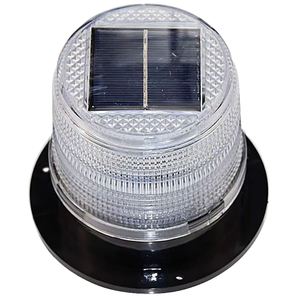
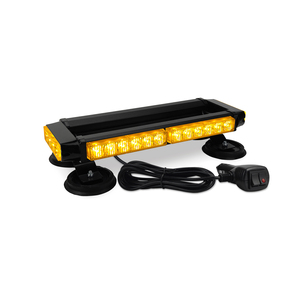
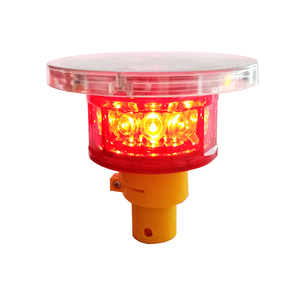

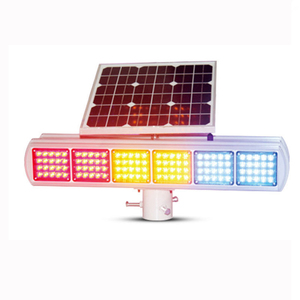
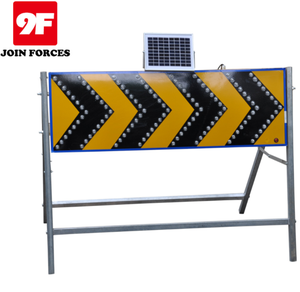
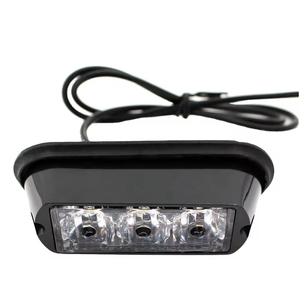
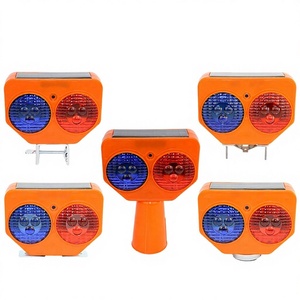
Pedestrian blinker lights operate in unsparing environmental environments—from continuous equatorial ultraviolet exposure to torrential monsoon precipitation and sub-zero freeze-thaw cycles. As a prime OEM/ODM manufacturer headquartered in the Vatwa GIDC industrial belt in Ahmedabad, Gujarat, India, our engineering philosophy treats the solar pedestrian flasher as a safety-critical mission system rather than an ordinary beacon.
The photometric efficacy of modern pedestrian blinkers hinges on precision-engineered Polycarbonate (PC) Fresnel optics and collimating refractive arrays. By collimating solid-state LED rays into targeted horizontal spreads (typically 30° to 60° horizontal and 10° to 15° vertical), our signal heads maximize daylight candela output (exceeding 800 cd in amber and 600 cd in red) without inducing blinding glare to oncoming motorists. Chromaticity parameters strictly comply with CIE 1931 coordinate boundaries, guaranteeing instant chromatic legibility even through direct sunlight scattering or dense automotive exhaust fogs.
Thermal mitigation remains the primary bottleneck for LED lumen maintenance and driver controller longevity. Enpowers integrates extruded aluminum heatsinks directly bonded to high-thermal-conductivity metal core printed circuit boards (MCPCB). This structural dissipation keeps the junction temperature of our Osram/Cree/EpiStar diodes under 65°C under continuous 50°C ambient heat, completely mitigating optical depreciation over their rated 100,000-hour functional lifespans.
The global infrastructure paradigm has fundamentally transitioned from passive traffic demarcation to active, sensor-actuated, and data-connected pedestrian warning systems. As governments across North America, Europe, the Middle East, and Asia mandate Vision Zero frameworks to eliminate vehicular-pedestrian fatalities, municipal procurement specifications are evolving along three distinct dimensions:
1. Shift from Continuous Flashing to Demand-Actuated RRFB (Rectangular Rapid Flashing Beacons): Municipalities are aggressively phasing out 24/7 continuous amber blinkers in high-density urban areas. Continuous flashing causes "driver sensory fatigue," where habitual motorists begin ignoring the light. Modern tenders universally require push-button actuation or passive thermal/PIR motion triggers that engage irregular, multi-pulsed flash rhythms (such as the MUTCD-compliant WW+S rapid alternating flash) only when pedestrians step toward the curb line. This increases driver yielding rates from below 20% to over 85%.
2. Transition to Advanced Lithium Iron Phosphate (LiFePO4) Battery Chemistries: Historical lead-acid (VRLA/SMF) batteries exhibited severe vulnerabilities: short cycle lives (300 to 500 cycles), extreme mass, low thermal tolerances, and total capacity degradation when subjected to prolonged cloudy seasons. Contemporary EPC specifications mandate cylindrical or prismatic LiFePO4 chemistry. With over 2,500 to 3,500 charge-discharge cycles at 80% DOD, integrated Battery Management Systems (BMS) with high/low temperature cut-off, and an operational window of -20°C to +65°C, LiFePO4 batteries reduce the total cost of ownership (TCO) across municipal 10-year road maintenance concessions by over 40%.
3. Standardization of Unified Architectural Enclosures: International EPC contractors executing high-speed corridors (such as NHAI expressways in India or trans-continental arterial links) now discard mixed-material improvised brackets in favor of single-source modular die-cast aluminum or virgin UV-resistant polycarbonate housings with standardized pole clamps, integrated sun visors, and tamper-resistant stainless steel fasteners.
| Engineering Parameter | Conventional Commercial Blinkers | Enpowers OEM/ODM Industrial Spec | Operational Advantage & Benefit |
|---|---|---|---|
| Luminous Intensity | 150 – 300 Candela (Unregulated) | > 800 – 1,200 Candela (Calibrated) | High contrast visibility at 500m+ under bright midday sunlight. |
| Optics Engineering | Basic diffuse cover plate | Engineered Fresnel lens / TIR collimators | Precise optical cut-off, zero glare spillover into driver focal plane. |
| Battery Chemistry | Standard Sealed Lead-Acid (1-2 yr life) | Grade-A LiFePO4 with smart BMS (5-8 yr life) | Survives deep discharges, zero sulfation, eliminates replacement labor. |
| Solar PV Ingestion | Basic PWM shunt controller | Microcontroller MPPT tracking efficiency >96% | Rapid 3.5-hour full recharge even under overcast winter atmospheric skies. |
| Environmental Sealing | IP54 to IP55 (Foam gaskets) | IP65 to IP66 (Seamless silicone O-rings) | Impervious to monsoon water jets, desert sand infiltration, and saline humidity. |
The pedestrian blinker light is no longer an isolated hardware component. It is rapidly becoming an active edge node in intelligent transportation systems (ITS). In our dedicated Ahmedabad R&D laboratory, our engineering teams are deploying innovations that align with the next decade of autonomous vehicle integration and smart infrastructure:
Wireless Sub-GHz Mesh Crosswalk Synchronization: In multi-lane boulevards and divided dual-carriageway expressways, crosswalk lights installed across opposite sides of the highway or on central pedestrian refuges must flash in exact millisecond synchronization. Running underground electrical conduits across paved highways costs thousands of dollars per meter and disrupts live transit. Our OEM units incorporate 433MHz/915MHz RF low-power wireless mesh transceivers with AES-128 encryption, enabling autonomous beacon clusters to synchronize within 5 milliseconds across spans up to 1,200 meters without cutting pavement.
Integrated Micro-Radar & Edge Vision Detection: Moving beyond mechanical crosswalk push-buttons that harbor bacterial cross-contamination and suffer mechanical fatigue, modern pedestrian blinkers integrate 24GHz Doppler radar sensors and lightweight AI computer-vision cameras. These onboard micro-sensors continuously evaluate the pedestrian approach trajectory, differentiating between a passerby walking parallel to the curb and an individual actively preparing to cross the roadway. This intelligent triggering mechanism prevents false-positive warnings, preserving driver vigilance.
Cellular-Vehicle-to-Pedestrian (C-V2X / V2P) Telematics: Advanced export configurations now feature integrated 4G LTE-M / NB-IoT modules capable of broadcasting standardized direct roadside alert messages (such as SAE J2735 PSM - Pedestrian Safety Message). When our pedestrian blinker is activated, the unit simultaneously flashes its high-intensity optical LED array and transmits an invisible digital warning beacon received by approaching connected connected vehicles (ADAS) and GPS fleet mapping systems, giving self-driving and assisted vehicles critical braking warning even before the pedestrian enters the driver's direct field of view.
Decades of rigorous manufacturing discipline in Ahmedabad, India, combined with strict compliance with national and international road transport authorities.
Operating our fully equipped plant at GIDC Phase-1, Vatwa, Ahmedabad, we manage every single process—from SMT surface-mount pick-and-place electronic assembly and automated optical inspection (AOI) to robotic silicone sealing and photometric lumen verification.
Our solar and electrical traffic signals are engineered and tested to satisfy Indian Road Congress (IRC) specifications, the Ministry of Road Transport & Highways (MoRTH), National Highways Authority of India (NHAI), Central PWD, and the Border Roads Organisation (BRO).
Whether you require custom 100mm, 200mm, 300mm, or rectangular RRFB enclosures, proprietary color chromaticity (Amber, Red, Blue, Green, White), custom solar array wattages, or private-label client silkscreening, our CAD/CAM engineers build directly to your project tender drawings.
We do not sell one-size-fits-all solar kits. Our applications engineering team leverages NASA and NREL global solar irradiation databases to calculate precise PV panel wattage and battery reserve capacity tailored specifically to your project's exact geographic coordinates.
Every export shipment is packaged in heavy-duty foam-lined export crating with humidity-absorbing desiccant systems, accompanied by full quality control inspection reports, Certificates of Origin (COO), CE/RoHS declarations, and precise bill-of-lading support for ports worldwide.
100% of manufactured pedestrian blinker light batches undergo 48 hours of continuous thermal stress burn-in testing, high-pressure IPx6 water-ingress chamber validation, and rigorous electronic power surge oscillation checks before receiving warehouse release dispatch authorization.
Authoritative technical clarification on common specifications, compliance hurdles, and manufacturing workflows.
A standard amber blinker typically flashes at a steady, uniform frequency of 50 to 60 flashes per minute using a 50% duty cycle, often operating 24 hours a day. While cost-effective, continuous flashing can lead to habituation, where drivers overlook the signal. An RRFB utilizes rectangular LED modules that pulse with an irregular, high-intensity rapid sequence (such as the 2/4-5 flash sequence where left and right lights alternate in staccato bursts, followed by both flashing together). Furthermore, RRFBs are predominantly demand-actuated via pedestrian push-buttons or thermal sensors, resulting in drastically higher driver compliance rates (up to 85% yielding compared to 20% for continuous beacons).
We calculate solar sizing using the formula: Total Daily Power Consumption (Wh) = LED Wattage × Flashing Duty Cycle × Daily Operating Hours + Controller Parasitic Draw. To ensure system autonomy during uninterrupted rainy or foggy seasons, we factor the minimum peak sun hours (PSH) of the target geographical coordinate (e.g., 2.5 PSH in Northern European winter versus 5.5 PSH in the Middle East). Our systems are engineered with a minimum of 7 to 14 days of zero-sunlight battery reserve autonomy to eliminate dead-battery outages on active roadways.
Yes. Although headquartered in Ahmedabad, India, where we supply major national clients including NHAI, PWD, and BRO, over 40% of our production is exported internationally. We regularly customize lens geometries, chromaticity coordinates, optical luminance classes (Class L1, L2, L3 per EN 12368), and rapid strobe flashing sequences specified under FHWA MUTCD Chapter 4N. Our clients simply share the applicable tender specifications or local transportation guidelines, and our engineering team provides a mapped clause-by-clause compliance matrix.
Mains electricity blinkers are well-suited for dense downtown corridors where continuous AC streetlighting or traffic signal cabinets are already present within meters of the pole and tall buildings obstruct direct sunlight. However, for suburban avenues, highway crosswalks, rural school crossings, or temporary roadwork zones, trenching asphalt and pulling electrical conduit often accounts for over 75% of total project installation capital costs. Solar pedestrian blinkers eliminate civil trenching, road closures, and recurring municipal electricity utility meters, installing completely within 2 hours per pole.
As an end-to-end manufacturer, we offer comprehensive OEM and ODM flexibility including: housing materials (die-cast marine-grade ADC12 aluminium or Bayer Makrolon UV-stabilized polycarbonate); signal dimensions (100mm, 200mm, 300mm diameter round aspects or custom rectangular arrays); LED color spectrums (traffic amber 590nm, traffic red 625nm, blue, green, and high-CRI white); actuation inputs (hardwired piezo push-buttons, ADA-compliant audible buzzers, 24GHz Doppler radar, microwave motion sensors, or passive infrared); power configurations (solar DC with integrated MPPT or 85–265V AC universal wide-input drivers); and private labeling.
Every commercial export order includes an individualized Certificate of Analysis (COA), Factory Acceptance Test (FAT) report, Ingress Protection (IP65/IP66) test certificates, photometric candela test logs, MSDS and UN38.3 lithium battery transportation safety documentation, and comprehensive wiring schematics. Commercial export paperwork (Commercial Invoice, Packing List, Certificate of Origin, Bill of Lading) is precisely coordinated to ensure immediate customs clearance at your destination port.