
Explore our industrial-grade, certified LED flasher series engineered for high-speed highways, mining corridors, toll lanes, industrial facilities, and municipal safety operations.
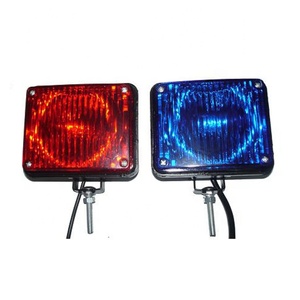
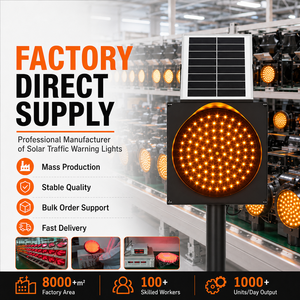
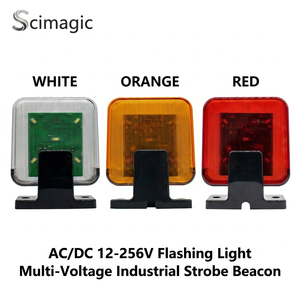
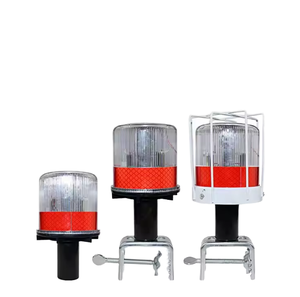
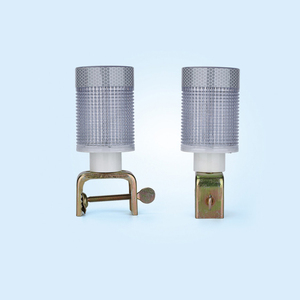
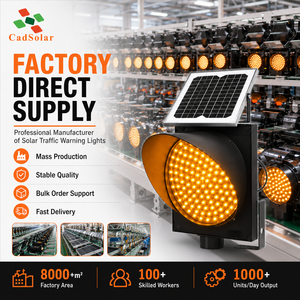
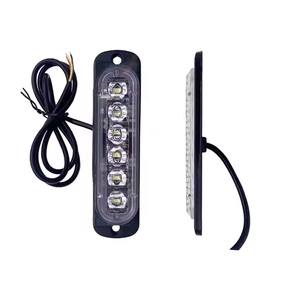
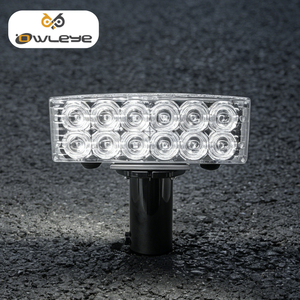
Sourcing industrial-grade traffic signaling equipment requires stringent adherence to international road safety doctrines, robust physical enclosures, and high-efficiency solid-state electronics. Operating out of specialized manufacturing facilities in Ahmedabad, Gujarat, India (Pushpak Industrial Estate, GIDC Phase-1, Vatwa), our production matrix is configured to deliver factory-direct pricing without intermediary surcharges, full structural traceability, and comprehensive tender customization.
Every batch of solar and electrical road blinkers is calibrated against the rigid specifications mandated by the National Highways Authority of India (NHAI), Public Works Department (PWD), and Border Roads Organisation (BRO). We also customize enclosure profiles, flash rates, and optical candela to match European (EN 12352) and American (MUTCD / ITE) tender clauses.
We retain full control over tooling, die-casting, and secondary optics injection. Our proprietary Fresnel lenses utilize Bayer UV-stabilized optical polycarbonate, delivering an exceptional 120-degree light distribution curve and preventing chromatic fading, chalking, or yellowing caused by decades of severe sunlight exposure.
Off-grid performance fails when solar sizing relies on generic assumptions. Our engineers perform precise solar insolation mapping based on the destination latitude, pairing Grade-A monocrystalline PV modules with temperature-resistant LiFePO4 or VRLA gel battery packs engineered to sustain 7 to 10 days of continuous overcast conditions.
The global traffic safety illumination market is undergoing a seismic paradigm shift. What once was a rudimentary analog blinking beacon has transformed into an intelligent, electro-optical edge computing device capable of localized dynamic signaling, energy self-optimization, and vehicle-to-infrastructure (V2I) communication. As infrastructure procurement shifts toward intelligent transportation networks, municipal and highway contractors must evaluate suppliers through the lens of emerging technical competencies:
Traditional autonomous blinkers flash asynchronously, creating a disorganized "visual carnival" that impairs driver depth perception at night. Cutting-edge road flashers integrate sub-1GHz wireless transceivers (433MHz / 868MHz / 915MHz) or integrated GPS pulse-per-second (PPS) time clocks, enabling miles of roadside beacons, chevron curves, and chevron warning arrows to flash in perfect harmony or synchronized sequential chase sequences.
Energy management in modern flashers has transcended dusk-to-dawn photodiodes. Modern units incorporate miniature 24GHz K-band millimeter-wave Doppler radar modules. When roadway traffic is sparse, the flasher conserves battery power in ultra-low-current stand-by; the moment an approaching vehicle is detected exceeding threshold speeds, the beacon triggers high-flux strobe bursts to maximize situational awareness.
High ambient thermal loads severely degrade conventional sealed lead-acid (SLA) batteries within 12 to 18 months. Modern OEM specifications demand integrated Lithium Iron Phosphate (LiFePO4) chemistry with built-in Battery Management Systems (BMS). LiFePO4 delivers 2,500+ deep discharge cycles at 80% DoD, superior thermal stability up to 65°C, and zero toxic off-gassing.
Procurement directors, civil EPC contractors, and highway concessions face stricter accountability matrices regarding product life-cycle costs (LCC) and total cost of ownership (TCO). Procurement decisions are evolving away from lowest-initial-bid mentality toward engineered sustainability and rapid deployment architectures:
| Evaluation Parameter | Legacy Sourcing Practice | Modern Engineering Procurement Standard | Operational Impact |
|---|---|---|---|
| Battery Chemistry | Sealed Lead-Acid / AGM Batteries | Automotive Grade LiFePO4 / LTO Cells | +400% Lifespan Reduced roadside servicing |
| Enclosure Material | Standard Virgin ABS / Recycled Poly | UV-Stabilized Polycarbonate + Die-Cast AL | IK09 Impact High resistance to gravel & salt spray |
| Solar Conversion | Polycrystalline (15-17% Efficiency) | N-Type TOPCon / Monocrystalline (22%+) | Compact Footprint Enhanced cloudy-day charging |
| Optical Performance | Generic 5mm Diode Clusters | High-Power SMD (Osram / Cree / Lumileds) | Class L8H Tested Visual range exceeds 1,000 meters |
| Quality Certification | Self-Declared Conformity Statements | Third-Party Lab NABL / CE / EN 12352 / ITE | Tender Immunity Instant government audit approvals |
Furthermore, circular economy procurement criteria now require modular component designs. In the event of a high-speed vehicle impact, municipal repair teams can replace damaged brackets, solar frames, or signal lenses independently rather than discarding the entire electronic assembly.
Direct technical answers covering OEM tooling, minimum order quantities, ingress ratings, battery autonomy math, and custom tender fulfillment.
Consult directly with our senior application engineers. We provide comprehensive photometric curves, tender compliance matrices, photometric IES files, and direct factory pricing within 24 hours.