
Direct OEM/ODM production lines offering customizable luminous arrays, customized solar power autonomy, multi-voltage drivers, and impact-resistant housings for expressways, tunnels, work zones, and toll plazas.
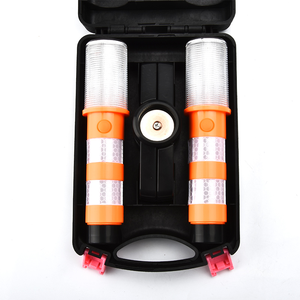
Engineered with high-intensity prismatic reflective sheeting and heavy-duty 3M magnetic docking for rapid vehicle attachment, emergency lane management, and portable construction perimeter safety.
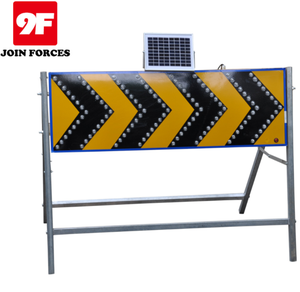
Dynamic optical hazard marker for sharp highway curves, mountain hairpins, and elevated flyovers. Features monocrystalline solar panels with smart night-sensing pulse drivers.
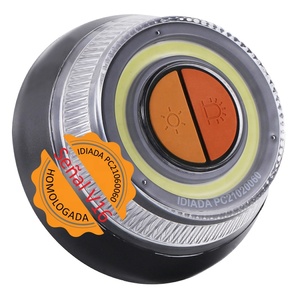
DGT/V16 compliant rechargeable roadside emergency beacon generating 40-80 candela omnidirectional luminous intensity for rapid vehicle breakdown warning without occupants stepping into traffic.
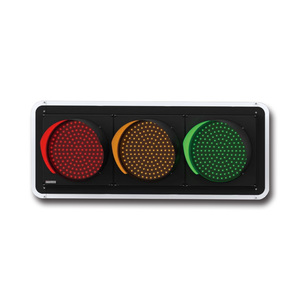
Modular UV-stabilized polycarbonate enclosure housing high-flux amber/red/green LED cluster arrays. Supports dual AC110-240V or DC12-24V solar integration with dynamic ambient dimming.
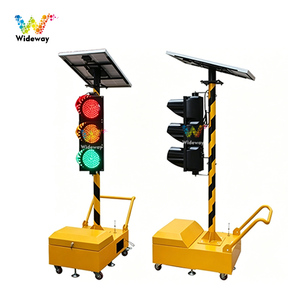
200-800m synchronized RF wireless mobile traffic system with trolley deployment base. Ideal for temporary detour management, one-way bridge construction, and emergency disaster relief coordination.
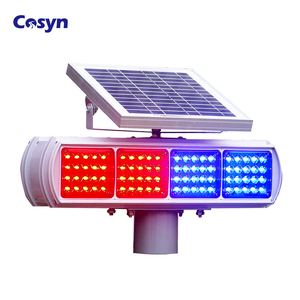
High-speed dual-color strobe beacon engineered with dual 360-degree Fresnel lenses, reinforced mounting brackets, and microcrystalline solar charging for police barricades and civil trenches.
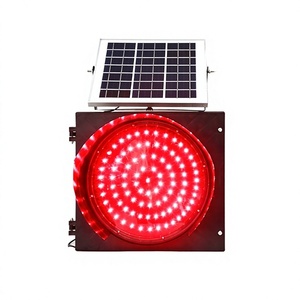
High-lumen industrial flashing beacon with omnidirectional optical focus, hermetic sealing against heavy rain/sandstorms, and integrated MPPT circuit ensuring stable duty-cycle flashing at median points.
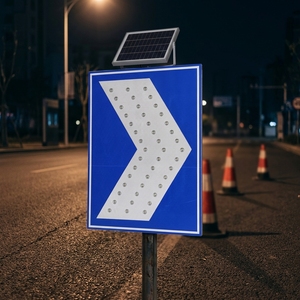
Precision-milled 3mm aluminum backing plate fused with Fourth-Grade microprismatic reflective film and synchronized perimeter LED pulsing for sharp curves, exit ramps, and highway crash barriers.
Operating out of our advanced manufacturing plant in Ahmedabad, Gujarat, India (GIDC Phase-1, Vatwa), we manage end-to-end component surface mounting, optical casting, photometric profiling, and stress chamber testing under strict quality assurance frameworks.
Our solar blinkers, chevrons, and plaza signals are engineered to satisfy stringent highway department norms including NHAI (National Highways Authority of India), PWD, BRO (Border Roads Organisation), IRC:SP:84, and European EN 12352 / American MUTCD standards on demand.
Each blinker utilizes custom UV-stabilized polycarbonate lenses with micro-Fresnel optics. This achieves optimal chromaticity coordinates, minimizes parasitic light scattering, and delivers over 800 meters of unhindered nighttime visibility across 30-degree horizontal cones.
Equipped with intelligent micro-controller charging algorithms that prevent thermal runaway and over-discharge. Supported by industrial-grade LiFePO4 or heavy-duty sealed deep-cycle lead-acid batteries designed for 7 to 10 consecutive overcast or monsoon days.
From virgin ABS / UV-resistant Polycarbonate heads to pressure die-cast aluminum enclosures, we support complete OEM mold development, bespoke bracket brackets for tubular or octagonal poles, and anti-theft mechanical locks for remote installations.
By eliminating trading intermediaries, global road contractors and municipal concessionaires enjoy substantial margin advantages, streamlined bill-of-materials traceability, certified raw materials, and documented factory acceptance testing (FAT) prior to export dispatch.
Serving EPC projects across 20+ countries, every consignment undergoes comprehensive IP water spray testing, high-temperature soak chambers, optical candela verification, and export fumigation crating to guarantee zero-defect field commissioning.
Ensure your procurement tenders prevent premature degradation. Compare the critical optical, electrical, and mechanical criteria engineered into our OEM/ODM road blinker product line.
| Engineering Parameter | Standard Commercial Grade | Our Industrial OEM/ODM Standard | Operational Advantage & Impact |
|---|---|---|---|
| Optical Luminous Intensity | 150 – 300 cd (Uncalibrated LEDs) | 400 – 800+ cd (Bin-sorted Epistar/Osram) | Guarantees 800m+ clear warning in dense fog, sand, or intense sunlight without color shifting. |
| Solar Photovoltaic Module | Polycrystalline (10W – 15W, 14% Eff.) | Grade-A Monocrystalline (20W – 40W, >21.5% Eff.) | Accelerated charging during overcast skies; reduces panel surface area requirements. |
| Energy Storage System | Conventional Valve Regulated Lead-Acid (VRLA) | Deep-Cycle LiFePO4 (2000+ Cycles) / High-Temp Gel | Operates reliably from -20°C to +70°C with 5-7 year operating lifespans without replacement. |
| Ingress Protection (IP Rating) | IP54 – IP65 (Glued gaskets) | IP66 – IP68 (Molded EPDM seamless silicone seal) | Prevents moisture ingress, terminal oxidation, and optical fogging under high-pressure cleaning. |
| Lens Polymer Technology | Standard GPPS / Low-grade Acrylic | Bayer Makrolon® UV-Stabilized Polycarbonate | Resists yellowing, high-impact rock throws, and crazing under severe tropical solar radiation. |
| PWM Pulse Control Mode | Fixed analog timer circuit | Smart MCU with ambient auto-dimming & sync | Prevents nighttime driver blinding while conserving up to 45% battery capacity per cycle. |
The global infrastructure sector is transitioning from stand-alone analog caution beacons to digitally synchronized, low-carbon active warning systems. Key shifts shaping engineering bills-of-quantities include:
Modern highway authorities no longer accept uncoordinated, asynchronous flashing across multi-sign chevron arrays. Highway bids increasingly demand wireless RF 2.4GHz / 868MHz mesh protocols that trigger sequenced "traveling arrow" patterns along high-speed deceleration lanes without physical cabling.
Environmental regulations and total cost of ownership (TCO) models are systematically replacing lead-acid chemistries. LiFePO4 cells deliver higher energy density, superior thermal resilience up to 65°C, and complete non-toxicity, drastically reducing median maintenance visits.
To mitigate "sign fatigue" where continuous flashing causes drivers to ignore warnings, highway agencies now specify integrated Doppler radar blinkers. The beacon remains dormant or steady, activating intense strobe pulses only when incoming traffic exceeds predefined speed thresholds.
ESG infrastructure compliance directives mandate high recyclability. Concessionaires are shifting to modular pressure die-cast aluminum or recycled polycarbonates with quick-release snap-fit LED boards, allowing single-technician roadside repair without replacing structural housings.
Continuous R&D across photonic distribution, solid-state power components, and connected telematics is transforming roadway illumination into an intelligent layer of smart transport ecosystems.
Advanced optical modeling using refractive micro-grooving channels luminous flux into sharp asymmetric beams. This targets the visual cone of motorists while avoiding upward light pollution, conforming to dark-sky preservation directives.
Integration of NB-IoT and LTE-M transceivers inside the signal housing allows municipal control rooms to monitor battery voltage, solar panel dust occlusion, LED failure, and physical tilt angles in real-time, eliminating manual field inspections.
Next-generation onboard micro-controllers utilize predictive algorithms based on seasonal solar curves. When continuous rain is detected, the unit dynamically throttles duty cycles and flash frequencies to extend autonomy to 15+ days without shutdown.
Direct technical guidance compiled by our senior optical and hardware engineers to assist procurement teams, EPC project managers, and civil consultants.
Whether you require customized solar traffic signal blinkers, tender-compliant arrow hazard chevron arrays, or toll plaza warning lighting, our engineering team in Ahmedabad is ready to support your technical specifications and volume delivery schedules.