Precision photometric optics, poly-crystalline photovoltaic charging modules, and UV-stabilized impact-resistant polycarbonate housings manufactured to withstand demanding climate regimes worldwide.
Exporting to Americas, EU & Middle East
NHAI, BRO, PWD Specification Compliant
Tooling, SMT Assembly & Optical Lab
Tested for Extreme Ambient Stress (-40°C to +75°C)
Modern highway infrastructure and high-speed temporary civil works demand significantly more than passive reflection or sporadic incandescent blinking. The international regulatory shift toward the Manual on Uniform Traffic Control Devices (MUTCD Section 6F.83), European Standard EN 12352 (Light Warning Devices), and Indian Road Congress (IRC) / NHAI statutory standards has elevated warning flashers into high-precision, electro-optical safety countermeasures.
As a vertically integrated OEM/ODM manufacturer, our engineering matrix focuses on mitigating the primary root causes of road hazard signal failure: premature battery sulfation, moisture-induced optical fogging, and inadequate daytime contrast luminance.
The core structural advantage of our construction warning light lines stems from a systematic approach to modular durability:
Lenses are injection molded with UV-stabilized Makrolon® polycarbonate resin containing anti-yellowing stabilizers, ensuring 92% light transmittance even after 5+ years of intense solar UV exposure in equatorial desert environments.
Integrated MPPT (Maximum Power Point Tracking) microchips regulate power distribution from solar panels to LiFePO4 / NiMH energy storage cells, dynamically adjusting discharge duty cycles to assure 7 to 15 days of continuous operation in overcast or monsoon conditions.
Utilizes ultrasonic perimeter seam welding combined with custom molded EPDM rubber compression gaskets, fully isolating the inner surface-mount PCBA from high-pressure road-spray, airborne particulate sand, and corrosive de-icing saline salts.
Procurement departments require rigorous hardware mapping against specific project geometries and risk zones. Review our quick-reference mechanical parameter spectrum below:
| Hazard Classification | Typical Lens Spec | Flash Frequency | Autonomy / Battery Life | Optimal Deployment Application |
|---|---|---|---|---|
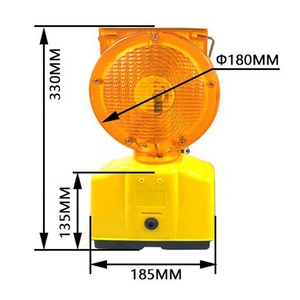
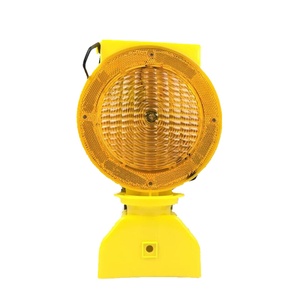
| Type A Low-Intensity Flasher | 7-inch (180mm) Amber Polycarbonate | 55–75 Flashes / Min | 120–160 hrs continuous without sun | Channelizing Barricades, Night Lane Closures |
| Type B High-Intensity Strobe | 7 to 8-inch Clear / Red Polycarbonate | 60–90 Flashes / Min | High-drain; Hybrid Solar / DC Buffer | Daytime Hazard Advance Warning, Highway Detours |
| Type C 360° Steady-Burn Beacon | 360° Omnidirectional Prismatic | Constant / Low-Current Mode | 80–110 hrs sustained illumination | Delineating Construction Tapers & Median Barricades |
| Type D 360° Synchronized Flasher | 2.4GHz RF Mesh Interconnected Dome | Sequential Wave Pattern | LiFePO4 with 10+ year thermal endurance | High-Speed Highway Merges & Work-Zone Chicanes |
The global traffic safety market is transitioning rapidly from fragmented consumables procurement toward comprehensive, connected infrastructure systems. When evaluating long-term road safety tenders and framework agreements, international tier-1 EPC contractors and municipal ministries are focusing on three primary evolutionary directions:
1. Connected Work Zones (IoT & V2X Integration): Modern barricade lights are no longer isolated warning devices. The integration of cellular-V2X (Vehicle-to-Everything) and DSRC beacons directly inside warning light housings allows work-zone status to broadcast real-time telemetry into incoming autonomous and connected vehicles' telematics dashboards. Our R&D center facilitates embedded sensor options that alert navigation platforms the instant a barricade light is knocked over or displaced.
2. Radio-Frequency (RF) Synchronous Sequenced Flashing: Traditional, unsynchronized strobe arrays create visual clutter and disorient approaching drivers at night (the "scattered flash" effect). Future highway tenders across North America and Europe explicitly mandate sequential flashing warning systems. By utilizing self-healing 2.4 GHz RF micro-mesh networks, our smart barricade lights self-organize without master controllers, creating a smooth visual arrow effect that guides drivers safely through highway work zones.
3. Sustainable Lithium Chemistry (LiFePO4) & Circular Economy Standards: The phase-out of hazardous Sealed Lead-Acid (SLA) batteries has accelerated. Advanced procurement guidelines demand Lithium Iron Phosphate (LiFePO4) chemistry due to its thermal stability in high-ambient zones (+65°C road surface temperatures), non-combustive characteristics, and 2,000+ deep-discharge cycle life (compared to just 300 cycles for lead-acid), drastically slashing recurring maintenance and disposal costs.
Building road safety equipment requires stringent consistency. With decades of manufacturing heritage originating from our high-precision fabrication base, our facilities provide complete turnkey support for international distributors, highway authorities, and safety brands:
In-house CNC mold engineering and high-tonnage injection machines allow rapid turnaround (under 25 days) for custom bracket geometries, bespoke optic profiles, and embossed corporate logos.
Every batch comes with certified photometric testing, IES files, IP67 waterproof validation reports, and hazardous transport documentation (UN38.3, MSDS) for smooth customs clearance.
Reinforced double-wall corrugated seaworthy cartons with internal custom EPE foam shock buffers ensure that lenses and solar cells arrive ready for deployment without micro-cracks or transit stress.
Direct technical answers to the most common queries from municipal procurement officers, highway engineers, and commercial distributors:
Whether you require tender-ready technical documentation, sample prototypes for laboratory photometric validation, or bulk container shipments, our international export engineering team is ready to assist.