Solar + AC Dual
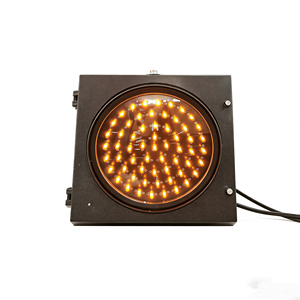
Solar & Mains Powered Yellow Flashing Traffic Signal Light with PC Material
Polycarbonate Housing
590nm Amber
IP65 Ingress

Engineered for mission-critical roadway delineation, construction work zones, highway intersections, and automated toll collection corridors. Fully customizable across chromaticity, voltage, solar autonomy, and enclosure geometry.
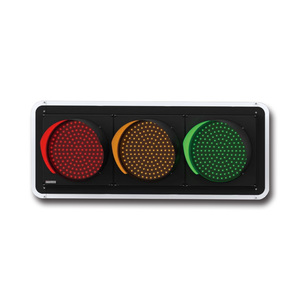
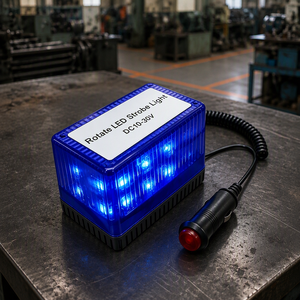
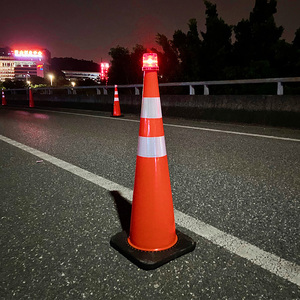
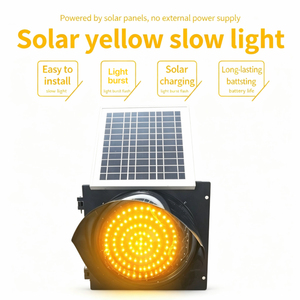
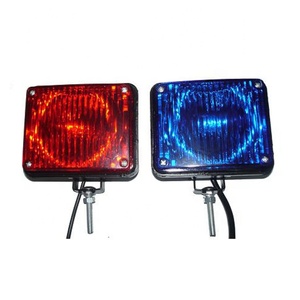
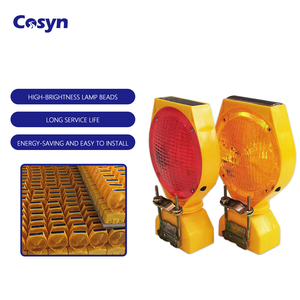
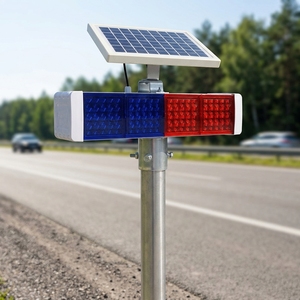
In modern intelligent transportation systems (ITS) and high-speed corridor design, an amber LED blinker is not merely an illuminator; it is an active safety beacon engineered to trigger immediate ocular driver response without inducing disability glare.
Our amber signal heads utilize automotive-grade AlInGaP (Aluminium Indium Gallium Phosphide) semiconductor dice. Emitting within a tight peak of 592nm ± 3nm, our optics minimize atmospheric Rayleigh and Mie scattering, achieving maximum penetration through dense fog, torrential rain, and sandstorms.
Utilizing high-transmittance optical-grade polymethyl methacrylate (PMMA) or UV-stabilized polycarbonate (PC), our internal collimating lenses reorient wide-angle lambertian LED emissions into an optimized horizontal beam spread (30°) and vertical viewing cutoff (15°) to eliminate light pollution and focus intensity where motorists need it.
Equipped with intelligent pulse-width modulation (PWM) constant current LED drivers, the beacon alternates between day mode (>800 cd on-axis) and night mode (automatically adjusted down to 300 cd). This prevents night-time retina saturation while saving up to 48% of battery storage capacity.
“Engineering standard compliance demands that amber warning beacons deliver continuous chromaticity adherence across broad operating thermal envelopes (-30°C to +75°C). Optical degrading is prevented through direct aluminum MCPCB thermal heat sinking.” — Enpowers Technical Infrastructure Division
| Performance Parameter | Solar-Powered Blinker (DC Architecture) | Electricity-Powered Blinker (AC Mains) | Engineering Compliance Standards |
|---|---|---|---|
| Input Voltage Envelope | 12V DC / 24V DC (Integrated MPPT) | 85V – 265V AC, 50/60 Hz | IEC 60529 / IEEE Standards |
| Luminous Intensity | 400 – 900 cd (Configurable) | 600 – 1200 cd (High-output) | EN 12352 Class L8H / ITE Compliant |
| Solar PV Array Capacity | 20W – 80W Mono/Polycrystalline | Not Applicable (Direct Transformer) | MNRE / IEC 61215 |
| Energy Storage Chemistry | LiFePO4 (Lithium) / Gel VRLA Deep Cycle | Optional UPS / Capacitor Backup | UN 38.3 / UL 1642 |
| Autonomy (Sunless Days) | 5 to 10 Continuous Days (Cloud/Rain) | Continuous (Grid Dependent) | NHAI Guidelines / IRC:SP:110 |
| Operating Temperature | -25°C to +70°C | -35°C to +80°C | MIL-STD-810G Environmental |
| Housing Substrate | UV-Resistant Polycarbonate / LM6 Alloy | Pressure Die-Cast LM6 Aluminium Alloy | IK08 to IK10 Impact Rated |
From architectural blueprints to high-volume injection molding and surface-mount device (SMT) populating, we supply global road authorities, municipal engineers, and private-label distributors with precision custom builds.
Rapid mold development for round (200mm/300mm/400mm), arrow, square, or chevron form factors. Materials include fire-retardant SABIC polycarbonate and corrosion-resistant powder-coated LM6 die-cast alloy.
Bespoke MCU programming delivering custom flash cadences: Standard 50-60 FPM, dual-pulse hazard strobing, synchronous RF multi-beacon coordination, or dimming algorithms tied to integrated LDR sensors.
Universal pole-mount collars (40mm to 114mm OD), cantilever arms, mast-arm assemblies, gantry drop clamps, and magnetic heavy-vehicle bases treated with hot-dip galvanization or electrostatic spraying.
Laser engraving of proprietary client brand marks, custom barcode/SKU labeling, tender-specific inspection serialization, and heavy-duty reinforced ISTA-certified maritime transit crating.
Operating from Plot No. 140, Pushpak Industrial Estate, GIDC Phase-1, Vatwa, Ahmedabad, Enpowers International stands as an established manufacturing force in traffic safety technology. Eliminating intermediate brokers, our factory delivers verified quality directly to EPC road infrastructure contractors.
Every amber blinker signal is subjected to rigid production-line verification: chromaticity coordinate testing using spectral goniophotometers, ingress protection validation under high-pressure water spray, and continuous 72-hour thermal-stress burn-in.


Global infrastructure procurement is experiencing a paradigm shift from passive static flashers toward connected, intelligent, and highly durable warning networks. Project managers and EPC buyers must account for these four technological shifts:
Tenders increasingly mandate wireless Sub-1GHz RF or LoRaWAN mesh communication between roadside beacons. Synchronized pulsing prevents chaotic visual noise at dangerous intersections, creating an orderly, highly discernible visual wave that dramatically cuts reaction latency for approaching drivers.
Traditional Lead-Acid/Gel VRLA batteries are rapidly being phased out of international project specifications due to sulfation under deep cycles. Lithium Iron Phosphate (LiFePO4) chemistries provide 3000+ lifecycle cycles at 80% DOD, superior high-temperature endurance, and zero acidic vapor venting.
Next-generation blinkers incorporate low-power DSRC / C-V2X broadcast transceivers. These warning beacons beam real-time hazard proximity warnings directly into automated vehicle cockpits and ADAS systems, alerting semi-autonomous transport long before the physical flashing aspect is visually sighted.
European and North American tenders enforce strict cradle-to-grave carbon auditing. Leading designs feature halogen-free, bio-circular polycarbonates and tool-less modular quick-release architectures allowing single-component replacement (LED engine or driver) without scrapping the chassis.
Authoritative answers for procurement managers, highway safety consultants, and commercial tender contractors.
Whether you need a quotation for a state highway tender, bespoke mold development, or high-durability solar amber warning beacons for an infrastructure corridor, our senior engineering team is ready to assist with CAD schematics and compliance mapping.
Inquire Now