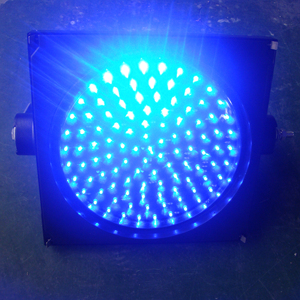
Explore our field-tested solar-powered flashing beacons, barricade safety strobes, remote-controlled intersection beacons, and active illuminated chevron arrow systems engineered for harsh climate resiliency.
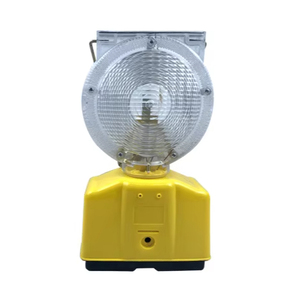
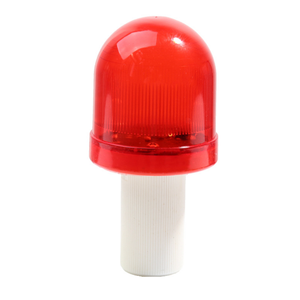
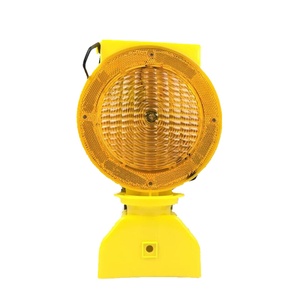
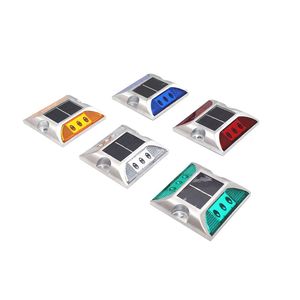
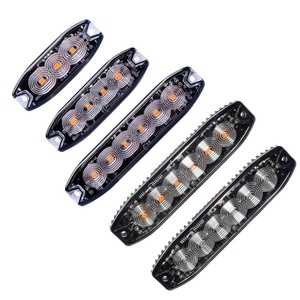
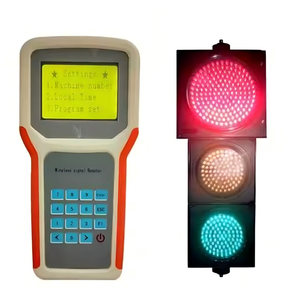
Autonomous solar warning flashers serve as vital, failsafe visual countermeasures across unlighted median crossings, high-risk arterial curves, construction work zones, and remote border highways. Modern civil infrastructure demands strict adherence to optical physics, power topology management, and material endurance.
Our solar flashers utilize injection-molded Bayer Makrolon® UV-stabilized optical polycarbonate. Internal micro-Fresnel optics condense divergent diode rays into concentrated, uniform parallel light columns. Luminous outputs consistently exceed 8,000 mcd per LED cluster, maintaining chromaticity compliance across standard Amber (590-595 nm), Red (620-625 nm), and Blue (465-470 nm) wavebands.
Moving away from legacy sealed lead-acid (SLA) reservoirs, our OEM designs integrate Grade-A Lithium Iron Phosphate (LiFePO4) cells paired with solid-state Maximum Power Point Tracking (MPPT) micro-controllers. Operating at >95% conversion efficiency, the charge circuitry prevents cell overcharging, deep discharge, and thermal runaways while guaranteeing 12 to 18 consecutive rainy/cloudy days of operational autonomy.
Housings are cast using either virgin UV-resistant polycarbonate or marine-grade die-cast aluminum alloys treated with electrostatically applied polyester powder coatings. Gasketed with siliconized O-rings and breather hydrophobic ePTFE membranes, our units deliver certified IP65 to IP68 ingress protection, preventing moisture ingress, saline fog erosion, and internal condensation.
Procurement authorities evaluate lifecycle expenses based on the Total Cost of Ownership (TCO). This comprehensive matrix demonstrates the mechanical and photometric differentials between generic consumer-tier warning lamps and our industrial-grade OEM specifications.
| Critical Engineering Metric | Commercial Grade / Standard Market | Enpowers Custom OEM Specification | Operational Impact & Benefit |
|---|---|---|---|
| Optical Polycarbonate Stability | Recycled PC / Unstabilized Acrylic | Bayer Makrolon® UV-Resistant Polycarbonate | Prevents yellowing, surface hazing, and optical candela decay over 7+ years |
| Diode Efficacy & Luminous Angle | Standard DIP LEDs (4,000-6,000 mcd, 15°) | Osram / Epistar High-Flux SMD / Encapsulated (8,000-12,000 mcd, 30°x30°) | Ensures wide-angle highway visual capture past 1,000 meters in dense fog and rain |
| Electrochemical Storage Cell | Standard VRLA / Sealed Lead Acid (SLA) | High-Density LiFePO4 with Hardware BMS Protection | Extends lifecycle from 300 cycles (SLA) to 2,500+ cycles; wide temp (-20°C to +70°C) |
| Charge Controller Topology | Basic On/Off Shunt Circuitry | Digital MCU Pulse-Width Modulated (PWM) or Micro-MPPT | Harvests power even in low-irradiance conditions; preserves deep-cloud autonomy |
| Flashing Frequency Regulation | Capacitor-timed RC Oscillator (Unstable) | Crystal-locked Solid-State Micro-controller | Guarantees exact 50 to 60 flashes per minute (±2%) per MUTCD / NHAI tender norms |
| Vibration & Structural Rating | Snap-fit Thin Mold Plastic Body | Rib-reinforced Die-Cast Aluminum or 3.5mm Virgin Polycarbonate | Withstands wind loadings exceeding 150 km/h and continuous vehicle turbulence |
Operating from Ahmedabad, Gujarat, India (Plot No. 140, Pushpak Industrial Estate, GIDC Phase-1, Vatwa), our state-of-the-art facility manufactures, solders, calibrates, and quality-tests optical warning hardware completely in-house.
By eliminating trading intermediaries, global road contractors and municipal engineering boards gain direct access to OEM/ODM custom fabrication. We adapt aspect sizes (200mm, 300mm, 400mm), housing bracket fixtures (unipole, mast arm, cantilever, or gantry), battery chemistries, and custom PCB firmware to your local project tenders.
 Fully integrated manufacturing compliant with NHAI, PWD, BRO, CE, and US MUTCD standards.

Procurement officers and infrastructure designers must anticipate rapid shifts in municipal mandates, environmental regulations, and intelligent transportation systems (ITS). Below are four definitive engineering shifts steering the future of roadway warning hardware.
Standard isolated blinkers are transitioning toward connected assets. Modern road tenders increasingly mandate smart optical nodes equipped with low-power NB-IoT or LoRaWAN transmitters. These micro-modems report real-time battery voltage, solar panel charging currents, and LED diode health directly to centralized road maintenance centers, completely eliminating manual highway patrol checks.
On blind expressway curves and long work zones, non-synchronized flashers can create a disorienting "visual clutter" phenomenon for drivers. Next-generation systems feature sub-1GHz (433/868/915 MHz) or GNSS satellite pulse sync. Arrays of chevron arrow signs or sequential lane-closure beacons flash in orchestrated rolling waves, guiding traffic smoothly through critical diversion bottlenecks.
Space-constrained cantilever warning poles demand higher energy density. Emerging solar flasher builds leverage Bifacial Monocrystalline PERC cells capable of capturing ground-reflected albedo light, boosting winter output by 15-25%. Furthermore, research is driving adoption of wide-temperature Sodium-Ion (Na-Ion) cells to achieve fire-safe, sub-zero highway resilience in mountainous BRO-level altitudes.
Our safety installations are specified across major national highways, mountainous defense roads, municipal corridors, and private mega-concessions.







Direct answers addressing technical tender parameters, customization capabilities, optical certifications, and logistics for overseas civil procurement managers.
Whether you require tender-compliant 300mm road blinkers, synchronized chevron curve warnings, or heavy-duty solar barricade lights, our engineering team in Ahmedabad is standing by to prepare CAD schematics, photometric reports, and factory-direct pricing.