Heavy-Duty Mobile
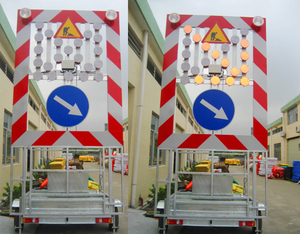

Precision-machined optical housings, deep-cycle solar charging systems, and ultra-high-candela LED arrays designed to perform under harsh ambient temperatures (-40°C to +85°C) across highways, civil construction corridors, and high-risk work zones.
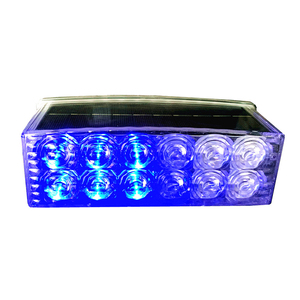
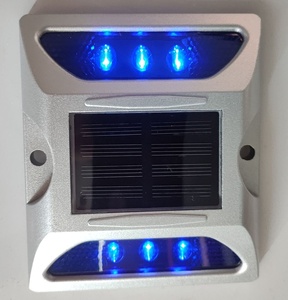

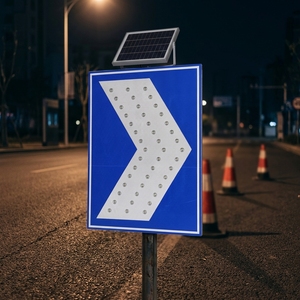
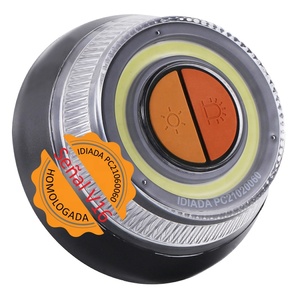
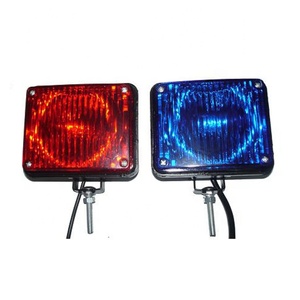
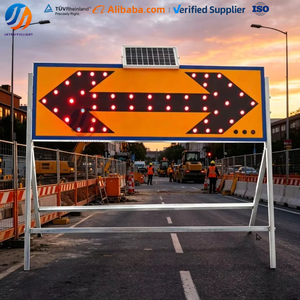
Procuring off-grid solar-powered traffic flashers (flashing yellow beacons, red stop flashers, directional arrow boards, and chevron warning signs) is fundamentally an exercise in risk reduction. In unmonitored highway environments, equipment failure compromises public safety and triggers immense municipal liabilities. As a premier original equipment manufacturer (OEM), we design our hardware to conquer optical attenuation, battery sulfation, thermal breakdown, and ingress failure.
Highway safety standards such as the Federal Highway Administration's MUTCD (Manual on Uniform Traffic Control Devices, Section 4L.01 & 4L.02), ITE (Institute of Transportation Engineers) Vehicle Traffic Control Signal Heads (VTCSH) specifications, and European Standard EN 12352 (Traffic warning lamps classes L2H, L8H, and L8M) dictate strict photometric performance. Flashers must maintain adequate luminous intensity across both horizontal and vertical beam angles while consuming fractional wattage to ensure solar balance across uninterrupted winter seasons.
Standard diffuse LED diodes waste up to 60% of their luminous flux outside driver lines of sight. Our OEM manufacturing integrates UV-stabilized optical polycarbonate lenses engineered with precision Total Internal Reflection (TIR) and multi-tiered Fresnel prism rings. This focuses output into a calibrated horizontal spread of 30° to 60° and vertical spread of 10° to 15°, providing daytime conspicuity exceeding 1,200 meters at a fraction of the current draw.
Unlike conventional VRLA/AGM batteries that degrade dramatically above 40°C or suffer permanent sulfation in sub-zero winters, our custom assemblies utilize Grade-A Lithium Iron Phosphate (LiFePO4) cells backed by custom Battery Management Systems (BMS). Offering >3,000 charge-discharge cycles at 80% DOD and operating parameters spanning -20°C to +70°C, the system guarantees an autonomous operational lifespan exceeding 7 to 10 years.
Roadway beacons withstand continuous vibration, salt-fog corrosion, diesel exhaust particulates, and severe wind buffet forces. We tool heavy-duty die-cast aluminum (ADC12) and virgin Bayer Makrolon polycarbonate housings sealed with continuous EPDM or foamed silicone gaskets. Every design passes simulated finite element analysis (FEA) for hurricane-grade wind loading (150 km/h to 200 km/h) and IK09/IK10 mechanical impact benchmarks.
| Engineering Parameter | Commercial Grade / Generic Importer | Our OEM Factory Precision Build | Operational Impact & Benefit |
|---|---|---|---|
| Optical Beam Regulation | Uncollimated 5mm Dip LEDs or basic SMD strips | High-Flux Cree/Osram SMD LEDs + TIR Fresnel Matrix | Eliminates phantom reflections; satisfies MUTCD Class I / EN 12352 L8H high-intensity daylight visibility. |
| Battery Chemistry & Life | Sealed Lead-Acid (SLA/AGM), 300-500 cycles (1-2 yrs) | Grade-A LiFePO4 / High-Temp LTO, 3,000+ cycles (7+ yrs) | Reduces scheduled maintenance and replacements by 80%, avoiding costly roadway lane closures. |
| Solar Energy Autonomy | Nominal 2 to 3 overcast days; frequent winter failure | Calibrated 7 to 15 Overcast Days (Geographic Sizing) | Guarantees uninterrupted flash frequency during extended monsoon rains, winter blizzards, or heavy smog. |
| Housing Ingress & Build | Recycled ABS / standard plastics, IP54 rating | UV-Stabilized Bayer PC or Cast ADC12 Aluminum, IP66-IP68 | Total protection against high-pressure water spray, fine silt infiltration, UV embrittlement, and salt corrosion. |
| Dimming & Energy Control | Fixed power draw or primitive LDR resistor | PWM Auto-Dimming (Photocell Ambient Feedback) | Prevents blinding night-time glare for approaching drivers while extending nocturnal battery reserve by up to 50%. |
Whether deploying 200mm (8-inch) or 300mm (12-inch) amber warning beacons at un-signalized rural crossroads, high-speed interstate exit curves, or school zone safety crossings, factory-direct OEM collaboration guarantees that tender clauses are met with verified laboratory test certificates, rather than unverifiable marketing claims.
Procurement teams and municipal transport planners are shifting away from standalone flashing beacons toward interconnected, reactive, and smart-city-integrated warning ecosystems. Understanding these macro trends provides strategic leverage in multi-year concession contracts and highway EPC bids.
Uncoordinated flashing lights create visual chaos and cognitive fatigue for approaching motorists. The future lies in synchronized chevron and flasher arrays using sub-1GHz wireless mesh (LoRa, Zigbee) or cellular NB-IoT/Cat-M1 networks. Chevron curves flash sequentially to visually trace the road geometry, leading to measurable drops in roadway departure accidents. Procurement specifications increasingly demand centralized remote status monitoring via cloud dashboards.
Continuous 24/7/365 flashing warning signs suffer from "driver habituation"—commuters subconsciously filter out beacons they see blinking every day. Advanced tenders now specify microwave Doppler radar-actuated flashers that activate only when approaching vehicles exceed speed thresholds or when thermal infrared pedestrian sensors detect crosswalk users. This active triggering triples driver alertness and slashes battery power draw by 65%.
With the rapid adoption of Level-2+ and Level-3 autonomous driving suites and ADAS systems, physical light signals are being augmented by digital radio warnings. Next-generation OEM solar flasher units are integrating C-V2X (Cellular Vehicle-to-Everything) and DSRC beacons, transmitting real-time digital warning messages (e.g., Road Works Ahead, Work Zone Speed Reduced, Hazard Beacon Active) directly into in-vehicle heads-up navigation displays.
Next-generation solid-state and sodium-ion (Na-ion) battery chemistries are reaching commercial production, eliminating lithium supply chain dependencies and maintaining flawless cycling at extreme freezing thresholds (-30°C to -40°C). Concurrently, flexible high-efficiency bifacial monocrystalline silicon and transparent perovskite overlays allow architectural integration directly into sign faces and support poles, eliminating bulky, easily stolen standalone solar panels.
International development banks and government transport ministries are incorporating Environmental Product Declarations (EPD) into procurement point schemes. Leading OEM factories are shifting toward modular aluminum extrusions, non-toxic lead-free solders (RoHS compliant), halogen-free cabling, and fully detachable sub-assemblies that enable zero-landfill refurbishment at the end of their 10-year deployment lifecycles.
Global engineering firms frequently manage concurrent projects across varying jurisdictions—each mandating differing lens sizes (200mm vs 300mm), flash sequences (single pulse, rapid double strobe, or MUTCD stutter), and mounting mast configurations. Procurement models now favor OEM manufacturers providing modular universal chassis, field-swappable optical engines, and firmware-selectable flash rate profiles.
Drawing from extensive OEM manufacturing heritage, our plant supplies fully traceable, spec-compliant warning hardware. We bridge the gap between engineering drawings and real-world deployment across 20+ export countries.
Unlike trading companies, our facility houses internal die-casting lines, high-precision injection molds, automated surface-mount (SMT) pick-and-place lines, and optical potting stations. This ensures strict control over circuit track impedance, LED binning consistency (matching forward voltage and dominant wavelength within ±1.5nm), and flawless enclosure hermeticity.
Whether your project is administered under NHAI, PWD, BRO standards, European Norms (EN 12352 / EN 12966), or American AASHTO/MUTCD clauses, our bilingual application engineers review tender documents line by line. We furnish matched compliance matrices, certified photometric test reports, and stamped CAD shop drawings for rapid engineer-of-record approvals.
Every product batch is subjected to rigorous environmental verification inside our testing laboratories: 48-hour continuous IPX6/IPX8 water immersion, salt spray chamber testing (ASTM B117), thermal shock cycling (-40°C to +85°C), and 72-hour sustained burn-in tests to identify infant mortality in electronic driver circuitry before dispatch.
Our safety hardware is deployed across national expressway corridors, international toll complexes, remote border mountain passes, and strategic industrial corridors.






Key clarifications on technical sizing, warranty criteria, minimum order quantities, and international shipping protocols directly from our factory engineering desk.