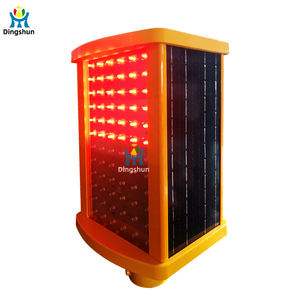
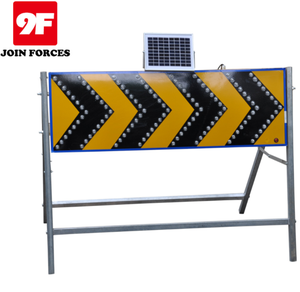
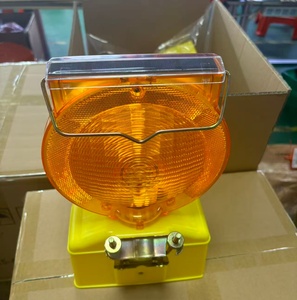
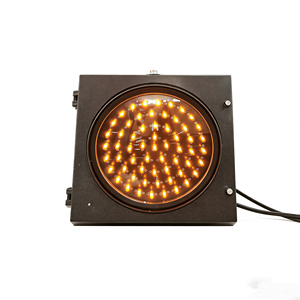
Precision-engineered, off-grid optical signals deployed across expressways, municipal intersections, and critical construction zones worldwide.
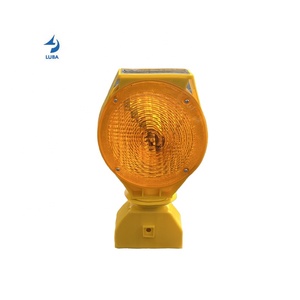
Solar traffic blinkers act as active optical warning mechanisms that convey non-verbal priority, caution, and hazard alerts to drivers approaching dangerous conflict points. The functional efficacy of any solar blinker module hinges upon strict compliance with chromaticity boundaries and luminous intensity distributions defined by CIE 1931, ASTM D4956, and EN 12368 standards.
Our amber (yellow) blinkers maintain a tight dominant wavelength distribution between 589 nm and 594 nm, eliminating washed-out whitish hues that diminish visibility in harsh sunlight. Red warning beacons operate strictly at 620 nm to 630 nm, ensuring rapid visual cortex recognition from distances exceeding 800 meters under unlit rural conditions. Coupled with internal Fresnel collimator lenses, the optical arrays yield wide horizontal beam divergence (±30°) to accommodate multi-lane approaches while concentrating vertical dispersion (±10°) directly into the oncoming driver's viewing plane.
Procuring solar-powered traffic signaling for cross-border projects demands precise mathematical balancing between solar insolation and electrical consumption. A critical vulnerability in budget blinkers is undersized solar panels paired with generic valve-regulated lead-acid (VRLA) batteries, which experience irreversible capacity fade after high-temperature thermal cycling.
Our Tier-1 industrial configurations implement high-efficiency monocrystalline silicon modules (yielding >21.5% conversion efficiency) integrated with Lithium Iron Phosphate (LiFePO4) energy storage. Unlike conventional lead-acid solutions that deteriorate above 35°C, LiFePO4 cells maintain a 2,500+ charge cycle life up to 60°C, providing an uncompromised continuous autonomy rating of 5 to 7 overcast days (120 to 168 operating hours without solar input).
Evaluate exact hardware metrics to construct bulletproof project tenders and ensure seamless on-site performance.
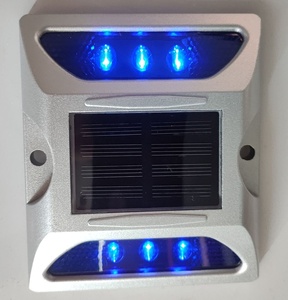
| Technical Parameter | Standard Highway Spec (200mm) | Expressway / Toll Spec (300mm) | Heavy-Duty In-Pavement (Studs) |
|---|---|---|---|
| Optical Lens Diameter | 200 mm (8 inches) | 300 mm (12 inches) | Integral Surface Lens Array |
| Luminous Intensity (Peak) | ≥ 400 cd (Amber) / ≥ 300 cd (Red) | ≥ 800 cd (Amber) / ≥ 600 cd (Red) | ≥ 15 cd per LED angle |
| Photovoltaic Capacity | 10W – 15W Monocrystalline | 20W – 30W Monocrystalline | 2.5V – 5V Embedded Solar Cell |
| Battery Chemistry | LiFePO4 (3.2V / 6Ah – 12Ah) | LiFePO4 (12.8V / 12Ah – 20Ah) | High-Temp Ni-MH / Supercapacitor |
| Autonomy Duration | > 120 Hours Continuous Flash | > 168 Hours Continuous Flash | > 72 Hours Zero-Light Autonomy |
| Enclosure Material | UV-Stabilized Polycarbonate (PC) | Die-Cast Aluminum or Virgin PC | Solid Cast Steel / Aluminum Alloy |
| Ingress Protection Rating | IP65 / IP66 Dust & Water Resistant | IP65 / NEMA 4X Compliant | IP68 Hermetically Sealed Submersible |
| Flash Rate & Duty Cycle | 45 – 60 FPM; 30% ON, 70% OFF | 50 – 60 FPM (Programmable) | Synchronous / 60 FPM Strobe |
Direct factory engineering guarantees compliance with NHAI, PWD, BRO, MUTCD, and European CE/EN standards.
We tailor optical intensity, mounting geometries, solar wattage, and enclosure materials strictly according to municipal highway tenders, EPC construction contracts, and road safety department guidelines.
Every product undergoes extensive climatic thermal cycling (-40°C to +80°C), accelerated aging under high UV irradiance, and salt-spray testing (ASTM B117) to survive extreme desert, marine, and sub-zero roads.
Eliminate intermediary export markups. Our automated SMT lines, custom PC injection molds, and in-house assembly units deliver Tier-1 quality at volume-competitive wholesale pricing for overseas projects.
Our custom solid-state microcontrollers utilize Maximum Power Point Tracking (MPPT) logic to increase charging yields by 20% on rainy and overcast days, prolonging battery health and operational reliability.
How the global road safety infrastructure is transitioning toward connected, autonomous, and ultra-durable warning assets.
Standalone, unsynchronized flashing lights are rapidly being replaced by wireless RF mesh and 4G Cat-1 enabled blinkers. Connected arrays flash sequentially along sharp curves or work zones, reducing cognitive load on drivers. Future systems interface with Cellular Vehicle-to-Everything (C-V2X) architectures to transmit digital in-cab hazard warnings.
Procurement agencies increasingly mandate Doppler-radar triggered actuation. Rather than flashing continuously 24/7, next-generation solar blinkers remain in low-power idle until approaching vehicle speeds exceed safety thresholds, saving up to 60% of stored battery capacity and dramatically heightening driver sensitivity.
In response to hazardous materials shipping restrictions on secondary lithium cells and extreme temperature limitations, manufacturers are deploying supercapacitor-assisted LiFePO4 batteries. These systems eliminate fire risks during maritime freight and provide functional life cycles extending beyond 10 operational years.
Clear, technical, and commercial insights to simplify international bulk acquisition and regulatory approvals.
A complete technical schedule requires defining: (1) Optical lens diameter (typically 200mm, 300mm, or 400mm); (2) Aspect type (circular caution, stop beacon, directional chevron arrow); (3) Minimum luminous intensity and dominant chromaticity wavelength; (4) Geographic installation coordinates for solar insolation calculations; (5) Autonomy reserve days (standard tenders require 5–7 cloudy days); (6) Enclosure IK and IP impact/waterproofing ratings; and (7) Pole mounting clamp diameter (e.g., 76mm, 89mm, or 114mm OD).
We deploy high-stability Lithium Iron Phosphate (LiFePO4) chemistry featuring integrated smart Battery Management Systems (BMS) with high/low temperature cut-off circuitry. For projects across desert terrains where internal enclosure temperatures surpass 60°C, we incorporate ventilated double-wall radiation shields. For sub-zero alpine corridors, we utilize cold-resilient cell formulations paired with silicon thermal insulation pads to prevent capacity drop.
Yes. Our engineering department regularly adapts internal drive boards, flash duty cycles, and optical diffusion masks to conform with EN 12368 (European Traffic Control Equipment), US Federal Highway Administration MUTCD (Manual on Uniform Traffic Control Devices), and Indian road codes including NHAI, PWD, and BRO guidelines. Technical compliance documentation and third-party test reports are provided during the pre-shipment submittal phase.
Solar traffic blinkers are classified under HS Code 8530.80 (Electrical signaling, safety or traffic control equipment). Because systems incorporate rechargeable lithium-based batteries, we handle all shipments under UN3481 (Lithium ion batteries contained in equipment) with full UN38.3 test summaries, MSDS documentation, and sea freight dangerous goods declarations. Units are packed in drop-tested, reinforced honeycombed master cartons with internal custom EVA foam to prevent transit shock.
Integrated all-in-one blinkers (where the solar panel, battery, and light head are housed in a single chassis) offer ultra-fast field installation with zero exposed cabling, making them ideal for road work zones, highway cones, and temporary detours. Split-type systems (where the PV panel is mounted atop the pole with an adjustable bracket facing true solar noon) are recommended for permanent municipal intersections and expressways with potential canopy shading, as they maximize energy harvesting efficiency.
Connect directly with our senior traffic systems engineering team. Receive detailed photometric reports, solar sizing analysis, and competitive factory-direct wholesale pricing tailored to your highway project schedule.
Send an Inquiry