
Our complete line of surface-mount solar studs, high-intensity roadside blinkers, and optical alert modules are engineered to optimize sight distances and mitigate transit collisions on critical infrastructure corridors worldwide.
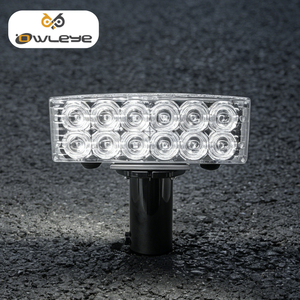
Engineered with an IP66 hermetic seal, poly-crystalline collector, and alternated dual-spectrum strobing for high-speed roadwork perimeters and work-zone tapers.
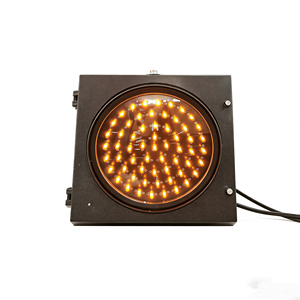
Constructed from virgin optical polycarbonate with UV stabilizers. Dual-input circuit allows seamless operation across solar micro-arrays and AC grid networks.
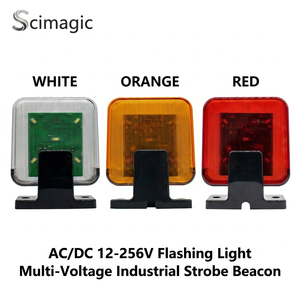
Universal industrial-grade perimeter signaling light with internal wide-range step-down power regulation. Engineered for automated checkpoints, gates, and commercial yards.
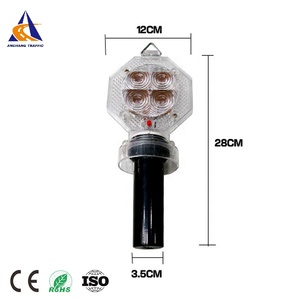
Retrofit barricade delineator featuring an omnidirectional Fresnel lens assembly. Instantly converts standard traffic cones and channelizers into dynamic visual warnings.
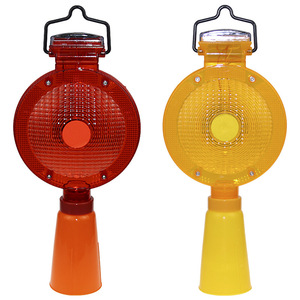
Self-charging off-grid beacon supporting 500+ meters of chromatic visibility. Integrates dusk-to-dawn photodiode intelligence to eliminate routine maintenance overheads.

Engineer Grade dynamic chevron array designed to guide split-second lane shifts and highway diversion flows with continuous high-brightness amber LED elements.
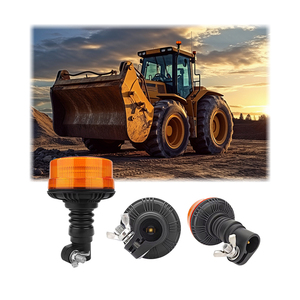
Certified for rigorous European transit standards. Features a vibration-dampened DIN flexible base, solid-state rotor circuitry, and poly-carbonate impact shell.
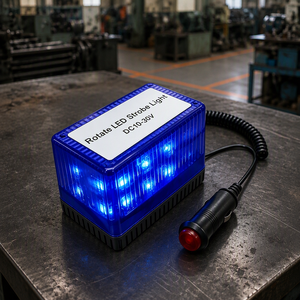
Combines standard micro-prismatic reflective sheeting with embedded high-frequency LED pulsing units to maximize compliance at uncontrolled pedestrian and curve crossings.
In modern highway engineering, passive retro-reflective delineators (traditional road studs/cat-eyes) operate under fundamental optical limitations: their luminescence strictly relies on the incident angle of vehicular headlamps. At high approach speeds (>100 km/h), wet weather conditions, or sharp horizontal curves, traditional glass or prismatic studs provide less than 3 seconds of actionable reaction time (approximately 90 meters of sight distance).
As a premier China wholesale solar road marker manufacturer and exporter, our active LED road markers and warning beacons deploy solid-state monocrystalline or polycrystalline PV modules integrated with ultra-bright Epistar/Cree diodes. By actively emitting up to 600+ mcd of light independent of external reflection, these autonomous markers project visual alerts up to 900 meters. This structural increase expands driver recognition latency from 3.2 seconds to upwards of 28 seconds, substantially suppressing cross-over collisions, run-off-road (ROR) accidents, and work-zone incursions.
| Key Metric | Passive Retro-Reflective Studs | Industrial Active Solar Road Markers | Engineering Advantage |
|---|---|---|---|
| Effective Visibility | 50 - 90 Meters (Headlight Dependant) | 500 - 1000+ Meters (Active Self-Emitting) | Up to 10x Sight Range Improvement |
| Adverse Weather Integrity | Dramatically degraded by fog, standing water, and road film | Piercing luminous output maintained through heavy rain and fog | Eliminates total optical wash-out |
| Energy Autonomous Lifecycle | Passive (Zero active emission) | 5 to 8+ Years via LiFePO4 / Supercapacitor cores | Maintenance-free decentralized setup |
| Mechanical Load Rating | Variable (Often crushed under heavy axle transport) | Cast Aluminum Housing: 20 to 40+ Tons (Static test) | Withstands extreme continuous HGV traffic |
| Smart Control & Sensing | None | Photocell automation, GPS synchronized flashing modules | Harmonized visual corridor creation |
Procurement directors and highway concessionaires are realigning standard bill of materials (BOM) specifications to integrate these four dominant technological shifts:
Traditional Ni-MH batteries suffer from thermal runaway in desert deployments and freezing degradation in cold regions (-20°C to +70°C). Tenders now prioritize supercapacitor (EDLC) configurations that deliver 100,000+ deep cycles and a 10-year lifespan without electrolyte leakage.
Randomly blinking markers cause visual clutter and driver fatigue. Modern DOT and highway tenders dictate GPS-synchronized pulses, where an entire continuous highway curve flashes uniformly or in a cascading runway wave to clearly outline sharp turns.
Global infrastructure developers no longer accept unverified low-cost units. Sourcing frameworks require certified compliance with EN 1463-1/-2 (European retroreflective standard), ASTM D4280 (impact and compression), and IP68 hermetic vacuum chambers.
Solar road markers are evolving into active roadside units (RSUs). Future-proof models house Bluetooth Low Energy (BLE), LoRaWAN modules, or ambient fog sensors that automatically adjust LED lux output and warn connected vehicular telemetry systems of black ice.
The manufacturing architecture for solar road studs and dynamic traffic alert lamps has evolved from simple hobbyist electronics to high-reliability aerospace and automotive manufacturing levels. Today's industrial production lines focus on three core pillars:
Combining rigorous in-house production with international compliance standards, we supply national highway developers, municipal EPC contractors, and concessionaires globally.
Complete control over LED assembly, SMT placement, solar module integration, and resin casting. Eliminates middleman markups and guarantees trace-level component batch control.
We tailor lens dimensioning, flash frequency (e.g., 1 Hz to 4 Hz), color chromaticity (Amber, Red, Blue, Green, White), and mounting jigs directly to the clauses of your tender documentation.
Tested in diverse climates worldwide—from Middle Eastern desert heat (+65°C road surfaces) to sub-zero Nordic winters—supported by complete multimodal export documentation.
Every batch undergoes thermal shock testing (-40°C to +80°C), continuous water immersion (IP68), and hydraulic pressure testing before crating and pallet dispatch.
Authoritative answers to the key operational and technical questions asked by project engineers, quantity surveyors, and international distributors.
Connect with our technical export engineers to request photometric files, sample testing units, and wholesale volume pricing for your upcoming road safety tenders.
Send an Inquiry