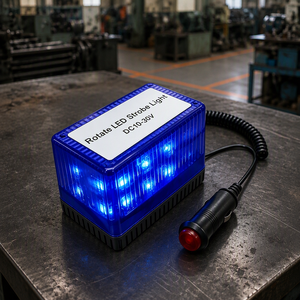
Enhanced Visibility Strobe LED Road Warning Signs
Ultra-bright directional flash matrix with high-grade optical polycarbonate lenses. Designed for heavy fog and critical accident-prone zones.
Contact Us
Engineered for continuous highway operations, lane shifts, toll entryways, and heavy construction zones with no grid connection required.
Ultra-bright directional flash matrix with high-grade optical polycarbonate lenses. Designed for heavy fog and critical accident-prone zones.
Contact Us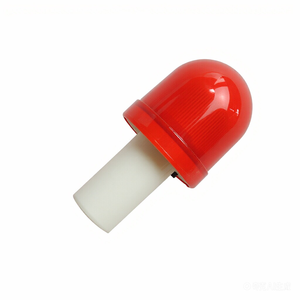
Compact solar beacon mountable on standard safety cones, featuring low-drain pulse circuitry for construction zone demarcation.
Contact Us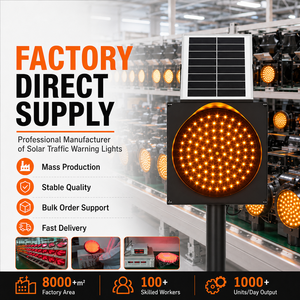
Multi-color off-grid warning beacon suited for highway median barriers, industrial haulage routes, and open-pit mining safety zones.
Contact Us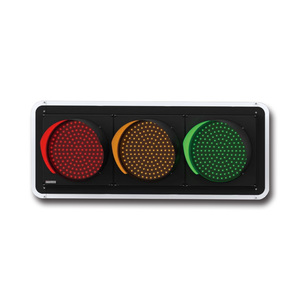
Precision modular guidance luminaires with programmable flash rhythms and multi-aspect lens integration for civil transit nodes.
Contact Us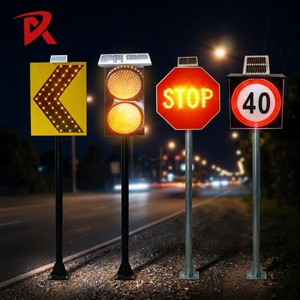
Dynamic optical alignment panel for hairpin highway curves, expressway flyover diversions, and high-speed interchange approaches.
Contact Us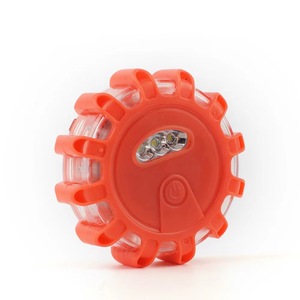
Rugged impact-resistant portable magnetic strobe flare housing 12 red and 3 white SMD LEDs for instantaneous hazard cordoning.
Contact Us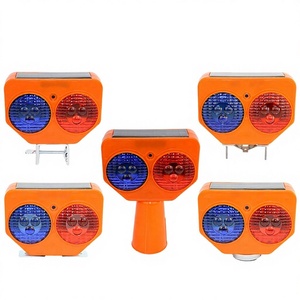
Heavy-duty iron frame safety barrier flasher with multi-angle solar reception, engineered to survive high-impact expressway workzones.
Contact Us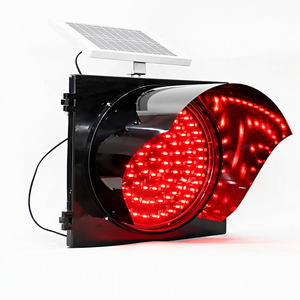
Sealed IP67 beacon designed for all-weather maritime, toll gate, bridge rail, and rural arterial road hazard demarcation.
Contact UsA technical evaluation framework for transport authorities, civil engineers, and infrastructure EPC contractors.
The operational reliability of a solar highway flasher depends on rigorous thermal modeling and continuous watt-hour calculations under worst-case solar irradiance. Standard civil tenders require flashers to sustain continuous warning rhythms across extended low-lux periods (5 to 7 consecutive monsoon or winter days).
Our engineering matrix incorporates high-conversion monocrystalline silicon wafers (efficiency > 21.5%) coupled with pulse-width modulated (PWM) or maximum power point tracking (MPPT) micro-charge controllers. These circuits dynamically taper current during non-peak daylight hours to prevent cell over-saturation while regulating output discharge to the LED array.
| Engineering Attribute | Standard Commercial | Heavy-Duty Industrial Spec |
|---|---|---|
| Solar Cell Type | Polycrystalline (15-17%) | N-Type Monocrystalline (≥21.5%) |
| Battery Chemistry | Lead-Acid / Standard Li-Ion | LiFePO4 (≥2500 Thermal Cycles) |
| Autonomy Reserve | 48 Hours | 120–168 Hours Continuous |
| Enclosure Rating | IP54 ABS Plastic | UV-Stabilized Polycarbonate IP65/67 |
Highway safety signaling is governed by strict international standards (such as EN 12352, US MUTCD Section 4L, and NHAI specifications). The luminous intensity must be calibrated to ensure optical awareness at a minimum recognition distance of 800 to 1,000 meters in direct ambient sunlight, without creating blinding glare at night.
By pairing focused convex Fresnel lenses with AlInGaP (Aluminum Indium Gallium Phosphide) amber and red diodes, our flash units achieve a luminous output exceeding 8,000 mcd per cluster while maintaining precise chromaticity coordinates:
• Amber Spectrum: 590 nm – 595 nm (Dominant Wavelength)
• Stop Hazard Red: 620 nm – 630 nm
Integrated photocell sensors automatically shift between Day Mode (maximum candela output for solar penetration) and Night Mode (reduced duty cycle to prevent retinal dazzle).
Strategic transformations reshaping global transport infrastructure procurement between 2025 and 2030.
Modern highway tenders increasingly favor flasher beacons embedded with Cellular Vehicle-to-Everything (C-V2X) and short-range DSRC warning beacons. In addition to visual strobe signals, these smart hazard modules broadcast direct digital safety payloads to autonomous vehicle ADAS platforms, alerting braking systems to workzones and road diversions well before physical line of sight.
Procurement teams are shifting away from standalone devices toward IoT-monitored signaling arrays. Using NB-IoT and 4G micro-gateways, concessionaires monitor real-time battery voltage, photovoltaic intake, LED burnout flags, and physical tampering via unified web dashboards. This reduces costly highway lane closures for routine physical maintenance audits.
Driven by ESG mandates and extreme climate resilience targets, Lithium Iron Phosphate (LiFePO4) has replaced nickel-cadmium and sealed lead-acid storage. LiFePO4 cells support up to 3,000 deep-discharge cycles, withstand operating ambients up to 65°C without thermal runaway, and eliminate toxic heavy metals, aligning with European Circular Economy Directives.
Integrated manufacturing capabilities, rigorous verification testing, and proven export engineering.
Zero intermediary markup. Complete in-house component assembly, mold tooling, and electronics soldering ensure direct pricing advantages on civil engineering tenders.
Every batch is manufactured to meet NHAI, PWD, BRO, and comparable European/American road safety specifications, backed by full technical datasheets and testing reports.
Bespoke adaptations for housing dimensions, bracket fittings (cantilever, gantry, pole-clamp), flashing frequencies, lens optics, and customized solar panel wattages.
Supplying road developers across 20+ countries with sea-worthy protective packaging, rapid documentation turnaround, and reliable global fulfillment support.
Essential guidance for tender managers, highway concessions, and technical sourcing teams.
Submit your tender documentation, lens sizing requirements, or target site coordinates for an engineer-verified technical proposal within 24 business hours.