
Engineered for high-speed expressways, treacherous mountain hairpins, toll plazas, and construction zones. Built with ultra-grade polycarbonate, CNC cast aluminum, and high-conversion monocrystalline PV modules.
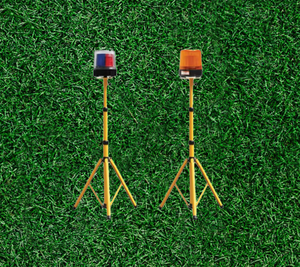
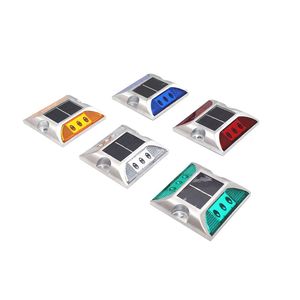
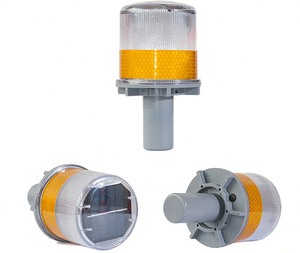
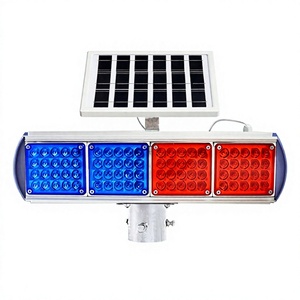
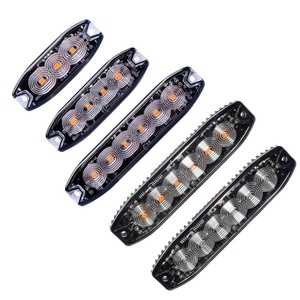
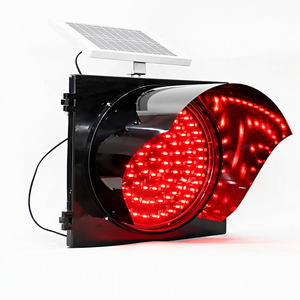
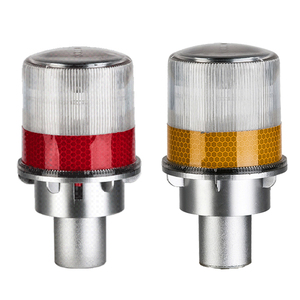
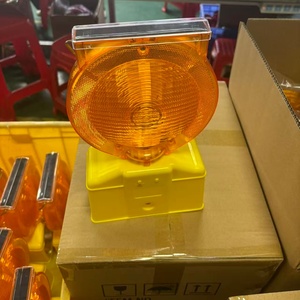
Eliminate intermediary trading commissions, secure ISO-audited batch uniformity, and customize hardware brackets for any highway profile across North America, Europe, the Middle East, and Asia.
Equipped with high-precision SMT placement lines, high-pressure aluminum die-casting machines, and cleanroom optical bonding lines. We control production from raw polymer resin to final spectral flux testing.
Highway safety devices must withstand extreme thermal cycles, intense UV degradation, chemical de-icing salts, and severe sandstorms. Every batch undergoes accelerated laboratory endurance testing.
We supply turnkey mechanical mounting kits precision-stamped to clamp onto standard W-beam profiles, Thrie-beam barriers, cylindrical bridge railings, concrete Jersey barriers, and tubular steel guardrails.
| Evaluation Parameter | Our China Factory Direct Standard | Generic Middleman / Assembler | Procurement Impact |
|---|---|---|---|
| Photovoltaic Efficiency | Monocrystalline Silicon (>21.5% conversion) with ETFE lamination | Low-grade Polycrystalline (<16%) with yellowing PET glue | Guarantees winter energy harvest; prevents moisture delamination |
| Energy Storage Chemistry | Lithium Iron Phosphate (LiFePO4) or Ultra-Capacitor (>3,000 cycles) | Recycled Ni-MH or low-grade Lead-Acid (<400 cycles) | Lifespan extended from 1.5 years to over 6-8 years without servicing |
| Optical Micro-Structure | Total Internal Reflection (TIR) Fresnel collimator lenses | Standard spherical diffuse dome without directional focus | Projects focused candela output up to 1,200m along the vehicle sightline |
| Housing Metallurgy | A380 High-pressure cast aluminum + Bayer Makrolon 2805 Polycarbonate | Scrap mixed plastic + thin cold-rolled stamped sheet | Survives roadside gravel blasts, snowplow wake, and thermal fatigue |
| RF Synchronization | Integrated 2.4GHz / Sub-1GHz wireless mesh module (optional) | Async flash only; lacks synchronized wave delineator functionality | Eliminates optical disorientation; creates runway-style flow vectors |
Stay ahead of evolving international road safety regulations, tender specifications, and smart highway infrastructure mandates.
Traditional random-flashing roadside beacons are rapidly being phased out by highway transportation authorities in favor of wirelessly synchronized sequential flash arrays. When dozens of solar guardrail lights illuminate in dynamic, directional patterns, night-time driver depth perception improves by up to 40% along hazardous highway bends, exit ramps, and construction detours.
Leading contractors now demand solar guardrail markers featuring onboard Sub-1GHz or 2.4GHz RF transceivers. These systems automatically synchronize their flash cycles without requiring centralized field controllers or physical interconnect cables, drastically reducing highway installation labor and trenching costs.
As Level 3 and Level 4 autonomous vehicle fleets scale globally, roadside barriers require markers detectable by both human eyes and machine vision sensors. Future-proof solar guardrail lights are adopting dual-spectrum illumination: visible high-candela LEDs paired with 850nm / 905nm infrared (IR) pulsers.
This allows automotive LiDAR and NIR cameras to identify crash barrier boundaries in dense fog, sandstorms, and blinding rain long before vehicular radar perceives physical steel rails. Sourcing departments bidding on smart-corridor tenders must stipulate optical prism retroreflectivity compliant with ISO 17387 standards.
While lithium iron phosphate (LiFePO4) remains the dominant battery chemistry for municipal projects, extreme-temperature highway projects (such as alpine passes experiencing -35°C or desert corridors reaching +70°C ambient) are pivoting toward graphene supercapacitors and sodium-ion cells.
Supercapacitors charge efficiently in sub-zero temperatures where lithium ions suffer dendrite plating, providing indefinite cycle lives exceeding 100,000 charges. For infrastructure developers looking to secure 10-year maintenance-free concessions, specifying supercapacitor-backed guardrail delineators is becoming the leading industry standard.
Maintenance dispatch along 500-kilometer remote highway networks represents a major operational expense for concessionaires. The latest generation of China-exported smart guardrail lights incorporates LoRaWAN or NB-IoT telemetry to report solar panel degradation, battery voltage, flash frequency, and crash-impact tilt alarms back to traffic operation centers.
When an errant vehicle impacts a guardrail post, the integrated tri-axial accelerometer immediately broadcasts an automated incident alert with GPS telemetry, alerting highway emergency teams before other motorists even call emergency services.
Comprehensive technical guidance for procurement officers, EPC tender evaluators, and road furniture importers.
Connect directly with our engineering sales department. Receive detailed photometric specification sheets, certified CAD mounting schematics, and volume CIF quotations tailored to your destination port.