
Direct manufacturer supply of self-powered photovoltaic beacons, high-flux amber slow signs, emergency strobe arrays, and dynamic speed delineation luminaires.
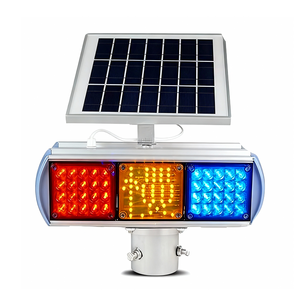
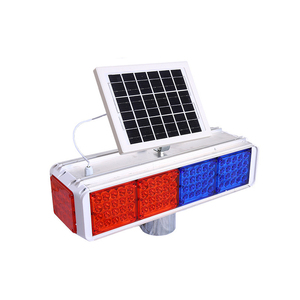
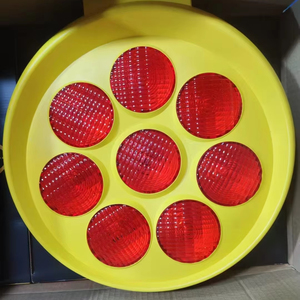
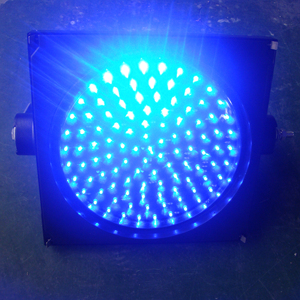
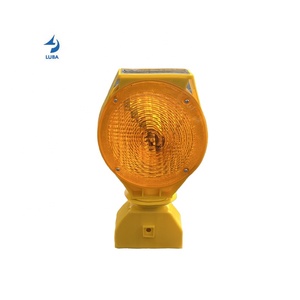
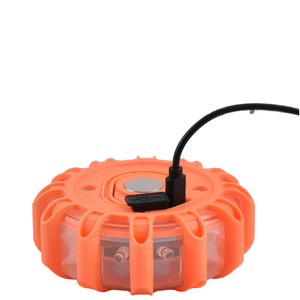
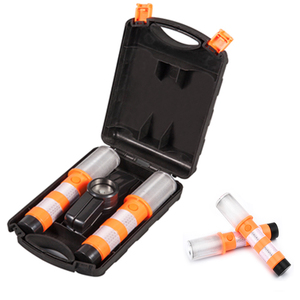
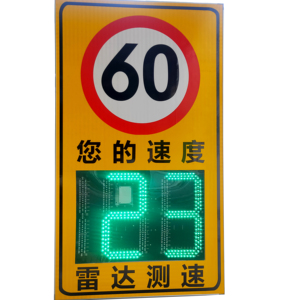
In modern high-speed highway infrastructure and arterial road construction, temporary work zones represent high-risk bottlenecks prone to vehicular conflict, spatial disorientation, and secondary collisions. As a premier China wholesale roadwork warning light manufacturer and exporter, our engineering group addresses these mission-critical challenges through optical precision, photobiological safety standards, and robust energy-harvesting technologies.
Roadwork warning lights are no longer simple low-power incandescent lamps or basic filament blinkers. Current civil safety frameworks—including the United States Federal Highway Administration Manual on Uniform Traffic Control Devices (MUTCD Part 6), European Standard EN 12352 (Traffic control equipment - Warning and safety light devices), and Australian Standard AS/NZS 3845—mandate stringent criteria for peak luminous intensity, night-time glare mitigation, horizontal and vertical optical beam divergence, chromaticity tolerances, and uninterrupted power autonomy under adverse climatic patterns.
By leveraging vertically integrated smart surface-mount technology (SMT) assembly, high-grade virgin polycarbonate (PC) and acrylic (PMMA) injection molding, and computerized solar micro-controller management, our manufacturing facilities provide tier-one civil contractors, traffic engineering departments, and wholesale distributors worldwide with certified roadwork delineation products engineered to reduce catastrophic collisions in dynamic work zones.
Controlling the entire industrial lifecycle—from optical ray-tracing simulations to robotic potting and thermal chamber stress-testing—ensures unmatched unit-to-unit consistency.
Our in-house optical engineering team utilizes advanced ray-tracing algorithms to design dual-layer Fresnel, cobweb, and micro-prismatic lenses. This eliminates black spots, increases luminous transmission above 92%, and ensures that flashing pulses satisfy exact candela ratings at 1,000+ meters down-corridor visibility.
Solar warning lights frequently fail due to undersized solar modules, premature battery degradation, or uncalibrated low-temperature cutoff points. We engineer intelligent Battery Management Systems (BMS) utilizing high-density Lithium Iron Phosphate (LiFePO4) or deep-cycle Ni-MH cells designed for deep discharge cycles.
Every batch of our roadwork warning beacons undergoes rigorous environmental validation inside specialized testing laboratories. From cyclic salt-spray chambers to simulate coastal corrosion to vibratory test benches conforming to IEC 60068 standards, we eliminate failure points prior to container departure.
Evaluate key technical parameters across primary industrial roadwork delineation platforms.
| Product Category | Typical Optics & Lumen Output | Energy Storage & Autonomy | Ingress & Impact Class | International Standard Conformity |
|---|---|---|---|---|
| Solar Double-Sided Warning Signs | Dual-face 5mm Epistar LEDs, >8000 mcd/LED, Diamond Grade Retroreflective Sheeting | 12V 7Ah LiFePO4 / 10W Monocrystalline PV, 140+ hrs continuous flashing | IP65, IK08 UV-Stabilized Engineering PC Housing | MUTCD Type B High-Intensity, GB/T 18833 Grade I |
| 300mm Solar Highway Blinkers | Cobweb Fresnel distribution, 350-450 cd peak candela, 430nm-625nm Amber/Blue/Red | 12V 14Ah Deep-Cycle GEL / LiFePO4, 15W PV Module, 200+ hrs autonomous run | IP67 Enclosure with pressure-relief breather valve, IK09 | EN 12352 Class L8H, ITE VTCSH-LED Standard |
| Solar Sunflower Strobe Lights | 360° conical omnidirectional lens, pulse strobe 60-75 flashes/min, 120 cd | 3.2V 2200mAh LiFePO4, integrated curved 2W PV, 120 hrs autonomy | IP68 fully encapsulated body with magnetic pipe mount | EN 12352 Class L2H, AS/NZS 1906.1 Retroreflective |
| Emergency Tactical LED Flares | 16 Ultra-bright radial LEDs, 9 user-selectable flash patterns, >1500m night range | 3.7V 700mAh Rechargeable Lithium-ion / Magnetic Induction charging | IP68 waterproof submersed 10m, 30-ton compression proof (IK10+) | US DOT FP-14, CE-EMC, RoHS Hazardous Materials |
| Dynamic Radar Speed Signs | Ultra-bright amber/red numeric matrix, dual-digit display readable at 250m | 12V 20Ah LiFePO4, 30W High-Efficiency Solar Array, intelligent sleep mode | IP65 Powder-Coated 2.5mm Marine-Grade Aluminum Enclosure | MUTCD Chapter 2B, EN 12966 Variable Message Signs |
The global infrastructure safety market is undergoing a fundamental structural transition. Procurement directors, civil engineering concessionaires, and governmental road administrations are moving away from disposable, unmonitored safety hardware toward interconnected, self-diagnosing, and automated work-zone warning systems. For procurement managers looking to optimize capital expenditures, three macro-level engineering shifts will dictate roadwork light procurement over the next five years:
Traditional random flashing beacons create visual clutter and optical chaos at high approach speeds. The future standard belongs to self-organizing Radio Frequency (RF) Sub-GHz (868/915 MHz) wireless mesh systems. Without requiring cellular networks, beacons automatically synchronize into fluid, sequential flashing waves ("moving arrows") that naturally guide vehicular trajectory through highway tapers.
As autonomous driving (AD) and Advanced Driver Assistance Systems (ADAS) become ubiquitous, physical visual warnings are being augmented by digital Cellular Vehicle-to-Everything (C-V2X) beacons. Next-generation roadwork lights integrate short-range direct communication modems (DSRC/C-V2X) that broadcast Work Zone Warnings (WZW) straight to vehicle head-up displays, stopping incursion crashes before physical contact.
Tough environmental legislation in North America and the European Union (EU Battery Directive 2023/1542) is phasing out toxic lead-acid and hazardous nickel-cadmium batteries. International procurement tenders now prioritize modular, repairable luminaires utilizing cobalt-free Lithium Iron Phosphate (LiFePO4) or high-cycle sodium-ion chemistries capable of exceeding 3,000 discharge cycles.
Evaluating upfront unit price versus lifetime maintenance, logistics packing, and operational reliability.
Verify photometric goniophotometer curves. Ensure the peak beam candela complies with MUTCD or EN 12352 classes so local civil road inspectors will not issue work-stop orders on site.
Request regional solar irradiation mapping calculations. A roadwork light destined for cloudy UK motorways requires a significantly higher PV-wattage-to-battery ratio than one installed in Saudi Arabia.
Demand pure optical-grade Bayer or Mitsubishi polycarbonate with UV stabilization masterbatch. Recycled plastics discolor, yellow, and shatter under 6 months of intense outdoor solar exposure.
As an experienced China exporter, we optimize nesting designs and knock-down bracket assemblies to maximize container volume efficiency, reducing ocean freight costs by up to 28% per unit.
In-depth responses covering international standards, custom OEM capabilities, battery longevity, and container dispatch.