Export Sales: +91 96012 58123[email protected]Exporting to 20+ Countries
China Wholesale Roadway Safety Light Manufacturers & Exporters
Precision-Engineered Solar Flashers, Emergency Beacons & Intelligent LED Highway Traffic Delineation Systems for Global Municipal and Infrastructure Procurement
Factory Direct Lineup
Engineered Roadway Hazard & Work Zone Safety Lighting
Tested for luminous efficacy, extreme thermal cycling (-40°C to +80°C), and weather-sealed optical integrity.
Advanced Manufacturing Competence: From Silicon to Sealed Assembly
Why Tier-1 highway concessionaires, transport ministries, and safety contractors consolidate their roadway lighting procurement through our China manufacturing hub.
In-House Optical Mold Engineering
Unlike assembly-only intermediaries, we operate high-precision multi-axis CNC tooling shops to fabricate custom optical molds for Fresnel and micro-prismatic outer lenses.
Optimized light collimation maximizing candela output along driver sightlines.
Refractive index tuning reducing stray photon scattering by 34%.
Virgin Bayer Makrolon 2805 polycarbonate with proprietary anti-yellowing stabilizers.
Global Specification Compliance
Every batch is manufactured to meet rigorous international road safety standards, ensuring seamless municipal approvals across diverse regulatory jurisdictions.
Full compliance with US MUTCD Type A, B, and C flashing warning requirements.
Certified against European EN 12352 (Classes L2H, L8H, L8M) light emissions.
Tested to NHAI, PWD, and BRO highway standard guidelines for export longevity.
Battery Chemistry & Solar Integration
We transition beyond outdated nickel-cadmium or lead-acid setups by integrating state-of-the-art LiFePO4 chemistry and anti-reflective monocrystalline PV wafers.
Extended cyclic durability exceeding 3,000 discharge cycles to 80% DoD.
Advanced BMS protections against deep discharge, thermal runaway, and short circuits.
Autonomous operational reserve providing up to 15 continuous overcast days.
Strategic Foresight (2025-2030)
Future Procurement Trends in Roadway Safety Lighting
How global infrastructure developers are adjusting technical specifications to optimize Total Cost of Ownership (TCO) and comply with smart transport mandates.
Modular Serviceability & Circularity Mandates
Procurement agencies are strictly eliminating sealed non-repairable beacons. Tenders increasingly penalize throwaway hardware that forces entire housing replacement upon battery end-of-life.
Standardized quick-release bayonet battery compartments without specialized tooling.
Recyclable, halogen-free thermoplastics designed for environmental compliance audits.
Photometric Verification & Lumen Maintenance
Bidding qualifications have transitioned from coarse wattage declarations to verified goniophotometric IES files and LM-80/TM-21 projected lumen maintenance.
Enforced minimum chromaticity coordinates per CIE 1931 for Amber (590-595nm).
Mandatory testing of optical degradation following 3,000 hours of continuous xenon arc UV exposure.
Uniform daytime high-ambient candela contrast to curb sun-washout accidents.
Dual-Source Supply Chain De-risking
International contractors are balancing their domestic quotas by partnering directly with scaled Chinese OEM/ODM tier-1 facilities capable of holding raw component inventory.
Buffers against localized freight bottlenecks via multi-port FOB dispatch (Ningbo, Shanghai, Shenzhen).
Comprehensive material traceability certificates (MTR) provided on structural mounting hardware.
Private labeling and customized packaging for multinational highway concession brands.
Technological Roadmap
Next-Generation Technological Trajectories in Highway Signaling
Moving from static autonomous flashers toward synchronized, sensor-driven, and energy-scavenging intelligent roadway beacons.
C-V2X & 2.4GHz RF Mesh Synchronous Flashing
Independent erratic flashing creates visual chaos that impairs driver depth perception. Future deployments leverage short-range sub-GHz RF mesh or GNSS timing chips to execute synchronized wave-flashing patterns along work zone tapers, visually guiding drivers along detour trajectories.
Adaptive Photocell Dimming with Ambient Tracking
Fixed-intensity LED warning lamps can temporarily blind oncoming drivers during pitch-black rural nighttime navigation while failing to provide sufficient contrast under direct desert midday sun. Next-generation microcontroller firmware applies continuous pulse-width modulation (PWM) dimming based on calibrated ambient lux sensors.
IoT Remote Health Monitoring & Telemetry
Large-scale turnpike corridors spanning hundreds of kilometers cannot rely on manual maintenance sweeps to identify disabled warning flashers. Narrowband-IoT (NB-IoT) enabled beacons report battery charge metrics, solar harvesting rates, and LED driver continuity back to highway operations centers in real time.
Engineering Reference Matrix
Comparative Technical Specifications by Product Class
Evaluate optical output, power architecture, and environmental ratings across our core manufacturing series.
Product Category
Optical Standard
Primary Substrate
Power / Solar Input
Storage Chemistry
Ingress Protection
Effective Visibility
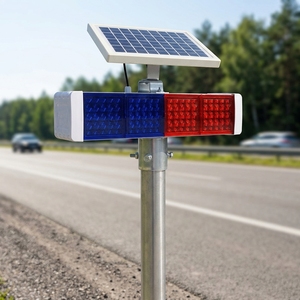
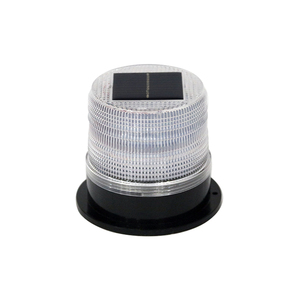
Solar Strobe Beacons
EN 12352 Class L8H / MUTCD Type A
Bayer Makrolon Polycarbonate
3W - 8W Monocrystalline PV
LiFePO4 (3.2V / 4Ah - 8Ah)
IP66 / IP67
≥ 1,000 meters
Magnetic Equipment Warning
SAE J845 Class 1 / Class 2
High-Impact ABS + Polycarbonate
1.5W Flexible / Glass Encapsulated
Lithium-Ion (3.7V / 2.6Ah)
IP67 Sealed Housing
≥ 800 meters
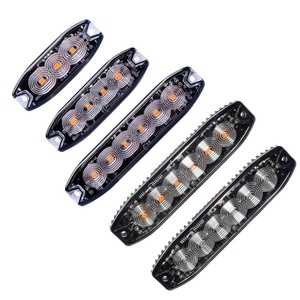
Vehicle Perimeter Grille Lights
ECE R65 / SAE J595 Class 1
Cast Aluminum 6063-T6 Base
DC 10V - 30V Vehicle Rail
External Alternator / Aux Battery
IP68 Submersible
≥ 1,500 meters
Traffic Cone Mount Blinkers
MUTCD Type A (Low Intensity)
UV Stabilized Polypropylene Base
0.6W High Efficiency Mono PV
LiFePO4 or NiMH Deep Cycle
IP58 Dust & Splash Proof
≥ 500 meters
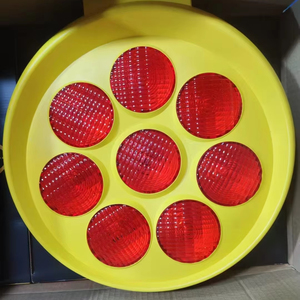
Dual Solar/Mains Flashing Signals
EN 12368 / EN 12352 Class L2H
100% Virgin GE Lexan Enclosure
20W-50W PV or 100-240V AC Grid
12V 18Ah-40Ah Deep Cycle AGM/LiFe
IP65 Enclosure Gasketed
≥ 1,800 meters
Procurement Intelligence
Frequently Asked Questions for B2B Importers & Contractors
Technical guidance covering tariff classifications, testing protocols, battery freight compliance, and bespoke manufacturing lead times.
What specific documentation is provided to satisfy municipal highway tender audits?
We provide complete regulatory compliance dossiers for every manufactured product series. This includes third-party ISO 17025 accredited laboratory test reports demonstrating compliance with EN 12352, EN 12368, and US Federal Highway Administration MUTCD (Type A, B, and C) standards. Furthermore, we deliver factory Certificate of Conformity (CoC) documents, raw material resin certifications (guaranteeing Bayer/Sabic virgin polycarbonate with UV resistance validation), IP67/IP68 ingress verification, and spectrophotometer color space reports mapping amber, red, blue, and green light outputs against standard CIE chromaticity diagrams.
How do you ensure solar blinker lights survive prolonged monsoon or extreme winter conditions?
Autonomous reliability in off-grid solar road safety lights is fundamentally an engineering ratio between solar energy harvest rate (calculated per worst-case peak sun hours in winter) and driver board energy consumption. Our engineers size every flasher system based on the client’s project geographic latitude. We utilize ultra-efficient Class-A monocrystalline cells coupled with microcontrollers that automatically throttle flash duty cycles when battery voltage dips below critical thresholds. Coupled with wide-temperature LiFePO4 cells capable of operating from -20°C to +65°C (or specialized low-temp variants operating down to -40°C), our systems provide a minimum of 10 to 15 days of continuous operational autonomy in total solar absence.
What are the hazardous goods shipping regulations for export orders containing integrated lithium batteries?
Lithium-powered roadway safety products are classified under UN3481 (Lithium ion batteries contained in equipment) or UN3171 (Battery-powered vehicle/equipment). As an experienced exporter to more than 65 countries, our factory maintains active UN38.3 test summaries, Material Safety Data Sheets (MSDS), and certified dangerous goods packaging protocols approved by maritime inspection authorities. For air freight or fast express samples, products are packaged strictly per IATA Dangerous Goods Regulations Section II or Section IB. For full container load (FCL) sea freight via Ningbo or Shanghai, batteries are protected with dual-insulation switches to completely eliminate parasitic drain or accidental ignition during transit.
Can optical lenses and flash circuitry be customized for specific OEM or private-label brands?
Yes. Approximately 60% of our export output is OEM/ODM manufactured for international safety distributors, emergency lighting brands, and construction consortiums. Our engineering team accommodates custom mold engraving (housing company logos directly on the polycarbonate outer mold or aluminum base), bespoke PCB programming (custom strobe rates, burst patterns, steady-burn overrides, or synchronization sequences), specialized powder-coat housing colors (safety orange, traffic yellow, or industrial matte black), and localized blister or carton packaging ready for retail or direct infrastructure delivery.
How do your LED roadway warning lamps compare in life expectancy against lower-cost domestic alternatives?
Low-cost alternatives typically cut corners across three vulnerability points: regrind (recycled) plastic resins that turn brittle and milky under UV exposure within 6 months; substandard LED dies run without thermal interface material (TIM) leading to swift lumen depreciation; and unsealed circuit boards vulnerable to acidic condensation. Our lights utilize 100% virgin resin with double UV-inhibitor compounding, genuine high-flux LEDs (Epistar, Cree, or Osram) with copper lead frames, and comprehensive conformal coating or silicone potting across the entirety of internal driver circuitry, guaranteeing an MTBF (Mean Time Between Failures) exceeding 50,000 continuous hours.
What is the Harmonized System (HS) Tariff Code for roadway warning lights, and how does it impact customs clearance?
Most of our solar roadway flashers and traffic signal beacons fall under HS Code 8530.80 (Electrical signaling, safety or traffic control equipment for roads, railways, or inland waterways) or HS Code 8512.20 (Electrical lighting or signaling equipment for motor vehicles). For certain portable solar cone blinkers or lanterns, HS Code 9405.42 or 9405.49 (Electric luminaires and lighting fixtures) may apply depending on the importer’s national customs directives. We supply preliminary commercial invoices and packing declarations with correct HS classifications, preferential origin certificates (such as RCEP, Form A, or Form E where applicable) to assist importers in minimizing duties and preventing port-side customs holds.
What are standard factory production lead times and Minimum Order Quantities (MOQ)?
For standard catalog products (such as our cone-mounted flashers, magnetic construction beacons, and 200mm/300mm flashing heads), our MOQ starts at 50 to 100 units to support agile contracting tests, with sample orders delivered in 3 to 7 working days. For standard commercial container orders (20GP or 40HQ), production turnaround typically runs 15 to 22 business days from deposit and artwork approval. Customized OEM orders requiring unique optical tooling or specialized PCB architecture require approximately 30 to 45 days for mold development and testing, followed by streamlined volume production cycles.
Procure Direct from China’s Leading Roadway Light Manufacturer