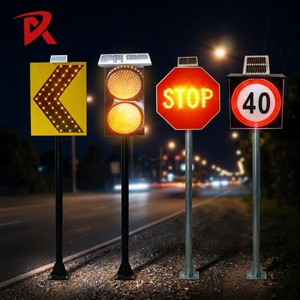
Engineered to satisfy MUTCD, EN 12352, and international highway project parameters. Every portable and pole-mounted blinker integrates premium grade LEDs, monocrystalline solar conversion modules, and high-capacity LiFePO4 energy reserves.
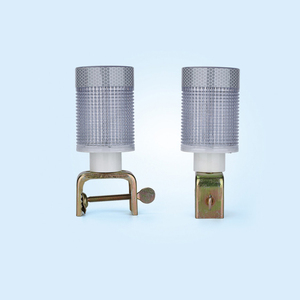
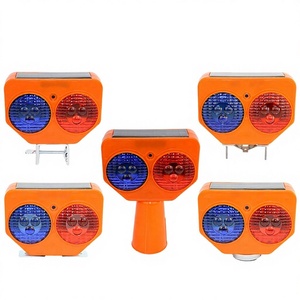
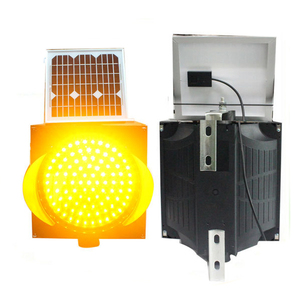
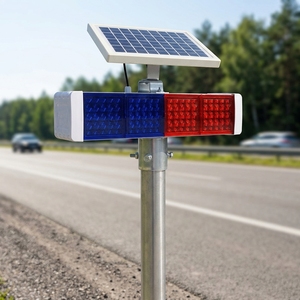

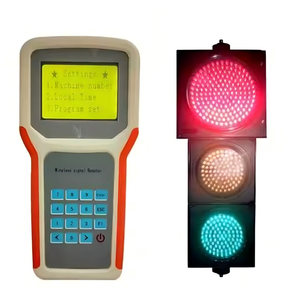
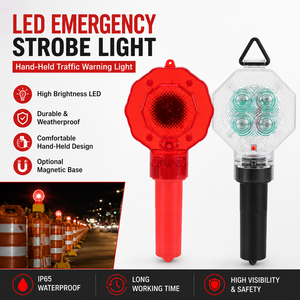
A rigorous examination of optical dispersity, photometric compliance, autonomous photovoltaic sizing, and electrochemical battery integrity across rigorous civil and transportation settings.
Traffic warning flashers must conform to strict luminous output standards to maintain visibility in diverse daylight, foggy, and rainy conditions without causing blinding disability glare at night.
Unlike standard outdoor garden lights, industrial portable traffic blinkers rely on specialized monocrystalline PV arrays and micro-controller circuitry engineered to harvest ambient energy under diffused overcast conditions.
Field failures in remote traffic beacons almost universally stem from sub-standard battery storage chemistry and uncontrolled thermal runaway in outdoor summer temperatures exceeding 60°C.
Comprehensive baseline metrics for cross-referencing national highway tenders, municipal safety equipment bids, and engineering procurement documentation.
| Technical Parameter | Commercial Grade (Standard Market) | Industrial Infrastructure Grade (Our Standard) | Engineering Tender Impact |
|---|---|---|---|
| Optic Lens Material | Recycled Polystyrene (PS) or Standard PC | Bayer Makrolon® UV-Stabilized Polycarbonate | Prevents yellowing, crazing, and lens clouding under prolonged UV radiation. |
| Ingress Protection Rating | IP44 – IP54 Basic Gasket Seal | IP65 / IP67 Fully Potted Electronics Enclosure | Guarantees complete protection against water jets, monsoon rains, and corrosive dust. |
| Storage Chemistry | Sealed Lead-Acid (SLA) or Ternary 18650 | Grade-A LiFePO4 (Lithium Iron Phosphate) | Increases operational lifespan from 1.5 years to >7 years; wide temperature stability. |
| Autonomous Backup Days | 24 – 48 Hours Continuous Blinking | 120 – 168 Hours (5–7 Rainy Days Autonomy) | Prevents blackouts during prolonged winter monsoon and low-lux seasonal periods. |
| Photometric Output (On-Axis) | 80 – 150 Candela (Limited Angle) | >350 – 600+ Candela (CIE Standard Compliant) | Clear visual perception at >800m distance at 120 km/h highway approach speeds. |
| Flash Synchronization | Unsynchronized Independent Flash | Optional Sub-1GHz RF Mesh or GPS Pulse Sync | Eliminates chaotic glare, creating organized directional guidance through diversions. |
As the smart transportation sector evolves, infrastructure authorities are transitioning from static, disconnected blinking lights toward connected, self-adaptive, and low-carbon traffic safety hardware.
Global highway departments are mandating smart blinkers equipped with LoRaWAN, NB-IoT, or proprietary Sub-1GHz RF mesh controllers. Fleet managers can monitor battery state-of-charge, PV generation, and operational faults remotely from central TMC software dashboards.
Temporary work-zone safety is shifting from disorganized, isolated flashing lamps to coordinated, sequentially cascading light waves. Synchronized flash pulses logically steer drivers away from closed highway lanes, dramatically reducing lateral collision rates at merge bottlenecks.
Global sustainability frameworks (such as European WEEE regulations) dictate zero-glue, fully serviceable assemblies. Our latest chassis platforms allow effortless field replacement of modular battery cassettes, optical lenses, and LED driver boards without discarding the main housing.
B2B buyers are seeking direct manufacturer partnerships over regional middlemen to control cost volatility, access raw material traceability, secure custom branding, and guarantee stable export logistics during peak construction seasons.
As a leading Chinese supplier and exporter of heavy-duty traffic safety equipment, our production infrastructure operates under rigid ISO 9001:2015 quality assurance protocols. From high-speed SMT surface-mount LED fabrication to in-house optical mold injection and environmental stress testing, we oversee the full supply chain lifecycle.
Eliminate commercial trading premiums, broker delays, and speculative quality variations. Access genuine engineering support directly from factory technicians.
Full flexibility across optical aperture diameters (100mm, 200mm, 300mm), color wavelengths, mounting configurations (traffic cones, crash barriers, tubular poles), and custom chassis embossing.
100% of manufactured production units undergo 72-hour continuous aging cycles, IPX6 water spray immersion, salt spray fog trials, and drop-impact resistance validation before export packaging.






Authoritative insights addressing customs, compliance, technical configurations, and logistics for procurement officers and engineering project managers.
Our industrial blinker series provides 120 to 168 hours (5 to 7 continuous days) of full flashing autonomy without direct sunlight. This is achieved by combining over-specced monocrystalline silicon panels with high-energy-density LiFePO4 battery banks and low-power PWM driver microchips that drop quiescent current draw below 0.05mA.
Yes. All exported units carry full CE and RoHS documentation, verifying optical radiation safety, electromagnetic compatibility (EMC EN 61000-6-3), and lead-free circuit assembly. For highway infrastructure projects, our lenses and luminous intensity outputs comply with standard EN 12352 Classes L2H and L8H and US MUTCD Section 6F requirements.
While SLA batteries suffer from plate sulfation, deep-discharge degradation, and rapid thermal death when internal temperatures reach 45°C, LiFePO4 (Lithium Iron Phosphate) offers >3,000 discharge cycles, maintains capacity across a -25°C to +70°C temperature range, reduces unit weight by 60%, and carries zero leakage or environmental hazard profile.
We mold all optic components exclusively from virgin Bayer Makrolon® Polycarbonate infused with high-performance UV absorbers. Enclosures feature double-ribbed EPDM / silicone sealing gaskets and pressure-compensating ePTFE breather vents, ensuring an authentic IP65 to IP67 environmental barrier that prevents internal condensation.
Standard batch MOQ is 50 to 100 units, with evaluation samples shipped in 3 to 5 business days. Commercial production lead times range from 15 to 25 days depending on batch scale. All export consignments are packed in impact-resistant 5-ply corrugated master cartons, reinforced with internal pearl-cotton shock absorbers, and fumigated wood palletizing.
Yes. As a primary manufacturer, we provide turnkey OEM/ODM services. We can customize mounting brackets for steel crash barriers, highway cones, or scaffolding pipes; flash rhythms can be programmed via firmware; and corporate logos can be permanently laser-engraved or molded into the polycarbonate housing.
Connect with our technical export engineers to request full photometric test reports, tender compliance matrices, bulk container freight estimates, and OEM customization quotes tailored to your project requirements.