
Precision-engineered flashing systems manufactured under strict ISO9001 and IATF16949 quality controls. Designed for round-the-clock reliability on expressways, heavy construction zones, port perimeters, and municipal arterials.
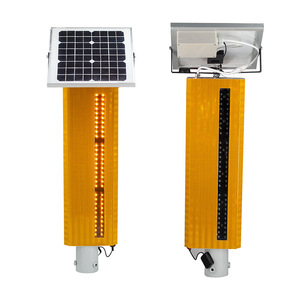
Integrated GPS satellite timing transceiver coordinates sequential or simultaneous flashing waves across hundreds of consecutive units without line-of-sight cables, preventing driver hypnotic glare in highway merge corridors.
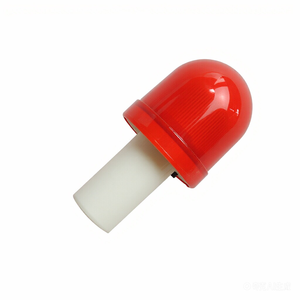
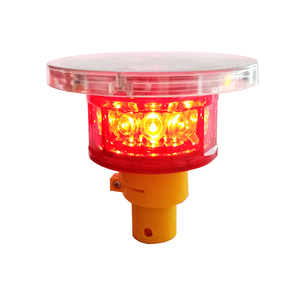
Lightweight, high-impact polycarbonate beacon engineered for instant plug-and-lock mounting atop standard universal traffic cones. Features an integrated light sensor for automatic dusk-to-dawn switching and high-luminance pulsing.
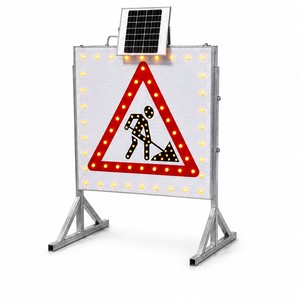
Industrial 600mm retro-reflective aluminum hazard sign with integrated amber LED perimeter diodes. Formulated for construction work zones, crosswalk awareness, and pedestrian crossing cautionary visibility at 800+ meters.

Military-grade vulcanized TPR elastomer armor disc beacon withstands a 30-ton vehicle rollover. Equipped with 16 high-output lateral LEDs and a high-strength neodymium base for instant chassis, barrier, or rescue vehicle attachment.
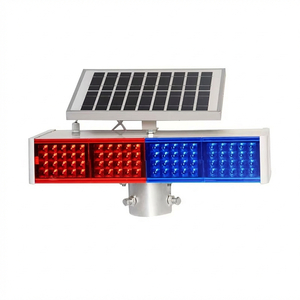
ADC12 die-cast marine-grade aluminum housing with internal thermal dissipation. Built with anti-UV polycarbonate dual-sided Fresnel optics, making it ideal for coastal expressways, toll approaches, and harsh desert environments.

Herringbone dynamic directional curve chevron board. Sequential cascading LED firing guides motorists dynamically through sharp bends, mountain passes, hairpin curves, and detour transitions during zero-visibility heavy fog conditions.
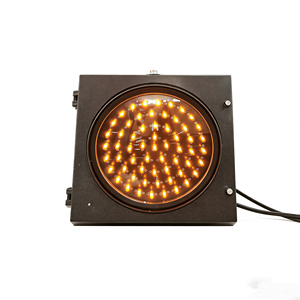
Single-aspect 200mm / 300mm flashing amber warning beacon head. Rugged aluminum visor and UV-resistant optical hood shield against sun glare, producing a 590nm optical wavelength that meets strict national highway junction standards.
Hybrid-architecture beacon system compatible with dual 85–265V AC grid inputs and 12/24V DC solar micro-arrays. Automatically fail-overs to off-grid battery reserves when municipal grid disruption occurs during severe storm events.
Modern traffic control infrastructure demands exceptional photometric reliability, unyielding weatherproofing, and smart communication compatibility. As the preeminent global hub for solid-state optoelectronics and solar energy storage manufacturing, leading Chinese LED warning beacon factories supply over 70% of the world's auxiliary flashing safety systems. From high-speed trans-continental highways in the Middle East and mining haul roads in Western Australia, to zero-maintenance toll corridors throughout Europe and North America, our specialized industrial manufacturing ecosystem produces signaling equipment engineered to withstand extreme thermal variance, saline marine fog, and intense mechanical vibration.
Procuring directly from verified Chinese manufacturing exporters eliminates intermediary trading markups while offering direct access to specialized electrical and photometric engineering teams. Factory-direct engagement enables deep customization of custom microcontroller firmware (such as flash intervals, pulse widths, and daylight photocell sensitivity), precision CNC bracket engineering for non-standard poles, and complete IES/photometric reporting to verify compliance with US MUTCD, European EN 12352, and Indian NHAI/IRC specifications.
True export quality relies on end-to-end supply chain integration. Our advanced manufacturing facilities utilize automated SMT (Surface Mount Technology) assembly lines outfitted with high-reliability Epistar and Osram LED emitters, automated optical inspection (AOI), and conformal silicone dipping that delivers comprehensive moisture and dust barriers across all printed circuit boards. Housing manufacturing leverages die-cast ADC12 aluminum alloys and virgin UV-stabilized Bayer Makrolon polycarbonate lenses that eliminate yellowing, hazing, and embrittlement under continuous exposure to desert UV radiation.
Direct source manufacturing yields up to a 42% cost reduction compared to regional wholesalers, while grade-A LiFePO4 batteries deliver an 8-year operational lifespan without costly field intervention.
Every production batch undergoes 72-hour continuous burn-in tests, goniophotometric beam profiling, thermal cycling from -40°C to +80°C, and rigorous IP67/IP68 submersible water ingress verification.
Complete turnkey engineering: private labeling, tailored optical Fresnel dispersion profiles, multi-voltage driver design (12V/24V/110V/220V), and specialized stainless steel pole mounting hardware.
The warning beacon sector is experiencing a major architectural transformation. Simple incandescent flashers and mechanical Xenon strobes have been rendered obsolete by high-efficacy solid-state LEDs driven by smart digital controllers. As procurement managers balance carbon abatement mandates, lifecycle maintenance costs, and strict road safety compliance, several key technological shifts are transforming global tender specifications:
Legacy flashing beacons along highway merge zones, sharp curves, and detours flash asynchronously. This chaotic scatter of light can trigger visual confusion and spatial disorientation for drivers moving at high speeds. Advanced warning systems now incorporate sub-gigahertz RF transceivers and GPS satellite time-pulse synchronization chips (PPS accuracy within ±1 microsecond). This enables kilometers of sequential chevron boards and warning beacons to flash in a continuous, flowing wave that intuitively guides driver perception through dangerous road segments.
Lead-acid (SLA) and nickel-cadmium batteries have fallen out of favor in global civil bids due to their vulnerability to thermal degradation and high environmental toxicity. Chinese tier-1 factories have fully adopted Grade-A Lithium Iron Phosphate (LiFePO4) battery packs managed by customized Battery Management Systems (BMS). Combined with high-efficiency N-type monocrystalline solar modules with cell conversion efficiencies exceeding 23.5%, these beacons deliver over 120 hours (5+ days) of uninterrupted flashing autonomy even during continuous winter rains and low-solar-irradiance conditions.
Modern Smart Cities and smart highway operators are specifying beacons with low-power cellular (NB-IoT / LTE-M) or LoRaWAN communication gateways. Remote operations centers can continuously monitor battery voltage levels, photovoltaic generation health, LED open-circuit errors, and physical orientation (tilt/impact collision alarms). This eliminates manual physical surveys, transitioning maintenance operations to predictive, targeted service dispatches.
Evaluating warning beacon hardware requires assessing mechanical housings, optical collimation, and power redundancy against specific environmental demands:
| Beacon Architecture | Optical Wavelength / Peak Luminous | Enclosure Material & Protection | Power Subsystem & Autonomy | Primary Municipal/Industrial Target |
|---|---|---|---|---|
| GPS Synchronous Flasher | Amber (590nm) / >8000 mcd per LED cluster | ADC12 Cast Aluminum / IP67 / IK09 | 18V Monocrystalline + LiFePO4 / 7 Days Continuous | Expressway ramps, interchange medians, highway detours |
| Traffic Cone Strobe Beacon | Red (625nm), Amber (592nm) / >4000 mcd | Bayer Polycarbonate Shell / IP65 / IK08 | 3.7V Li-Ion / Integrated Photocell / 40+ hrs | Temporary municipal road repairs, utility trenching, checkpoints |
| Solar Chevron Arrow Sign | Sequential Yellow / High Intensity 3M Retro | Reinforced Alum Alloy / Anti-Wind Load 120km/h | Dual 20W Solar Array / 12V LiFePO4 / 120 hrs backup | Mountainous hairpin turns, high-speed curves, off-ramps |
| Heavy-Duty Magnetic Flare | Multi-spectrum (Red/Blue/Amber) / Ultra-wide 360° | High-Density TPR Overmold / Submersible IP68 / IK10 | High-Capacity Rechargeable Li-Polymer / 30 hrs | Police emergency fleets, hazardous hazmat spills, mining haulers |
| Hybrid AC/DC Junction Light | Class 1 Chromaticity / High Luminous 300mm Lens | Industrial Polycarbonate & Sheet Metal / IP65 | Universal 85-265V AC + 12V DC Solar Auto-Relay | Urban arterial crossroads, school corridors, factory logistics gates |
Direct technical clarity to assist sourcing directors, highway concessionaires, civil engineering estimators, and import-export managers in streamlining tenders and factory contracts.
For standard production runs of 500 to 2,000 units, factory assembly and burn-in testing require 15 to 22 business days. Customized tooling, bespoke bracket fabrications, or specialty PCB firmware flashing generally take 25 to 30 days. Fast-track container dispatches can be staged from nearby Ningbo or Shenzhen deep-water freight ports.
We utilize custom-machined optical polycarbonate Fresnel lenses combined with secondary internal collimator reflectors. These concentrate light output along the critical horizontal viewing plane (±15° divergence). By focusing output at dominant 590nm amber and 625nm red wavelengths, our beacons exceed 8,000 mcd per node, remaining clearly visible at over 1,000 meters under noon sun.
Yes. Our microcontrollers support custom flash configurations. Whether your project requires standard single flash (50-60 fpm), double-pulse rapid strobe, California-compliant pulsing, or synchronized 5-step directional sequencing, custom flash profiles can be programmed into the firmware prior to SMT fabrication.
Every export dispatch includes CE, RoHS, and FCC compliance certificates. In addition, third-party laboratory test reports are provided on request for IP65/IP67/IP68 water and dust ingress, IK08/IK10 impact resistance, salt-spray corrosion per ASTM B117 (up to 500 hours), and UN38.3 lithium battery air/sea freight transport safety documentation.
Our Grade-A LiFePO4 cells are rated for over 2,500 full charge-discharge cycles down to 80% remaining capacity, delivering roughly 6 to 8 years of field performance. The embedded BMS protects cells across a wide operational temperature range of -40°C to +80°C, preventing under-voltage cell collapse in sub-zero winters and thermal runaway in extreme desert environments.
We offer comprehensive private-label manufacturing: precision laser engraving of logos directly onto aluminum housings, custom mold stamping on polycarbonate lenses, branded barcodes/carton serializations, and drop-tested export crating designed to withstand rough multi-modal transit without damage.
Our modern manufacturing facility covers 18,000 square meters and is outfitted with high-precision SMT placement systems, automated optical inspection machines, and in-house environmental test chambers. We avoid manual assembly shortcuts, engineering every warning beacon for continuous field operation across demanding real-world conditions.
Goniophotometric profiling verifies peak luminous intensity (candelas), color chromaticity coordinates, and beam divergence angles against strict international road agency standards.
100% of manufactured PCBA controller boards undergo 72 hours of uninterrupted electrical stress testing within accelerated thermal chambers to identify and eliminate early field failure risks.
High-pressure water jet spraying and continuous submersive pressure testing guarantee reliable ingress protection ratings from IP65 to IP68 across all sealed beacon assemblies.
Connect with our technical engineering sales staff to request detailed photometric datasheets, arrange sample evaluations, obtain formal FOB/CIF rate quotations, or review custom OEM production drawings.