
Engineered for extreme environmental duty, high optical luminance, and off-grid reliability. Each product undergoes rigorous salt-fog testing, vibration resilience analysis, and optical candela mapping before global dispatch.
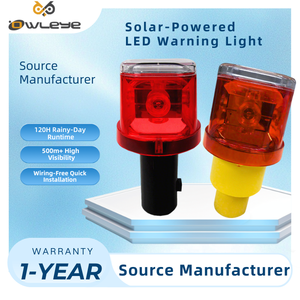
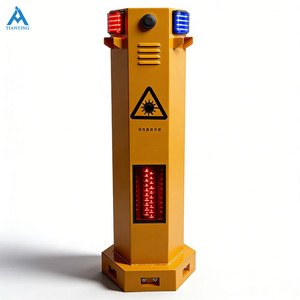
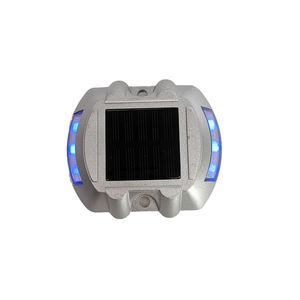
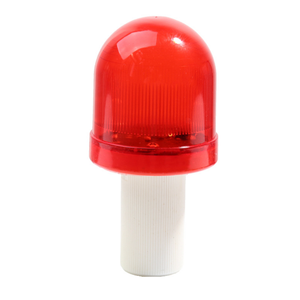
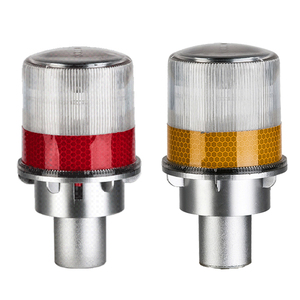
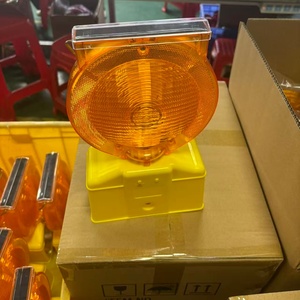
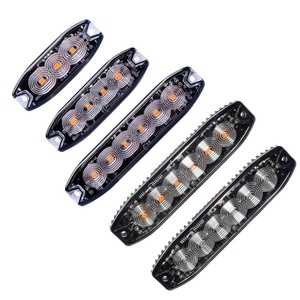
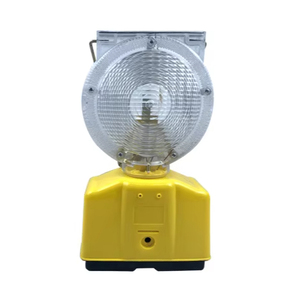
Modern highway safety networks demand rigorous engineering metrics from passive and active alerting hardware. Procuring wholesale highway warning lights, solar blinkers, and barricade strobe beacons from China is no longer merely a low-cost sourcing exercise; it has evolved into a strategic partnership regarding precision photometric distribution, solid-state electronics longevity, and micro-power energy harvesting.
China’s manufacturing landscape for traffic safety electronics is deeply specialized across distinct manufacturing clusters, each offering specific supply chain efficiencies:
The global epicenter for precision mold manufacturing, injection tooling for optical polycarbonate (Makrolon®/Lexan®), and UV-stabilized Fresnel lenses. Ideal for high-volume barricade lights, road studs, and solar blinker housings.
Specializes in high-density surface-mount electronics (SMT), intelligent MPPT solar charge controllers, dynamic radar-synchronized speed feedback strobes, and IoT/C-V2X connected road beacons.
Renowned for pole-mounted infrastructure, high-wattage monocrystalline solar module laminations, toll plaza signaling gantry assemblies, and centralized municipal traffic signal enclosures.
When evaluating prospective Chinese factories for municipal tenders or concessionaire supply contracts, B2B procurement managers must mandate independent laboratory test reports verifying the following technical parameters:
| Evaluation Parameter | International Standard | Critical Engineering Metric | Factory Failure Mode / Risk |
|---|---|---|---|
| Luminous Intensity & Optics | EN 12352 (Class L2H/L8H), US MUTCD Section 6F | Effective candela (cd) rating along optical axis ±10° horizontal | Sub-par LEDs producing beam scattering, glares, or insufficient day visibility |
| Chromaticity Coordinates | CIE 1931 Color Space (Amber / Yellow / Red) | Dominant wavelength 588–592 nm (Amber), 620–630 nm (Red) | Off-spec binning causing washed-out orange or pinkish hues under sunlight |
| Enclosure Ingress Rating | IEC 60529 (IP65 / IP67 / IP68) | Continuous silicone gasket channels or ultrasonic hermetic welding | Moisture ingress causing short circuits, corroded traces, and lens condensation |
| Battery Chemistry & BMS | UN38.3, IEC 62133 | LiFePO4 with over-voltage, low-temp cut-off (-20°C charging protection) | Use of recycled 18650 NMC cells degrading in summer road heat (>55°C) |
| Solar Autonomy Reserve | AASHTO Guidelines / NHAI / PWD | 120–240 hours continuous blinking under zero solar irradiance | Under-sized monocrystalline panel resulting in battery drainage during monsoons |
Qualified Chinese suppliers maintain darkroom goniophotometers to verify beam candlepower curves, alongside programmable walk-in thermal-humidity chambers (-40°C to +85°C) and salt-spray corrosion chambers. Direct auditing of these specific testing rigs is the single most reliable differentiator between direct OEM manufacturers and repackaging trading companies.
The highway safety industry is undergoing a digital transformation. Passive flashing beacons are evolving into intelligent road infrastructure components integrated with connected vehicle networks, intelligent transport systems (ITS), and sustainable circular supply chains.
Modern highway taper zones require synchronized flash sequences (sequential wave blinkers). Factories in China now embed Sub-1GHz RF (433/868/915 MHz) or NB-IoT chips, enabling kilometers of work zones to flash cohesively, eliminating visual confusion for drivers at 120 km/h.
To address severe cold-climate procurement (Scandinavia, Canada, Northern China), tier-1 suppliers are pioneering Sodium-Ion (Na+) battery integrations. These cells retain 85% capacity at -30°C, offering superior zero-fire thermal stability compared to conventional lithium chemistries.
Rather than constant 24-hour blinking, dynamic warning systems activate high-intensity strobes or projected laser crosswalk lines only when pedestrians approach or when vehicle speed thresholds are breached, multiplying optical effectiveness while conserving battery reserves.
New EU and North American infrastructure tenders mandate modular disassembly. Chinese production lines are migrating away from single-pour potted resin blocks toward reusable snap-lock IP68 housings, allowing the independent field replacement of LED drivers, batteries, or solar panels.
Civil engineering estimators often debate whether to extend electrical lines along highway perimeters or deploy self-contained solar warning light fixtures. Field telemetry across 1,000 highway segments reveals the clear economic divergence:
| Cost Driver (10-Year Lifecycle per 10km Sector) | AC Grid-Powered Blinker Setup | Solar Off-Grid LED Blinker Setup | Contractor Savings |
|---|---|---|---|
| Cabling, Trenching & Conduit Civil Works | $45,000 – $80,000 (Copper cable, digging, backfill) | $0 (Zero subterranean civil infrastructure) | 100% Civil Capex Elimination |
| Power Drop Transformer & Utility Interconnection | $12,000 – $25,000 (Grid tap, meters, permits) | $0 (Stand-alone photovoltaic energy) | Eliminates regulatory utility approvals |
| Initial Fixture Capex (Per 20 Points) | $3,800 – $6,000 (Mains AC heads) | $7,000 – $11,000 (Solar panel, battery, controller) | Initial unit premium balanced in month 2 |
| Grid Electricity Tariffs (10-Year Run) | $14,400 (Continuous baseline utility billing) | $0 (Continuous renewable self-generation) | Cumulative operational operational savings |
| Total Estimated 10-Year Expenditure | $75,200 – $125,400 | $9,500 – $14,000 (Includes 1 battery cycle) | 81% Net Lifecycle Reduction |
Sourcing directly from our specialized manufacturing facilities eliminates intermediate trading layers, providing complete control over technical specifications, supply chain traceability, and delivery schedules for large-scale highway concessionaires.

Practical, engineering-grounded answers to the critical technical and logistical questions faced by B2B buyers, municipal engineers, and safety contractors.
Under European Standard EN 12352, flashing warning lights for traffic control are categorized by optical diameter, effective luminous intensity (candela), and operating duty cycle:
• Class L2H: Typically utilizes a lens diameter ≥180mm with an effective axial intensity ≥50 cd (daytime requirement ≥250 cd). Designed primarily for urban roads, roadwork tapers, and low-speed lane divergence markings.
• Class L8H: Mandates a lens diameter ≥300mm with high-flux optics generating axial candela ≥1,500 cd to 2,000 cd. Class L8H is strictly specified for high-speed motorways, expressways, fog-prone passes, and overhead crash cushion protection. Our factory produces certified models for both classifications with full goniophotometric documentation.
Our engineering team sizes off-grid systems based on the destination's Worst-Month Peak Sun Hours (PSH) using NASA surface meteorology data. The formula is:
Battery Capacity (Ah) = (Daily Consumption [Ah] × Autonomy Days Reserve) ÷ (Depth of Discharge [DOD] × Temperature De-rating Factor)
Solar Panel Sizing (Wp) = (Daily Energy Consumption [Wh] × Safety Factor 1.35) ÷ (Worst Month PSH × MPPT Efficiency)
For example, in regions with 2.0 PSH and a requirement of 7 overcast autonomy days, a 12V 0.5A continuous flashing system requires at least a 30W–40W monocrystalline PV panel and a 35Ah LiFePO4 battery pack to guarantee uninterrupted 24/7 service without battery depletion.
While PMMA (acrylic) offers slightly superior natural UV transparency, it has poor mechanical impact resistance (brittle fracture). Highway warning lights are subjected to high-speed gravel impacts, flying debris, and accidental knocks by heavy equipment.
Virgin Polycarbonate (PC) modified with UV-blocking additives provides up to 30 times higher impact resistance (Izod impact >600 J/m) than PMMA, preventing casing shatter during high winds or collisions. We use optical-grade Bayer Makrolon® PC resins to combine high clarity with shatter-proof durability.
International maritime and air transport (IMDG / IATA DGR) classifies built-in lithium batteries under UN3481 (Lithium-ion batteries contained in equipment). To ensure customs clearance and carrier acceptance, we supply full compliance packages with every shipment:
1. UN38.3 Test Summary Report: Documenting altitude simulation, thermal shock, vibration, impact, external short circuit, and overcharge safety.
2. MSDS (Material Safety Data Sheet): Detailing chemical makeup and hazard classifications.
3. Safe Transport of Goods Certificate: Issued by authorized inspection bodies (such as Shanghai Chemical Industry Testing Center) confirming ocean-freight container compliance.
Yes. We operate an in-house metal fabrication and stamping workshop capable of manufacturing hot-dip galvanized or powder-coated steel brackets, U-bolts, banding adapters, and cantilever arms tailored to specific pole diameters (e.g., 60mm, 76mm, 89mm, or 114mm OD) or flat concrete barrier mountings. Custom mounting drawings can be confirmed via 3D STEP files prior to mass fabrication.
For standard catalogue warning lights and solar blinkers, sample dispatch is executed within 3 to 5 business days. For customized OEM configurations (custom firmware flash sequences, unique silkscreen branding, or custom wiring harnesses), functional prototypes are ready in 10 to 12 days.
Standard containerized mass orders (20GP / 40HQ) typically ship within 18 to 25 days from final technical drawing approval, supported by our buffer stock of standard optical lenses and certified electronic sub-assemblies.
Partner directly with an established engineering manufacturer. Submit your tender specifications, optical lux requirements, or drawing packages for a direct technical review and competitive FOB/CIF quotation within 24 hours.