
Precision-molded optics, UV-stabilized polycarbonate lenses, and long-life energy storage built to meet MUTCD, EN 12352, and international road safety standards.
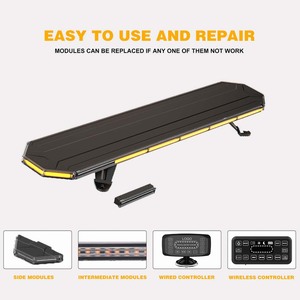
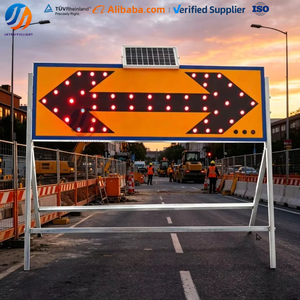
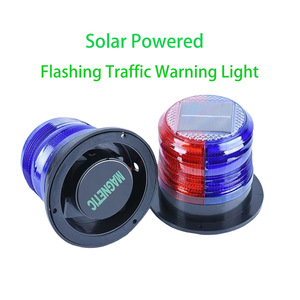
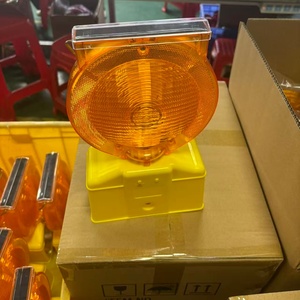
Bypassing commercial traders to deliver factory-direct engineering integrity, strict quality assurance, and complete compliance documentation.
Our facility houses CNC machining centers and customized injection molds engineered specifically for Fresnel, convex, and total internal reflection (TIR) optical lenses. Every optic profile undergoes rigorous TracePro simulation to eliminate blind angles and ensure 360-degree or directional lux distribution matching local highway authority mandates.
Unlike standard off-the-shelf units that cut costs on energy storage, our engineering team calculates specific geographic peak sun hours (PSH). We match mono/polycrystalline PV panels with thermal-resistant LiFePO4 batteries or deep-cycle lead-acid packs, guaranteeing non-stop performance through over 15 overcast or rainy days.
We provide full documentation for international civil tenders, including IP65/IP67/IP68 ingress certifications, CE, RoHS, EN 12352 (Classes L2H, L8H, L9H), and MUTCD compatibility sheets. We assist EPC contractors with batch salt-spray corrosion tests, wind tunnel vibration stability tests, and photometric distribution diagrams.
Infrastructure development worldwide has transitioned from reactive warning hardware to active, self-sustaining luminous guidance systems. When procurement directors and project engineers specify road hazard flashers, highway strobe lights, and warning beacons, they are evaluating life-cycle cost (LCC) rather than initial unit price. The costs of lane closures, technician deployment on elevated cherry pickers, and regulatory liability far exceed the light's hardware value.
As a specialized factory, we mitigate these operational overheads by designing light enclosures featuring ultrasonic welding, anti-UV Bayer polycarbonate formulations that avoid yellowing over five years of direct equatorial exposure, and solid-state constant-current driver boards that isolate LEDs from battery voltage drops.
Compare fundamental system specifications to match tender and project operational criteria.
| Parameter / Specification | Standard Construction Grade | Expressway & Highway Class | Extreme Conditions / Border Works |
|---|---|---|---|
| Luminous Intensity (Cd) | 50 – 150 Candela (EN 12352 L2H) | 300 – 800 Candela (EN 12352 L8H) | > 1,500 Candela High-Penetration |
| Lens Material & UV Index | Standard Polycarbonate (PC) | Bayer Makrolon® UV-Resistant PC | Borosilicate Glass / Reinforced Polycarbonate |
| Battery Storage Tech | Ni-MH / Standard Lithium-Ion | Industrial Grade LiFePO4 (>2000 cycles) | Wide-Temp LiFePO4 (-30°C to +75°C) |
| Ingress Rating | IP54 to IP65 | IP65 to IP67 Silicone Gasketed | IP68 Completely Hermetic Encapsulation |
| Solar PV Module | 0.5W – 2W Polycrystalline | 3W – 10W High-Efficiency Mono-Si | 15W – 40W External Array Configuration |
| Working Autonomy | 72 Hours (3 continuous days) | 120 – 240 Hours (5 to 10 days) | 360+ Hours (>15 Overcast Days) |
Where intelligent transportation infrastructure and optical warning engineering intersect.
The global traffic sector is moving rapidly away from asynchronous, randomly blinking flashers on major work zones. Next-generation installations require RF wireless self-organizing mesh networks where hundreds of warning lights automatically sync their pulse frequency, forming an uninterrupted fluid light wave that guides motorists clearly around obstructions.
To eliminate optical blinding and driver glare while maximizing battery life, upcoming regulations encourage adaptive optical feedback. Built-in light-dependent resistors (LDR) adjust driver current dynamically: shifting into hyper-bright high-noon punch to cut through sun haze, and dialing back to softer, non-dazzling candela outputs during pitch-black night hours.
Safety lights are becoming active nodes within Cooperative Intelligent Transport Systems (C-V2X). Prototype warning assemblies now integrate short-range radar or Bluetooth low-energy beacons that transmit work-zone intrusion alerts, speed reduction advisories, and active taper warnings directly to vehicle heads-up displays before the driver even spots the visual beacon.
Direct technical answers addressing installation logistics, engineering limits, and custom factory production.
For Nordic, Canadian, or extreme Southern latitude deployments where peak sun hours drop below 1.5 PSH in winter, standard off-the-shelf solar blinkers suffer brownouts. We re-engineer the system with oversize monocrystalline silicon solar cells (30–50% higher peak wattage) and couple them with low-internal-resistance LiFePO4 cells equipped with built-in thermal PCM jackets to retain charging capacity down to -30°C.
Yellowing and cracking happen when low-grade recycled regrind resins degrade under solar UV-B radiation. Our factory uses 100% virgin optical-grade polycarbonate sourced directly from Covestro (Makrolon®) or SABIC (Lexan®), compounded with UV-stabilizing additives (UV384/Tinuvin-class). We validate batches under accelerated xenon-arc UV aging tests simulating 5+ years of intense continuous irradiation.
Yes. Because our microcontrollers (MCU) are coded and flashed in-house, we can program specific flash sequences (single flash, double flash, quad flash, Stoddard strobe pattern, or steady burn) with any required flash rate (e.g., 50 to 70 fpm according to EN 12352). We also integrate 2.4 GHz wireless RF transceivers or GPS-based pulse triggers for synchronous work-zone sequencing without running physical interconnect cables.
For standard production items using standard amber/red/blue optics, MOQs start as low as 100 units. For tailored OEM branding (custom color injection molded housings, specific bracket castings, silk-screened logos, customized packaging), MOQs range between 300 to 500 units. Sample units for tender qualification ship within 3–5 business days, while container-scale orders complete in 18–25 days.
Connect with our technical engineering sales division. We supply comprehensive photometric IES data files, compliance certification dossiers, sample evaluation units, and transparent tier-1 pricing schedules.