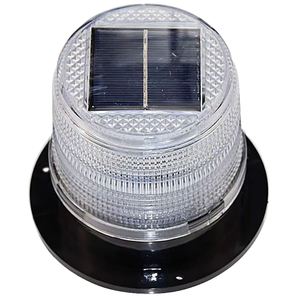
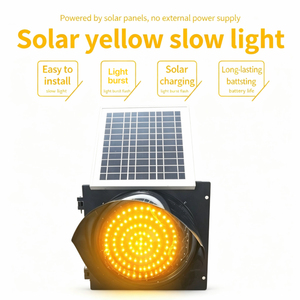
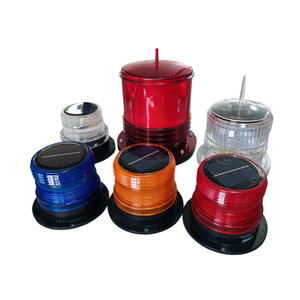
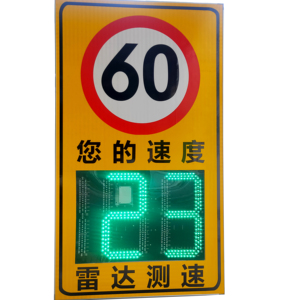
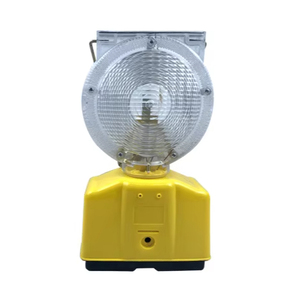
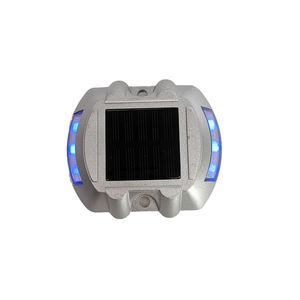
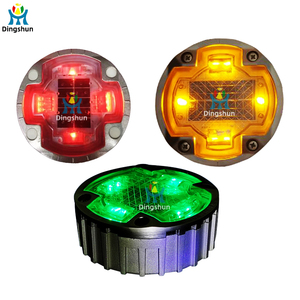
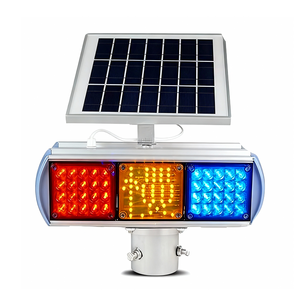
Explore our certified portfolio of active solar road studs, intelligent radar signs, and commercial-grade traffic warning beacons designed for highways, ports, work zones, and complex intersections.
Modern transportation networks demand optical road delineation that performs far beyond standard passive retroreflectors. As a premier China solar road stud manufacturer, our production matrix focuses on addressing severe field failure modes—such as structural shear under overloaded axles, lens micro-abrasions from salt and sand, and premature lithium battery degradation due to thermal cycle extremes.
Passive cat's eyes rely entirely on the luminance delivered by a vehicle's low-beam or high-beam headlights. On dark, curved rural expressways, rain-soaked asphalt, or high-speed arterial corridors, this passive retroreflection limits driver reaction windows to less than 90 meters (around 3 seconds at 100 km/h). In contrast, our active-emission solar LED road studs deliver an intense optical output visible from upwards of 900 to 1,000 meters, extending driver awareness horizons to over thirty seconds. This significant jump in reaction time practically eliminates lane-departure collisions, unguided median impacts, and work-zone incursions.
Molded under high pressure with aviation-grade ADC12 aluminum alloy, yielding tensile resilience that comfortably sustains heavy truck axle loadings exceeding 30 to 40 metric tons.
Sealed using deep-fill modified epoxy resins and ultrasonic casing welding. Prevents any internal water ingression, road salt delamination, or lens condensation over multi-year deployments.
Features micro-textured monocrystalline solar cells with high conversion rates (over 21%), capturing ambient power even through overcast, high-latitude, and rainy conditions.
Selecting the right road safety markers requires balancing mechanical mounting styles with local highway environmental profiles. The engineering matrix below contrasts the core functional attributes across our primary delineator models:
| Performance Metrics | Surface Raised Aluminum Stud | Core-Drilled Embedded Stud | Polycarbonate Solar Delineator |
|---|---|---|---|
| Target Applications | Edge lines, exit slipways, toll plazas | Centerlines, heavy trucking corridors, snow-plow routes | Pedestrian crosswalks, urban pathways, cycling paths |
| Load Compression Threshold | ≥ 20 – 25 Metric Tons | ≥ 35 – 50 Metric Tons | ≥ 10 – 15 Metric Tons |
| Energy Storage Chemistry | LiFePO4 battery (1,500+ cycles) | High-temp supercapacitor or LiFePO4 | Ni-MH / Li-ion Polymer cell |
| Operating Temperature | -25°C to +75°C | -40°C to +85°C | -20°C to +65°C |
| Optical Chromaticity | Amber, Red, White, Blue, Green | Custom Bi-directional (e.g., White/Red) | High-flux Amber / Blue / Green |
| Autonomous Run Time | 120 hrs continuous post-full charge | 160 hrs continuous post-full charge | 72 – 96 hrs continuous run time |
Whether you require standard 100x100mm cast aluminum highway markers or custom smart-addressable core-drilled units, our engineering division supplies verified photometric test sheets (CIE compliance) and salt-spray qualification records for all government and municipal tenders.
As transportation agencies embrace sustainable zero-carbon road infrastructure and Vision Zero traffic safety initiatives, the procurement requirements for solar road studs are undergoing three structural shifts:
1. GPS Wireless Synchronous Flashing: Traditional standalone blinking markers generate visual noise when operating out of sync along winding mountain passes or exit ramps. Next-generation tenders increasingly mandate GPS-synchronized or sub-1GHz RF synchronized blinking arrays. By flashing in strict visual unison or running sequential guide sequences, these studs give drivers clear visual cues that outline road geometry through heavy fog, driving rain, and zero-street-light rural routes.
2. Supercapacitor Energy Storage for 10-Year Lifespans: While lithium-ion chemistries perform well under moderate conditions, regions subject to desert heat or freezing winter temperatures risk premature capacity loss. Modern high-tier procurement specifications favor advanced supercapacitors (EDLCs). Offering operating life cycles exceeding 100,000 charges and reliable performance from -40°C to +85°C, supercapacitor road markers match the working lifespan of the asphalt layer itself, significantly reducing lane-closure maintenance costs.
3. V2X Integration and Smart Crosswalk Sensing: Road studs are evolving from passive light sources into active endpoints for intelligent transport systems (ITS). Modern smart crosswalk systems pair thermal or microwave pedestrian sensors with embedded solar studs that instantly switch from low-power steady mode to rapid amber strobe when a pedestrian steps into the crosswalk, alerting oncoming drivers well in advance.
With an extensive manufacturing footprint, clean-room SMT production bays, and dedicated mechanical stress test labs, our factory serves as an established supply partner to road contractors and public works authorities globally:
From custom anchor shank lengths and specific prism reflector angles to bespoke PCB programming, we tailor hardware directly to tender criteria.
Every production batch undergoes 100% pneumatic pressure testing, photometric spectral calibration, water-immersion verification, and salt-fog testing.
Comprehensive dangerous goods documentation for air and maritime lithium shipments (UN38.3, MSDS) ensures prompt customs clearance and dependable logistics handling.
Connect directly with our engineering sales group for complete photometric lab reports, custom casing mold options, and tiered factory pricing on your next deployment.