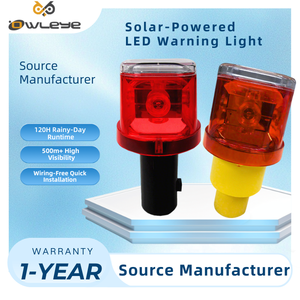
Export-grade solar LED hazard warning lights, embedded highway markers, and synchronized strobes tested under harsh environmental parameters.
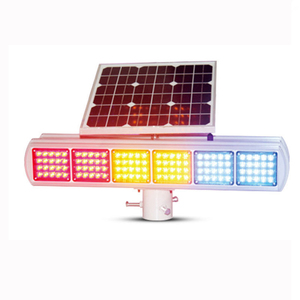
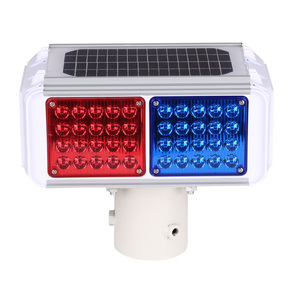
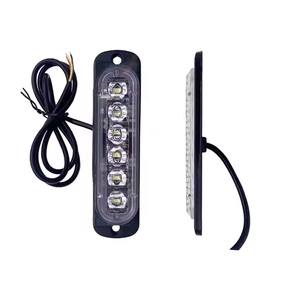

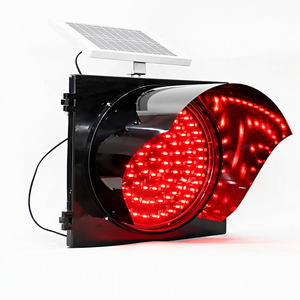
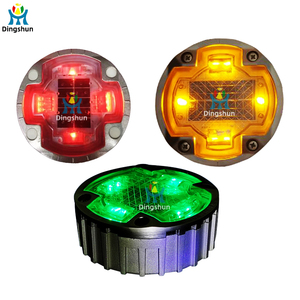
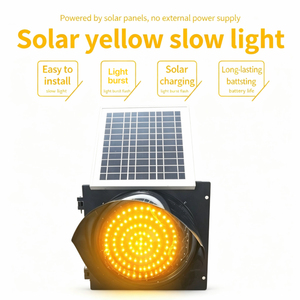
In global road infrastructure, port operations, and industrial safety installations, hazard light failures can compromise critical operations. As an established direct manufacturing enterprise, we maintain vertically integrated production from initial mold fabrication and surface mount technology (SMT) LED assembly to automated photometric evaluation and environmental chamber testing.
Our operational framework bypasses trading intermediaries, providing international civil engineering contractors, government departments, and safety equipment distributors direct access to factory-engineered optical devices. Operating in full alignment with international engineering specifications (including NHAI, PWD, and BRO benchmarks, with cross-compatibility for European EN 12352 and American MUTCD/ITE standards), our export infrastructure provides verified optical metrics, strict batch-to-batch colorimetric consistency, and certified IP ratings.
| Performance Parameter | Commercial Grade (Standard Market) | Industrial Export Standard (Our Built Matrix) | Engineering Benefit |
|---|---|---|---|
| Optical Enclosure Material | Recycled ABS / Standard Polycarbonate | Bayer Virgin Makrolon® Polycarbonate + UV Stabilizers | Prevents optical yellowing, micro-cracking, and impact failure under high UV |
| Ingress Protection | IP54 - IP65 Basic Gasket Seal | IP68 Hermetic Ultrasonic Weld / Silicone Mold Cast | Withstands permanent moisture, coastal salt mist, and pressure washing |
| Battery Chemistry | Lead-Acid or Standard Ternary Li-ion | Automotive Grade LiFePO4 (Lithium Iron Phosphate) | Operates from -40°C to +80°C with 2,500+ deep cycle lifetimes |
| Photometric Output | Uncalibrated 5mm DIP LEDs | Epistar / Cree High-Flux Surface Mount Devices (SMD) | Maintains certified luminous intensity (>800cd) across wide viewing angles |
| Power Management | Basic On/Off Resistor Circuits | Microcontroller Pulse-Width Modulation (PWM) with MPPT | Maximizes low-light solar harvesting, prolonging operational runtime to 120h+ |
Anticipate engineering shifts, regulatory updates, and supply chain demands driving international civil tenders and hazard beacon procurement.
Tenders across Europe, North America, and Australia now demand quantified product carbon footprint (PCF) reports. Procurement is shifting rapidly toward solid-state and sodium-ion/LiFePO4 chemistries that eradicate toxic heavy metals, reduce thermal runaway hazards during transoceanic shipping, and remain operable down to -40°C without auxiliary battery heating systems.
Isolated flashing beacons are increasingly phased out in favor of RF-meshed or GPS-synchronized hazard strobes. Synchronized flashing prevents visual disarray in highway work zones, creating a unified optical wave that guides drivers through lane closures. Integrated telemetry allows municipal engineers to monitor battery voltages, solar current, and LED failure rates remotely.
Next-generation hazard lights employ dynamic PWM dimming modulated by real-time ambient lux sensors and localized microwave radar. By dimming down to non-blinding thresholds during clear nights and boosting to peak lumens during dense fog or torrential downpours, installations minimize driver glare while extending operational autonomy past 150 continuous hours.
The industrial landscape for LED hazard lights is transitioning away from conventional incandescent or xenomorph discharge bulbs to solid-state, highly focused semiconductor devices. Traditional strobe tubes required short bursts of high-voltage current, resulting in brief electrode life, high electromagnetic interference (EMI), and fragile glass housings unsuitable for harsh construction environments.
Modern industrial and road safety projects demand integrated units capable of withstanding constant vibrational stresses from passing heavy-duty commercial transport. Precision-engineered aluminum extrusions serve as dual-purpose structural frames and high-efficiency thermal sinks, routing heat away from SMD junction points to preserve luminous efficacy across tens of thousands of continuous operational hours. When paired with high-efficiency multi-crystalline or monocrystalline photovoltaic wafers, these systems deliver fully autonomous warning signals without ground trenching, conduit laying, or expensive grid interconnections.
Answers to common questions regarding technical parameters, export packaging, quality assurance, and international customs clearance.
We operate dedicated production facilities focusing on SMT electronic placement, optical mold fabrication, robotic assembly, and rigorous photometric quality assurance. International buyers work directly with our engineering division, eliminating third-party markups and ensuring strict fidelity to tender-driven design schematics.
Our complete range of LED hazard beacons, road studs, and solar flashing lights is engineered to satisfy Indian NHAI, PWD, and BRO benchmarks, alongside international standards including EN 12352 (Traffic Control Warning Devices), US Federal MUTCD regulations, and CE/RoHS/IP68 certifications. Mill-test certificates and photometric testing files are accessible upon request.
Solar arrays and battery capacities are sized around localized peak sun hour (PSH) calculations. By integrating monocrystalline silicon PV panels with intelligent MPPT battery management systems, our units provide upwards of 120 hours of continuous, unassisted flashing runtime, ensuring uncompromised round-the-clock safety through extended seasonal overcast.
Yes. As the original manufacturer, we provide turnkey OEM/ODM engineering services. Optical arrays can be built with single, dual, or alternating color options (Amber, Red, Blue, Green, White), tailored flash frequencies (standard 60 FPM, dual-burst, or custom stroboscopic sequences), private-label chassis embossing, and tailored mounting brackets for poles, gantries, or traffic cones.
Units are packaged using reinforced multi-ply export cartons, molded inner foam inserts, and sea-tight shrink wrap. Battery subsystems incorporate deep-sleep transit modes to mitigate parasitic discharge. Lithium cells are shipped fully compliant with UN38.3, MSDS, and maritime IMDG / air IATA hazardous goods protocols.
Standard catalog orders ship within 10 to 15 working days. Tailored structural runs or high-volume government tender consignments usually complete within 20 to 30 days. Priority component inventory is retained for accelerated delivery to international infrastructure contractors facing tight installation milestones.