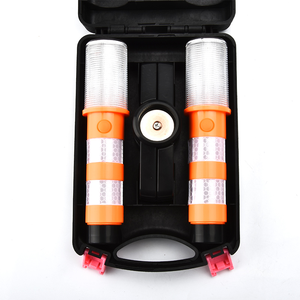
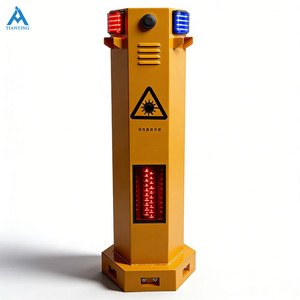
BOLI Red Green Flashing LED Traffic Safety Light with 3M Magnetic Base
• High Intensity Prismatic Reflective
• Neodymium 3M Magnetic Fleet Mounting
• Visual Warning Distance: ≥800m

Direct OEM/ODM catalog from high-precision directional arrow light factories in China. Tested across extreme temperature variances (-40°C to +80°C) with continuous illumination stability.
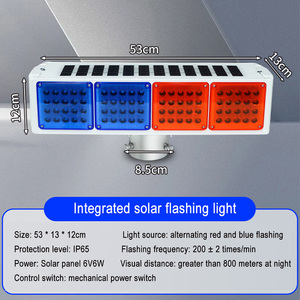
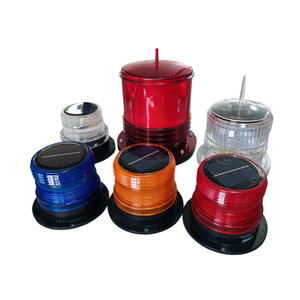
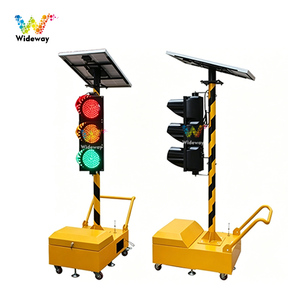
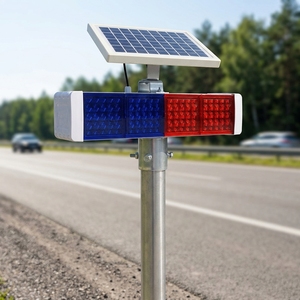
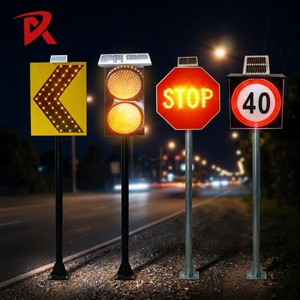
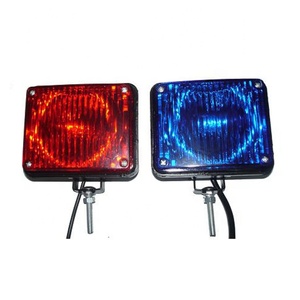
In modern roadway infrastructure, traffic management systems are undergoing a paradigm shift from passive static signage to dynamic, electro-optical delineators. Directional arrow lights, chevron warning indicators, and flashing optical beacons serve as critical cognitive triggers for motorists navigating high-speed arterial expressways, complex interchanges, and hazardous roadwork diversions. The demand for reliable directional signage has grown substantially as transportation authorities emphasize the "Vision Zero" global road safety framework.
Historically, roadway operators relied heavily on mains-powered incandescent or basic LED blinkers that demanded extensive civil works, sub-surface trenching, and grid interconnections. Today, Chinese precision manufacturing has elevated the directional light supply chain by mastering three foundational disciplines: high-efficiency photometrics, intelligent power autonomy, and rugged mechanical metallurgy.
Procurement departments across Europe, the Middle East, Southeast Asia, and the Americas now prioritize directional arrow solutions that integrate Grade-A Monocrystalline Silicon modules and Lithium Iron Phosphate (LiFePO4) energy storage. Unlike legacy Lead-Acid or standard Gel batteries that degrade rapidly in desert ambient temperatures (+55°C) or freeze in sub-zero alpine conditions (-30°C), LiFePO4 cells maintain a steady 2,000–3,500 lifecycle count with built-in Battery Management Systems (BMS) protecting against thermal runaway, deep-discharge, and parasitic load.
Next-generation directional chevron signals incorporate Maximum Power Point Tracking micro-controllers that boost solar harvesting efficiency by 24–30% during low-irradiance overcast conditions and harsh monsoons.
Moving away from physical data wires, cascading arrow signs now communicate via Sub-1GHz RF (LoRa) mesh topologies, ensuring multi-panel dynamic arrow waves flash with millisecond synchronization up to 1,000 meters.
By pairing OSRAM/Epistar high-flux LEDs with secondary PMMA Fresnel lenses and 3M Diamond Grade reflective sheeting, visibility extends beyond 1,200 meters without causing debilitating night glare.
As connected automated mobility (CAM) and Cooperative Intelligent Transport Systems (C-ITS) advance, global buyers are redefining their technical bidding parameters:
1. Autonomous Optical Dimming via Photodiode Sensing: International road standards (such as EN 12966 and US MUTCD) strictly prohibit nighttime over-illumination that blinds drivers. Leading Chinese manufacturers incorporate multi-stage light-dependent resistors (LDR) that automatically scale luminous output between 100% (under blazing midday sunlight) down to 25% (at pitch-black midnight), simultaneously preserving critical battery reserve.
2. Edge-AI & Vehicle-to-Infrastructure (V2I) Interfacing: The future directional chevron is no longer an isolated warning flasher; it acts as an intelligent roadside edge unit. Directional lighting clusters are increasingly integrated with Doppler radar sensors and LiDAR grids to trigger flashing sequences only upon detecting approaching vehicles or localized hazards, delivering unmatched energy conservation and situational impact.
3. Circular Materials & Corrosion Resilience: Sustainable infrastructure tenders now mandate lifecycle recyclability. Enclosures have shifted decisively to marine-grade cast ADC12 aluminum with electrostatic thermoset polyester powder coatings, rated for 1,000+ hours of continuous salt-spray testing according to ASTM B117 standards.
| Engineering Attribute | Standard Commercial Grade | Tier-1 Factory Specification (Export Grade) | Project Engineering Benefit |
|---|---|---|---|
| Solar Conversion Engine | Polycrystalline (15-17% efficiency) | Monocrystalline Grade-A (21-23.5% efficiency) | Maximizes charge pickup in confined, shaded roadside spaces. |
| Energy Storage Tech | Standard Sealed Lead-Acid (SLA) | Automotive-grade LiFePO4 with Intelligent BMS | Triples operative lifecycle; zero thermal maintenance over 6+ years. |
| Housing Enclosure | Recycled ABS / Basic PVC Plastic | Die-Cast ADC12 Alloy + UV-Proof Polycarbonate | Withstands vehicle buffeting, stones, UV discoloration, and vandalism. |
| Optical Ingress Rating | IP54 to IP55 | IP65 to IP68 hermetically sealed with breathing valves | Zero internal condensation; impervious to high-pressure washdowns. |
| Operational Autonomy | 48 - 72 hours under overcast sky | 120 - 240 hours (5 to 10 rainy/foggy days) | Absolute zero outage probability during sustained winter bad weather. |
Combining advanced automated SMT production, rigorous environmental testing labs, and strict global infrastructure standard adherence.
We eliminate trading markups. From mold tooling, aluminum die-casting, PCB SMT population, to spectral optical calibration, all processes occur within our state-of-the-art facilities.
Whether your civil tender references NHAI, PWD, BRO, AASHTO, or European EN specifications, our in-house engineering team customizes lens diameters (200mm, 300mm, 400mm) and mounting brackets.
Exporting to more than 20 countries worldwide with specialized shockproof wooden crating, UN38.3 lithium battery hazardous maritime certification, and complete customs documentation sets.
Key technical considerations clarified for road maintenance contractors, tender committees, and electrical infrastructure buyers.
Autonomy is calculated as: [Battery Capacity (Wh) × Depth of Discharge (DoD) × Efficiency] ÷ Daily Watt-Hour Consumption of the LED module. Our engineering team calculates exact solar panel wattage and LiFePO4 capacity based on the specific GPS coordinates and historical meteorological solar radiation data (NASA Solar Insolation tables) of your installation territory, ensuring 7–10 days of non-stop operation even in continuous rainfall.
Depending on destination market requirements, lights must conform to EN 12368 (Traffic control equipment - Signal heads) or US Federal Highway MUTCD Type C / Type B flashing arrow specifications. Critical metrics include chromaticity coordinates for Amber (590-595nm), Red (620-630nm), and Green (500-505nm), luminous intensity uniformity, and minimum phantom light ratio prevention.
Yes. Our chevron and directional systems feature embedded 433MHz/868MHz/915MHz LoRa multi-channel synchronization modules or satellite GPS clock sync. The first master unit coordinates the pulse pulse-timing with up to 30 slave units, creating an ultra-smooth cascading visual arrow effect across road curves without tearing up tarmac for signal conduits.
We supply modular hot-dip galvanized mounting hardware accommodating standard 76mm, 89mm, and 114mm steel poles, alongside customizable universal 304 stainless steel clamping bands for cantilever gantries, bridge parapets, and temporary water-filled crash barriers.
Heavy-duty fleet safety units (like our BOLI series) utilize high-grade N52 neodymium magnetic disc bases paired with anti-scratch silicone suction skirts. They are physically wind-tunnel tested to withstand highway vehicle turbulence and emergency maneuvers up to 130 km/h without dislodging.
Rapid prototyping samples for tender verification are dispatched within 5–7 working days. Standard container orders (20GP / 40HQ) comprising 500 to 2,000 units are manufactured, serialized, and quality inspected within 18–25 days, supported by complete third-party inspection reports.
Submit your tender documentation, bill of quantities (BOQ), or technical drawings. Our application engineering department will generate a compliant bill of materials and optical photometric simulation within 24 hours.
Get a Quote