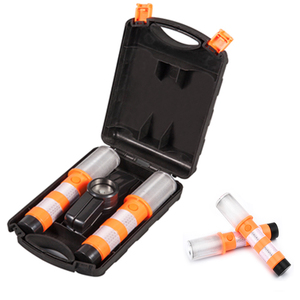

Engineered for high-glare daytime refraction, multi-day autonomy in zero-sunlight scenarios, and harsh roadbed vibrations across global transport corridors.
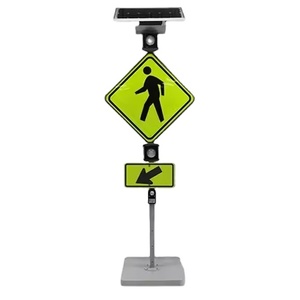
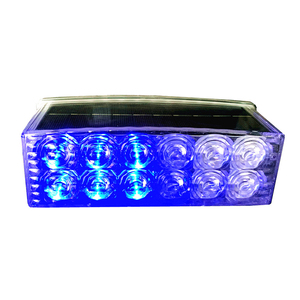
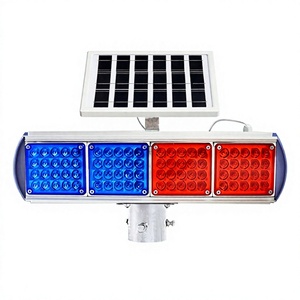
A rigorous breakdown of amber beacon photometrics, thermal degradation curves, and ingress engineering standards for municipal and highway tenders.
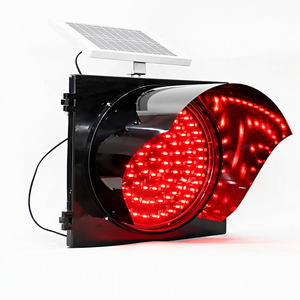
Amber safety signaling requires precise spectral output centered between 589nm and 595nm dominant wavelengths. Sourcing from tier-one wafer foundries (such as Epistar and Osram Opto), our optical arrays maintain crisp visual recognition across heavy fog, sea spray, and direct glare without blue-shift degradation.
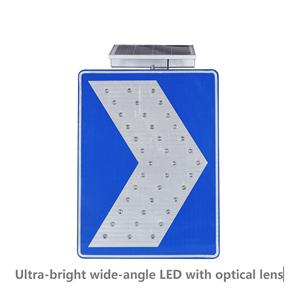
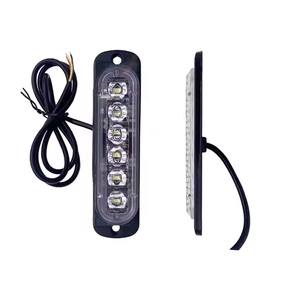
By pairing high-candela surface-mount diodes (SMDs) with precision-injection polycarbonate Fresnel internal optics, radiant flux is concentrated across a ±10° horizontal plane while mitigating upward atmospheric loss, achieving compliance with EN 12352 Class L8H and SAE J845 Class 1 requirements.
Diode lumen depreciation accelerates when junction temperatures exceed 85°C. Our assemblies employ aluminum core PCBs (MCPCB) integrated directly into high-pressure die-cast LM6 aluminum or virgin GE Lexan UV-stabilized polycarbonate enclosures, keeping operational temperatures below 62°C under full equatorial sunlight.
Replacing traditional sealed lead-acid (SLA) systems, our solar beacon topologies feature A-grade Lithium Iron Phosphate (LiFePO4) energy packs with intelligent MPPT micro-controllers. Systems support up to 3,000 deep discharge cycles (80% DoD) and maintain continuous flashing operation for up to 150 hours during zero-solar monsoons.
Every industrial flasher features continuous vulcanized EPDM gaskets or polyurethane conformal potting, providing certified IP67/IP68 environmental protection. Dynamic testing includes MIL-STD-810G harmonic vibration profiling to resist stress cracking on high-speed heavy-haul expressways and plant sites.
A reference checklist for civil project consultants, municipal engineers, and concessionaires when standardizing tender documentation.
| Evaluation Parameter | Commercial Grade / Low-Tier Units | Our OEM/ODM Industrial Standard | Engineering Benefit |
|---|---|---|---|
| LED Array & Luminous Output | Unbranded 5mm DIP LEDs (80–120 mcd) | Automotive SMD 3030/3535 High-Power (>240 lm/W) | Penetrates dynamic daytime glare up to 1.5 km distance |
| Lens Composition | Recycled Polystyrene (PS) or PVC | UV-400 Polycarbonate (GE Lexan 103R / Bayer 2805) | Zero yellowing or UV chalking over an 8-year service lifecycle |
| Battery Storage Architecture | Lead-Acid Gel (300–500 cycles, high self-discharge) | LiFePO4 with active balance BMS (2,500+ cycles) | Reduces high-elevation maintenance and scheduled replacements |
| Photocell Autonomy Switching | Fixed hysteresis LDR (Prone to false switching) | PWM dynamic optical sensing with software debouncing | Mitigates dusk-to-dawn flicker and vehicle headlight blinding |
| Enclosure Protection Index | IP54 rated, glued perimeter joints | IP67 / IP68 with robotic CNC continuous silicone seal | Complete resistance to coastal salt spray, fine dust, and power washers |
Strategic technology insights for procurement directors tracking next-generation safety infrastructure, V2X, and net-zero municipal compliance.
Traditional passive illumination is transitioning to connected hardware. Emerging roadside warning lights integrate 5G Cellular-V2X (C-V2X) nodes. When an amber warning flasher triggers during crosswalk entry or lane diversion, it transmits an omnidirectional SAE J2735 message directly to autonomous navigation controllers, adding an active radio layer to visual signaling.
Fixed-cadence flash profiles are being phased out in favor of dynamic radar-actuated systems. Internal microwave Doppler units track approaching vehicular speed: calm traffic maintains a low-lux visual beacon, while sudden overspeed initiates high-frequency Class-1 strobe warnings. This reduces overall power consumption and prevents visual fatigue for neighboring properties.
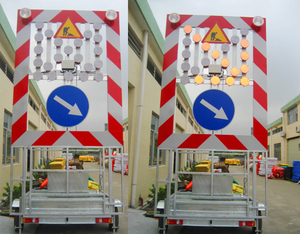
On high-speed highway curves and long runway perimeters, independent flashing can cause disorientation. Modern engineering specifications demand integrated sub-1GHz RF or GPS synchronization across multiple warning stations. Sequential, uniform chasing beacons define visual curves with higher cognitive clarity for approaching drivers.
To reduce visual footprint, next-generation housing integrates bifacial microcrystalline PV panels capable of absorbing both direct sun and albedo reflection from pavement. Paired with wide-temperature solid-state capacitors or hybrid sodium-ion cells, future beacons can operate from -40°C arctic freeze to +75°C desert roadbeds without thermal runaways.
Operating a specialized manufacturing campus, our production ecosystem unifies optical tooling, clean-room SMT surface mounting, computerized optical sphere verification, and IPX8 hydraulic immersion test tanks. We provide engineering support for Tier-1 contractors, public works agencies, and global traffic equipment distributors.
Step 1: Spectroradiometer Validation: Diode wavelength analysis verifying peak 590nm distribution within ±2.5nm tolerance.
Step 2: Dual-Axis Vibration Profile: 10Hz–55Hz harmonic sweeps checking PCB solder joint structural stability.
Step 3: Thermal Shock Cycling: Multi-cycle transitions between -40°C and +80°C in environmental simulation chambers.
Step 4: Hydrostatic Seal Auditing: Immersion testing verifying integrity against vacuum-draw water ingestion.
Key clarifications addressing compliance standards, power budgeting, and international logistics for municipal projects.
EN 12352 classifies warning lamps by effective light intensity, aperture size, and daytime/nighttime operational thresholds. Class L8H specifies high-intensity beacons (minimum 1,500 cd along the optical axis) suitable for daytime visibility on high-speed expressways. Class L8L designates lower-intensity beacons (minimum 250 cd) optimized for nighttime visibility without blinding oncoming drivers. Our systems can be configured with automated photocell switching to satisfy both thresholds within a single housing.
We perform irradiation modeling using NASA Surface Meteorology and Solar Energy data sets based on your project installation coordinates. System sizing references the worst-case winter solstice insolation values (Peak Sun Hours). We balance PV output and LiFePO4 storage capacity to maintain 5 to 7 days of continuous autonomy without direct sunlight, protecting against deep discharge degradation during extended monsoon or winter cloud cover.
Yes. Our onboard micro-controllers support software configuration for single-flash, double-flash, quad-flash, California-spec slow burn, or sequential chasing profiles. Flash cadences (such as 60 flashes/min or 120 flashes/min) are programmed at the factory to align directly with regional traffic guidelines (such as US MUTCD, European EN 12352, or local transport ministry standards).
We supply comprehensive technical submittal packages including 3D step files, dimensional CAD drawings, raw material declarations (RoHS/REACH), optical distribution curves (.IES format), third-party IP67/IP68 test certificates, and photometric compliance reports to streamline approvals by project consultants and regulatory agencies.
We use high-grade virgin polycarbonate (GE Lexan or Bayer Makrolon) formulated with UV-stabilizing additives. Our lenses maintain >88% total luminous transmission across a minimum 5-year outdoor exposure window, resisting brittleness and surface micro-crazing in high UV equatorial and desert environments.
We support both small-batch pilot testing and bulk sea-freight procurement. Assemblies are packed in high-density drop-tested inner foam and heavy-gauge corrugated master cartons, palletized on heat-treated ISPM-15 compliant wooden pallets with waterproof shrink wrapping for secure intermodal container transit.
Connect with our technical sales team for comprehensive photometric verification files, CAD specifications, sample evaluations, and tender-ready pricing.
Inquire Now