Cone Top
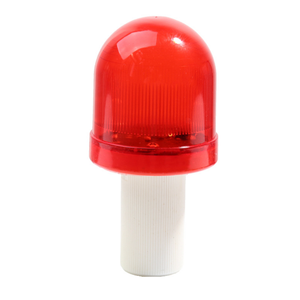
Mini Red LED Traffic Warning Strobe Light Roadway Battery Powered
- Fitment: Standard Safety Cones
- Optics: Omnidirectional 360° Flash
- Durability: Impact Modified PC Shell

Precision-molded Fresnel optical diffusers, grade-A monocrystalline PV collectors, and lithium-iron chemistry tailored for infrastructure safety contractors.
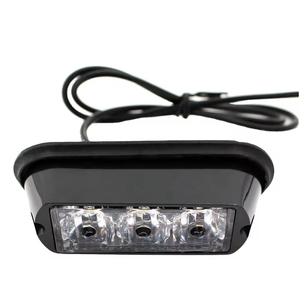
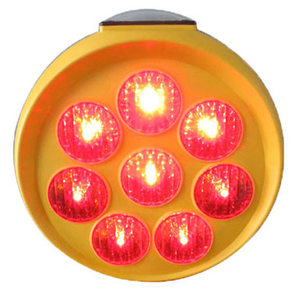
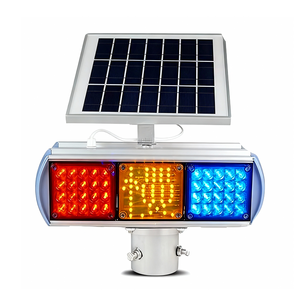
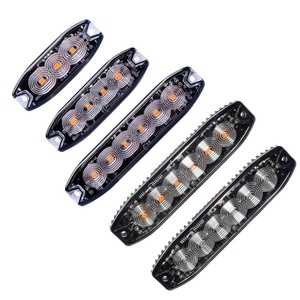
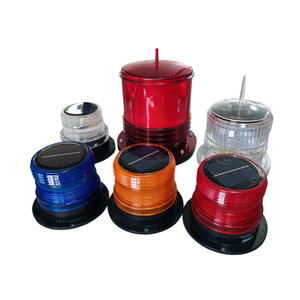
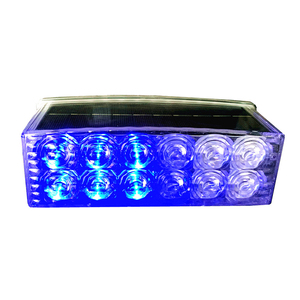
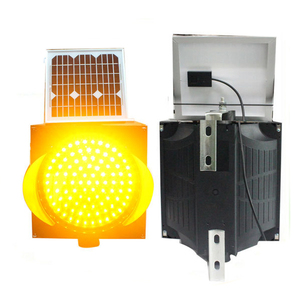
In modern traffic management, maritime fairway marking, and industrial construction logistics, the solar strobe warning light represents an indispensable category of passive-to-active visual signalization. Unlike static delineators, a pulsing high-candela strobe cuts through adverse atmospheric conditions—such as dense coastal fog, sandstorms, and heavy monsoonal precipitation—by engaging peripheral vision up to ten times faster than steady-burn lamps.
For engineering contractors, municipal infrastructure ministries, and international distributors, selecting a tier-1 supplier requires a rigorous understanding of optical divergence, solar power budget equilibria, thermal resilience of energy storage cells, and housing material degradation curves. Sourcing directly from certified manufacturing facilities ensures that component tolerances, such as poly-carbonate UV stabilizer additives and LED junction temperatures, match exact tender mandates.
The procurement landscape for off-grid traffic safety assets is undergoing a profound paradigm shift driven by zero-maintenance infrastructure mandates and intelligent sensing integration. Over the next five-year lifecycle, institutional buyers should monitor three decisive procurement vectors:
1. Lithium Iron Phosphate (LiFePO4) Superseding Lead-Acid & Standard NiMH: Traditional Valve-Regulated Lead Acid (VRLA) batteries suffer irreversible capacity degradation within 18–24 months when subjected to deep discharge under extreme summer ambient temperatures (+45°C). Procurement tenders worldwide are now enforcing minimum 2,000-cycle LiFePO4 chemistry with integrated Battery Management Systems (BMS) capable of operational stability from -20°C to +65°C.
2. Wireless Mesh & GNSS Synchronized Flashing: Uncoordinated, chaotic flashing along a highway detour or airport construction corridor creates cognitive disorientation for approaching drivers. Next-generation procurement specifications demand GPS-synchronized simultaneous flashing or sequential "chasing" wave patterns across clusters of 10 to 50 independent solar strobe units without trenching physical umbilical cables.
3. Circular Polymer Accountability & UV Stabilization: Extreme ultraviolet radiance causes cheap poly-carbonate enclosures to discolor, embrittle, and suffer microscopic cracking within months. Institutional engineering standards now specify optical-grade Bayer Makrolon or Sabic Lexan compounded with minimum UV-stabilizer grade 320, ensuring guaranteed optical transmission retention of >88% across a 5-year outdoor deployment.
| Engineering Attribute | Standard Municipal Grade | Heavy Industrial / Highway Spec | Testing & Compliance Protocol |
|---|---|---|---|
| Photometric Output | 150–250 Candela (Peak) | 500–850+ Candela (Pulsed Flash) | EN 12352 Class L8H / ITE Compliant |
| PV Cell Conversion | 16.5% Polycrystalline | 21.5%–23.0% N-Type Monocrystalline | IEC 61215 Accelerated Ageing |
| Storage Chemistry | Ni-MH (1.2V–2.4V) | LiFePO4 (3.2V) with Low-Temp Cutoff | UN 38.3, UL 1642 Transportation |
| Chassis Hermeticity | IP65 Gasket Seal | IP68 Nitrogen Purged / Sonic Welded | IEC 60529 Dust & Immersion Chamber |
| Lens Impact Resistance | IK07 | IK10 Vandal-Resistant Polycarbonate | EN 62262 Kinetic Impact Impact Drop |
Historically, strobe lamps relied on high-voltage xenon discharge tubes. While xenon offers intense localized burst luminescence, its high power consumption mandated oversized 50-watt solar arrays and bulky lead-acid accumulator banks, creating structural wind-loading hazards on temporary road poles. The industry transformation has converged on Solid-State Micro-Cluster LEDs coupled with Microprocessor Pulse-Width Modulation (PWM).
Modern drivers utilize customized buck-boost synchronous controllers that monitor real-time battery voltage and solar panel open-circuit potential. When persistent overcast conditions occur, the firmware automatically modulates flash pulse width (e.g., from a 120ms burst down to a crisper 60ms pulse) preserving lumen perception while reducing system power draw by 42%. This optical efficiency enables a compact 300mm beacon to sustain up to 10–14 days of complete autonomy in sub-zero winter drizzle.
Precision tooling, stringent batch inspection, and full lifecycle engineering support from prototype design to port-of-entry logistics.
We configure signal colorimetry, candela distribution, flashing frequency, and bracket hardware directly to international project tenders, including NHAI, PWD, BRO, and European CE/EN 12352 regulations.
Every delivery is engineered with calibrated solar-to-battery capacity balances modeled after the installation region's mean peak sun hours (PSH), preventing premature dead-battery shutoffs during dark winter months.
From unique Fresnel lens mold tooling and custom aluminum bracket extrusion to customized flash firmware coding, we provide factory-direct engineering without intermediary price layers.
Active supply chains shipping to over 20 nations across North America, Europe, Australia, and the Middle East, backed by dangerous goods (UN 38.3) battery clearance, test certificates, and seaworthy wooden crating.
Direct technical answers addressing system autonomy, harsh weather durability, and international sourcing standards.
Autonomous sizing is determined by the formula: Autonomy Days = Battery Effective Capacity (Wh) / Daily Strobe Consumption (Wh). For industrial roadway beacons, reputable manufacturers design for a minimum safety factor of 5 to 7 overcast days (120–168 continuous dark hours). We customize solar photovoltaic output (Wp) and internal LiFePO4 / NiMH ampere-hours based on the historical solar irradiance (NASA PSH data) of your destination installation coordinate.
For marine, port, and littoral road projects, our strobe beacons are manufactured with hermetically sonic-welded or silicone O-ring gasket seals meeting IP68 ingress protection standards. Metallic mounting brackets utilize electro-polished 316-grade stainless steel or anodized marine-grade 6063 aluminum, tested under continuous 96-hour neutral salt-spray (NSS) test cycles in compliance with ASTM B117 without galvanic blistering.
Self-contained solar strobe lights provide exceptional Total Cost of Ownership (TCO) advantages for highway diversions, rural crossings, mountainous terrains, and construction corridors where trenching electrical cables costs thousands of dollars per kilometer. Conversely, AC 110V/220V grid-connected blinkers remain preferable under heavily shaded metropolitan flyovers or dense urban tree canopies where direct solar insolation is obstructed.
Yes. Our microcontrollers support firmware customization for flash rates (e.g., standard 60 FPM, rapid 90 FPM, double-flash, or Morse Code "U" navigational flashes). Optical wavelengths are strictly bin-matched to international chromaticity coordinates: Amber/Yellow (590–595nm), Red (620–625nm), Blue (465–470nm), and Maritime Signal Green (520–525nm).
Every commercial batch is accompanied by comprehensive engineering documentation: Certificate of Origin (CO), Factory Acceptance Test (FAT) records, photogoniometer luminous intensity polar curves, CE/RoHS compliance declarations, and verified UN 38.3 test summaries alongside MSDS documents for compliant maritime/air battery cargo clearance.
Connect with our technical export engineering desk to receive comprehensive photometric files, CAD bracket dimensional drawings, and volume tender discounts.