Featured Road Safety Warning Flashers & Solar Beacons
Engineered specifically for arterial highways, critical lane mergers, municipal work perimeters, and severe incident management sectors.
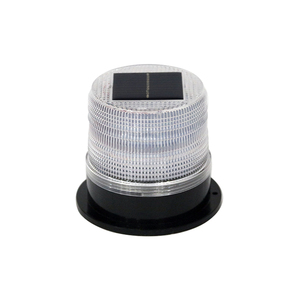
Magnetic Light-controlled Flashing Road Construction Beacon, Vehicular Traffic Safety LED Solar-powered Warning Light
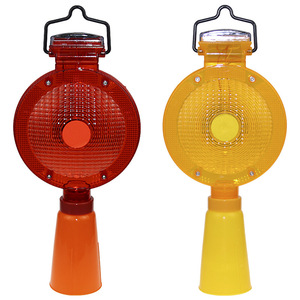
Road Safety Solar Traffic Cone LED Flashing Warning Light Red/Yellow IP58 Waterproof 50m Visibility
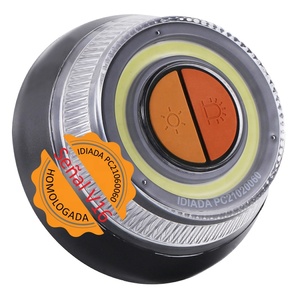
Car Warning Light 40CD-80CD Help Flash Traffic Signal Car Road Flare Safety Emergency LED Rechargeable V16 Light
CE Traffic Lamp Flashing Yellow LED Blinkers Barricade Flasher Light / Amber Road Cone Solar Barricade Light WARNING Safety
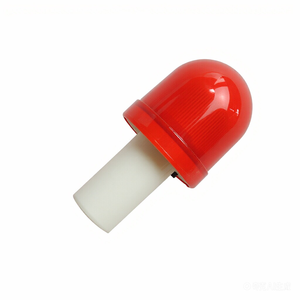
Eco-Friendly LED Flashing Traffic Warning Lamp Mini Red Strobe Light for Traffic Cone Safety Applications
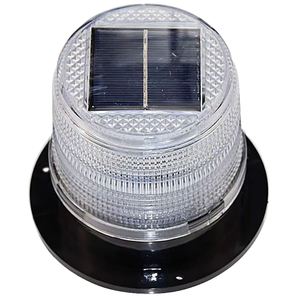
Solar Charging Plastic LED Warning Light Traffic Emergency Vehicle Strobe Beacon Magnetic Mount Highways Roadway
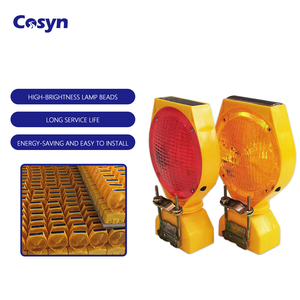
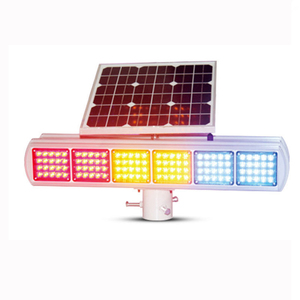
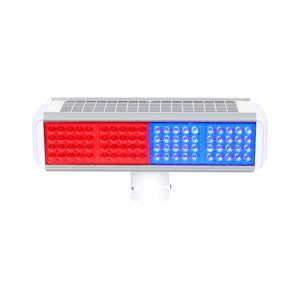
Solar Panel Warning Lights Road Safety Two-Side Red Yellow White Rapid Flashing Beacon Strobe Traffic Light PVC PU IP65
Future Procurement Trends in Road Safety Flashers (2025–2030)
An authoritative analysis of optical shifts, smart telemetry convergence, and battery chemistry lifecycles transforming municipal and highway tenders.
1. LiFePO4 Transition & Supercapacitors
Global highway departments are systematically phasing out toxic Sealed Lead Acid (SLA) and standard Nickel-Metal Hydride (NiMH) cells. Tenders increasingly enforce Lithium Iron Phosphate (LiFePO4) chemistry boasting 2,000+ deep discharge cycles and reliable -20°C to +65°C thermal stability, alongside hybrid supercapacitor arrays engineered for sub-zero desert and arctic installations.
2. V-16 Regulatory Harmonization
Following the European Union’s mandate transitioning traditional hazard triangles to connected V-16 emergency flashing beacons, overseas civil authorities are writing dynamic luminous intensity standards into municipal codes. Sourcing standards demand narrow-band amber/yellow wavelengths (585nm–595nm) with strictly verified candela thresholds between 40cd and 80cd.
3. IoT, LoRaWAN & GPS Flash Synchrony
Modern work-zone delineators are evolving from standalone blind flashers to synchronized linear arrays. Utilizing low-power 2.4GHz RF and sub-1GHz LoRaWAN networks, interconnected barricade flashers pulse sequentially to guide high-speed traffic past sudden lane closures, drastically decreasing collision incidence at highway bypasses.
Road Safety Flasher Parameter Matrix for Project Bidding
Critical performance criteria essential for government EPC bids, civil tendering, and international homologation.
| Evaluation Parameter | Standard Commercial Grade | Industrial Highway Heavy-Duty Grade | Tender Verification Method |
|---|---|---|---|
| Photometric Output | 15–30 Candela (diffuse) | 50–120+ Candela (focused beam angle) | Goniophotometer measurement at 1.5m to 25m |
| Optical Refractive Design | Extruded Translucent Polystyrene | Optical-Grade Polycarbonate with 360° Fresnel Prisms | UV Aging Accelerated Weathering (ASTM G154) |
| Solar Ingestion Efficiency | 12% Polycrystalline Cells | 21.5%+ High-Yield Monocrystalline PV Wafer | Standard Test Condition (STC) 1000W/m² Flash Chamber |
| Thermal Resilience | -10°C to +45°C Operational Range | -35°C to +75°C Severe Climate Operation | Environmental Thermal Shock Chamber Cycle (IEC 60068-2-14) |
| Housing Impact Resistance | IK06 General Duty | IK09/IK10 High Impact Resistant Molded Polycarbonate | Drop Hammer Impact Verification (EN 62262) |
| Ingress Hermeticity | IP54 Splash Resistant | IP67 / IP68 Continuous Submersion & Pressure Wash | Vacuum Air-Decay Leakage Testing Tank |
Why Global Infrastructure Contractors Choose Our Manufacturing Base
Delivering high-capacity production, end-to-end quality documentation, and rigorous environmental stress screening for worldwide projects.
Standard-Compliant Builds
Manufactured to fulfill rigorous global standards including NHAI, PWD, BRO specifications, CE directives, and MUTCD / EN 12352 requirements for high-speed highway, border, and bridge deployments.
In-House SMT & Tooling
From injection molding of high-density polycarbonate housings to automated Surface Mount Technology (SMT) LED assembly and conformal silicon dip coating for ultimate anti-corrosion protection.
Proven Global Deliveries
Trusted supply chain partners across 20+ countries, serving civil concessions, international port projects, and heavy industrial yards with standardized seaworthy carton and pallet crating.
Custom Optical Engineering
Lens geometry customization, pulse rate timing (30 to 120 flashes per minute), bidirectional split color lenses, and precision-bracket engineering for custom steel barriers or jersey barriers.
Factory-Direct Cost Control
Zero intermediary markup. Volume price tiers optimized for large EPC highway contractors and local municipal safety asset distributors looking for sustainable long-term procurement.
100% End-of-Line Burn-in
Every single unit undergoes an exhaustive 72-hour continuous cycling test, rain spray ingress immersion check, and photodiode lux audit before packaging and dispatch.
Frequently Asked Questions by Safety Directors & Buyers
Technical clarity on compliance, testing standards, customization parameters, and logistics.
How do you calculate solar autonomy during extended overcast or monsoon weather?
We calculate autonomy using the equation: Total Battery Capacity (Wh) / Average Daily Continuous Consumption (Wh/day). Our units are configured with minimum 5 to 7 days (120–168 hours) of unassisted reserve power, factoring in parasitic controller loss and sub-ambient discharge coefficients.
What is the advantage of Polycarbonate (PC) over PMMA or PS in highway environments?
Polycarbonate offers superior Izod impact strength (up to 600-800 J/m), preventing shatter when hit by high-speed road debris or knocked down during barrier collisions. Combined with high-grade UV stabilizers, it preserves optical transmittance over 90% without yellowing or micro-cracking under intense solar irradiation.
Can you customize flash rates and luminous output for specific highway tenders?
Yes. Our MCU (Microcontroller Unit) firmware can be programmed for standard single-flash (50–60 fpm), double-strobe, triple-pulse, or steady-burn modes. Luminous output can be dialed to comply precisely with EN 12352 classes L1, L2H, or specific civil tender guidelines.
What certifications and compliance reports accompany bulk overseas shipments?
Standard export orders include CE, RoHS, and ingress protection (IP65/IP68) test certifications. Upon request, we provide third-party laboratory reports for photometric distribution curves, high/low-temperature operational tests, and UN38.3 lithium battery transport safety certificates for air/sea transit.
Looking for Reliable Road Safety Flasher Manufacturing Capacity?
Whether you require tender-compliant samples, custom CAD mounting bracket designs, or container-load OEM manufacturing pricing, our engineering team is available 24/7 for prompt technical feasibility assessment.
Get a Quote