
Explore our certified portfolio of active hazard illumination systems, engineered for round-the-clock road visibility, construction barriers, civil detours, and multi-lane expressways.
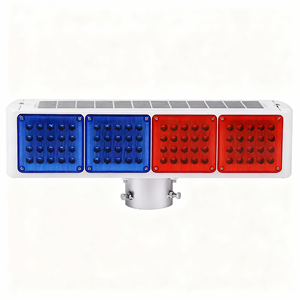
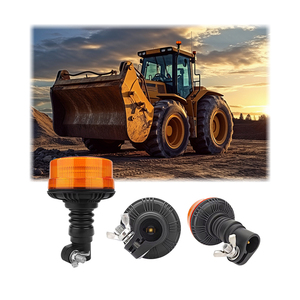

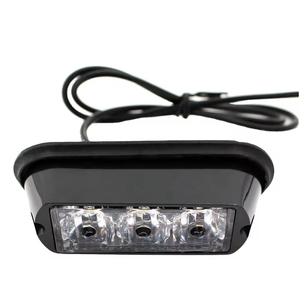
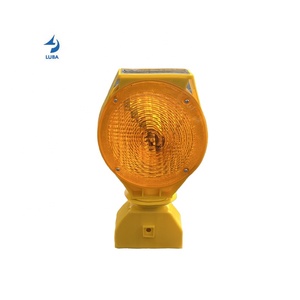

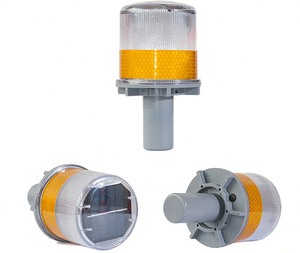
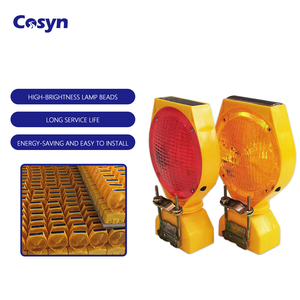
In modern high-speed transportation corridors, safety relies heavily on autonomous, fault-tolerant alert hardware. As an established CE Certified Traffic Alert Light Factory and Global Exporter, our manufacturing philosophy centers on delivering repeatable photometric brilliance, environmental ruggedness, and complete immunity to catastrophic environmental failure. Operating from state-of-the-art facilities compliant with international specifications including European EN 12352, American MUTCD, and India's NHAI, PWD, and BRO guidelines, our lighting devices serve as life-saving visual beacons on national expressways, critical bridgeheads, automated toll facilities, and dangerous municipal intersections.
The performance of a traffic alert beacon is measured not merely by its immediate luminescence, but by its operational longevity under brutal climatic extremes. Roadside hardware must endure ultraviolet radiation degradation, constant heavy vehicle vibrations, thermal cycling ranging from sub-zero Alpine winters to scorching desert summers, and pervasive moisture ingress. Our engineering architecture utilizes die-cast ADC12 aluminum housings, Bayer/Sabic virgin optical-grade polycarbonates, and military-grade surface-mount LED modules to ensure that every beacon dispatched to our 20+ export destinations maintains unbroken visual guidance for years without maintenance interventions.
Zero intermediary markups. Fully integrated in-house cleanroom SMT assembly, injection molding, CNC tooling, and photometric goniophotometer calibration.
Full conformance to European warning light categories L2H, L8H, and L8M, guaranteeing verified chromaticity coordinates and luminous intensity limits.
Dynamic MPPT charging paired with ultra-reliable LiFePO4 or industrial sealed AGM battery architectures delivering 7 to 10 days of non-sunlight backup.
Custom engineering for government tenders, infrastructure concessionaires, and EPC contractors, complete with full drawing packages and test certificates.
A rigorous breakdown of traffic alert lighting categories to guide municipal project engineers and procurement authorities in selecting optimal configurations.
| Functional Category | Certified Standard | Chassis Construction | Optical Emission Class | Power Architecture | Typical Infrastructure Deployment |
|---|---|---|---|---|---|
| Dual-Sided Solar Strobe | CE, EN 12352 Class L8H | Die-Cast ADC12 Aluminum | >500 cd (High Noon Peak) | Monocrystalline + LiFePO4 | Divided highway medians, dynamic detour bifurcations |
| Rotational DIN Beacon | ECE R65, E-Mark, CE | Shockproof Flexible Rubber / PC | 120-180 Flashes/Minute | 12V/24V DC Auxiliary | Highway utility fleets, industrial tractors, escorts |
| Mains Directed Arrow Signal | CE, EN 12966, IP65 | UV-Stabilized Polycarbonate | Dynamic Directional Amber | 110V - 240V AC Stabilized | Toll plaza channelizers, permanent urban intersection lanes |
| Barricade Solar Flasher | EN 12352 Class L2H, CE | Impact Polyethylene / Lexan | >55 cd (Effective Nighttime) | Polycrystalline + NiMH/Li-ion | Temporary perimeter barriers, civil road excavations |
| Emergency Disc Flare | CE, RoHS, IP68 Waterproof | Overmolded Thermoplastic (TPU) | Multi-Angle 360° Strobe | Rechargeable Lithium Polymer | Rapid incident management, hazardous hazmat spill cordons |
Strategic intelligence for road development authorities, civil contractors, and municipal purchasers navigating technological shifts in roadside safety infrastructure.
Tenders increasingly mandate traffic alert lights with integrated RF and Cellular Vehicle-to-Everything (C-V2X) transmitters. When active, these beacons transmit localized situational hazard warnings directly into the heads-up display of approaching autonomous and ADAS-enabled passenger vehicles.
Global procurement has decisively shifted away from heavy, toxic lead-acid cells toward thermally stable LiFePO4 chemistry. Offering over 3,000 thermal cycles, integrated Battery Management Systems (BMS), and exceptional charge recovery in high-ambient-heat environments, total lifecycle operating costs decrease by 60%.
Modern international safety directives enforce strict anti-glare ceilings to prevent driver blinding during moonless nights. Advanced beacons feature dynamic photodiode sensing that outputs maximum candela under blinding midday sun, then automatically throttles down to night-optimized, non-glare warning levels.
The progression of traffic alert hardware from rudimentary incandescent flasher units to high-precision optoelectronic beacons represents one of the most substantial safety evolutions in roadway engineering. Early generations suffered from massive parasitic power drain, fragile filaments prone to rupture from roadway rumble vibrations, and rapid degradation of yellow cellulose acetate lenses under ultraviolet radiation.
In standard illumination, dispersion casts photons across wide non-critical sectors, diluting visual effectiveness. Modern CE certified traffic warning lights utilize custom-engineered Fresnel micro-prismatic optical lenses molded from optical-grade Sabic Lexan. These lenses collimate light emitted by Osram or Lumileds high-flux diodes into tightly focused horizontal fans—minimizing wasted skyward emissions and amplifying horizontal candela along the approach vectors where drivers need visual acquisition most.
High-candela LED systems generate intense junction temperatures. If thermal loads are not rapidly evacuated, diode phosphors degrade rapidly, resulting in catastrophic chromatic shifts (yellow shifting to dim white) and reduced lumen output. Our industrial housings utilize heavy-duty ADC12 die-cast aluminum alloys equipped with rear radiative heatsink fins. This architecture maintains diode junction temperatures below 65°C even in intense desert environments, guaranteeing a rated L90 service life exceeding 100,000 continuous hours.
Older generation solar flashers utilized primitive shunt controllers that wasted up to 35% of harvested solar energy, frequently dying during consecutive overcast days. Contemporary export units incorporate smart Maximum Power Point Tracking (MPPT) microcontrollers operating at 98.5% conversion efficiency. These units dynamically adjust to trace impedance fluctuations, pulling critical trickle charge currents from diffused, low-lux winter ambient light to keep reserve cells fully functional year-round.
Direct technical and commercial answers tailored for engineering consultants, municipal purchasing officers, and civil construction estimators.
Consult with our senior photometric engineers for tender compliance cross-referencing, project design submittals, and comprehensive factory-direct pricing for international distribution.
Get Catalog