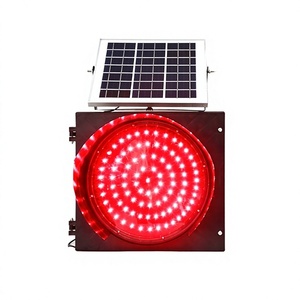
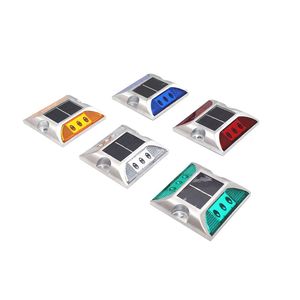
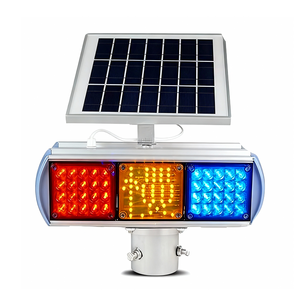
Precision-molded optical devices certified for highways, construction deviations, civil municipal roads, and critical industrial corridors.
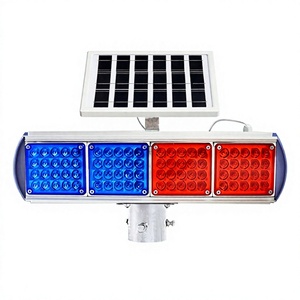
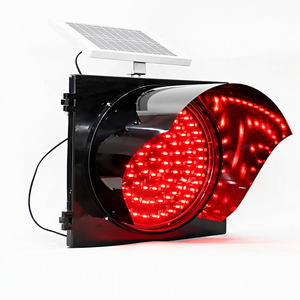
Modern arterial road safety and highway intersection control increasingly depend on resilient, decentralized warning mechanisms. A CE certified solar signal light is not merely an assemblage of low-cost LEDs and miniature photovoltaic plates; it is an engineered node designed to fulfill rigorous optical performance parameters under EN 12368 (traffic control equipment standards), electromagnetic compatibility mandates under EN 50293, and the mechanical vibration stress frameworks codified under European and American highway directives.
When civil engineers and infrastructure concessionaires evaluate suppliers, luminous intensity distribution and chromaticity coordinates represent the foundational performance benchmark. Under international standards (such as EN 12368 Class B2/2 or US MUTCD Section 4D), an amber or red flashing signal must generate a daylight luminous output of no less than 400 to 800 cd on-axis, while dynamically throttling luminous output during twilight and total darkness (often downward to 50–100 cd) to prevent debilitating ocular glare for oncoming motorists. Factory-direct suppliers achieve this through pulse-width modulation (PWM) driven microcontrollers paired with integrated reverse-biased silicon photodiode arrays.
Global procurement directives are systematically phasing out toxic, short-lived sealed lead-acid (VRLA/SLA) batteries. Modern tier-1 solar signal light manufacturers have re-engineered power enclosures for Lithium Iron Phosphate (LiFePO4) chemistry, providing >2,500 lifecycle cycles at 80% Depth of Discharge (DoD) and thermal operational stability across extreme temperatures ranging from -30°C to +65°C.
Future-focused municipal tenders now mandate RF-linked or NB-IoT wireless mesh synchronization. Adjacent solar amber beacons or sequential chevron light arrays across expressway curves must establish sub-millisecond flash synchronization without external data wiring, preventing visual chaos through coherent visual lead sequences.
Polycarbonate (PC) lens degradation from relentless UV-A and UV-B exposure represents the primary cause of premature field failure in tropical and high-altitude deployments. Industrial-grade suppliers utilize Bayer Makrolon® or Sabic Lexan® optical resins injected with hindered amine light stabilizers (HALS), preserving >92% light transmittance over a validated 10-year lifespan.
| Evaluation Parameter | Certified Infrastructure Grade | Generic Commercial Grade | Procurement & Risk Impact |
|---|---|---|---|
| Optical Chromaticity | EN 12368 / CIE 1931 Yellow & Red Limits | Uncalibrated Phosphor LEDs | Non-compliant units fail tender acceptance tests. |
| Battery Chemistry | Industrial Grade LiFePO4 with Cell BMS | Recycled AGM / Lead-Acid | Lead-acid requires field swap every 12–18 months. |
| Housing Ingress | Hermetic IP65 / IP67 Silicon Gaskets | Glued Foam Tape (IP53) | Moisture ingress triggers circuit board delamination. |
| Solar Autonomy | 120 to 168 Hours (5 to 7 overcast days) | 24 to 48 Hours maximum | Intersections black out during extended monsoon/winter. |
| Impact Resistance | IK08 / IK09 Polycarbonate or Cast Alloy | Thin PS or Recycled Polypropylene | Micro-cracking from road projectile vibration. |
Procuring authorities are advised to reject bids omitting third-party photometrics, solar power sizing matrices (PVSyst audits), or formal CE LVD/EMC test documentation. By choosing direct-from-factory suppliers with end-to-end component traceabilities, contractors ensure structural reliability and eliminate unnecessary distributor markups.
As a dedicated manufacturer and global exporter, our state-of-the-art facilities produce high-durability road safety systems built to Indian (NHAI, PWD, BRO) and worldwide international specifications (European EN, US MUTCD). We maintain comprehensive control over the entire production chain: precision die casting, CNC housing fabrication, robotic SMT circuit assembly, and rigorous climate-chamber burn-in tests.
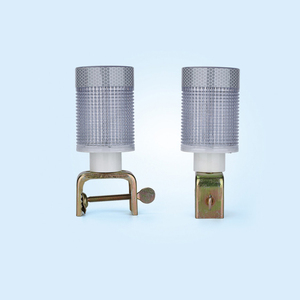
By eliminating intermediary brokers and supply-chain trading markups, our clients receive direct access to production-run engineers, turnkey customization (signal aspects, arrow orientations, voltage ranges, and mounting clamp brackets), and transparent material certifications for government audit pass-through.
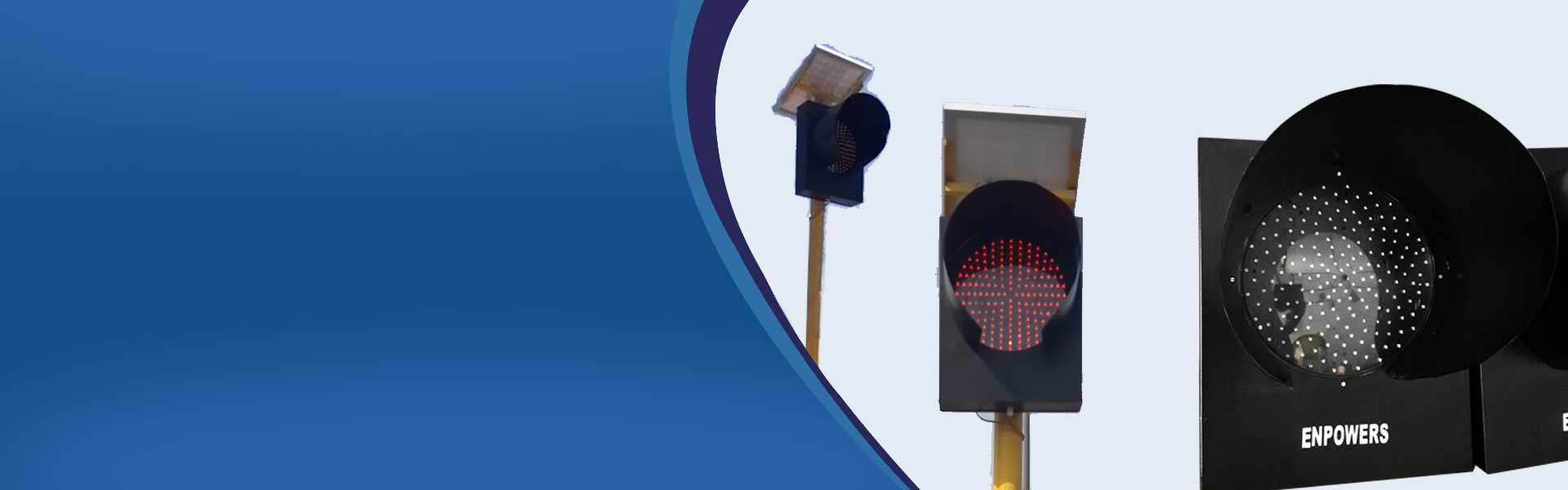
The convergence of green off-grid autonomy, cellular vehicle-to-everything (C-V2X) communications, and smart cities.
The transition toward high-efficiency N-type TOPCon monocrystalline cells allows higher wattage output within smaller footprints. This lowers wind-load surface resistance on tall traffic poles while enhancing energy collection in weak ambient light and overcast conditions.
Instead of continuous flashing, future-generation solar warning beacons incorporate Doppler millimeter-wave radar units that stay in low-power idle until detecting oncoming vehicles traveling above designated speed thresholds, boosting driver response times by over 40%.
Next-decade solar signal nodes are evolving into IoT micro-gateways, relaying road hazard status, curve entry alerts, and construction speed limits directly to connected vehicle dashboards via dedicated short-range communications (DSRC) and C-V2X protocols.
Clear, definitive technical clarifications addressing certification verification, logistics packaging, and project tender mapping.