
Tested rigorously under extreme solar irradiance, moisture ingress, and continuous duty cycles. Fully compatible with NHAI, PWD, BRO, and CE EN 12352 optical compliance metrics.
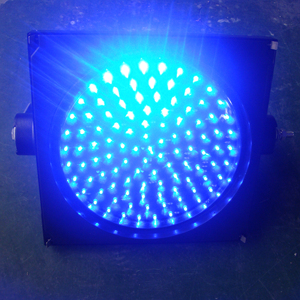
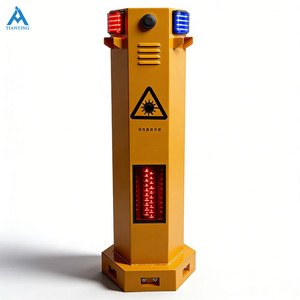
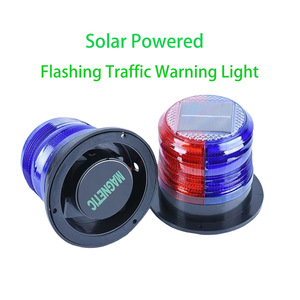
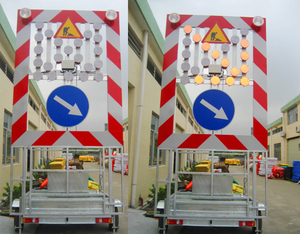
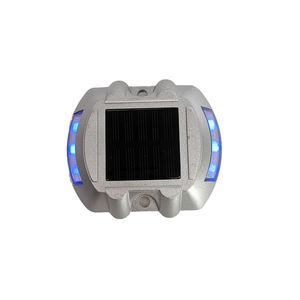
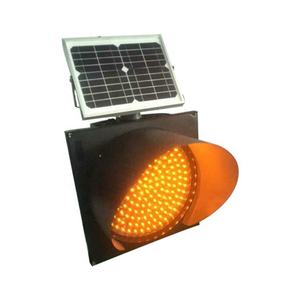
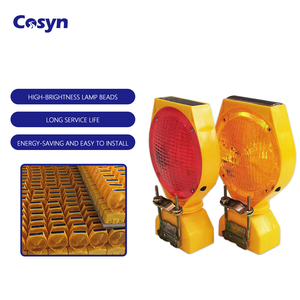
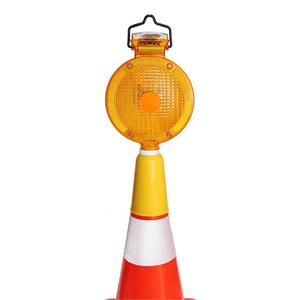
Operating from Plot No. 140, Pushpak Industrial Estate, GIDC Phase-1, Vatwa, Ahmedabad, Enpowers International delivers rigorous quality control straight from the manufacturing floor to multi-continent distribution pipelines.
Every hazard flasher, solar traffic signal blinker, and high-impact light enclosure is designed, molded, assembled, and photometrically inspected within our own manufacturing compound. Procurement officers bypass trading agent markups entirely.
Fabricated natively to conform to the exacting field engineering standards of NHAI (National Highways Authority of India), PWD (Public Works Department), and BRO (Border Roads Organisation), with full certification profiles available for European and American DOT requirements.
Unlike commercial consumer-grade blinkers, our solar arrays, microcontrollers, and industrial LiFePO4 / Lead-Acid energy banks are calibrated mathematically based on global horizontal irradiance (GHI) maps, ensuring failure-free signaling over 5-7 days of sustained cloud cover.
Strategic considerations for transportation departments, concessionaires, and EPC infrastructure contractors navigating next-generation roadside safety installations.
Global highway departments are aggressively shifting away from isolated hazard lights toward NB-IoT and LoRaWAN-enabled flashers. Procurement pipelines now prioritize units providing remote health checks, battery lifecycle diagnostics, and real-time flash synchronization along highway medians and bridge approaches.
Procurement specifications for 2025–2030 are rapidly phasing out traditional flooded and gel-electrolyte batteries. LiFePO4 cells yield 3,000+ deep-discharge cycles, perform without thermal runaways in extreme climates (+65°C desert corridors to sub-zero high-altitude expressways), and drastically reduce replacement cycles.
International cross-border infrastructure tenders require strict photometric consistency. CE EN 12352 Class L8H and L8L standards demand uniform chromaticity, minimal luminaire degradation, and targeted beam spreads that alert drivers up to 1,500 meters away without causing nighttime optical glare.
How cutting-edge optical, material, and electrical manufacturing is reshaping the durability of road safety assets.
Optical arrays engineered with internal micro-prismatic refractive patterns achieve extreme luminous efficiency, delivering wider angular visibility for diverging heavy-traffic lanes.
Dynamic Maximum Power Point Tracking firmware extracts up to 25% more solar energy during low-angle sunrise, sunset, and diffused cloud conditions, maximizing battery reserve capacity.
As showcased in smart pedestrian crossing systems, high-intensity diode beacons now augment flashing signals with dynamic optical lane bars painted directly onto the asphalt surface.
Specialized resin matrix formulations prevent yellowing, crazing, and structural embrittlement under intense tropical and desert UV radiation, ensuring multi-year IP integrity.
An engineer's comparative framework for evaluating procurement documentation against verified field survivability metrics.
| Specification Feature | Generic Commercial Grade | Enpowers Industrial / CE Engineering Grade | Procurement Impact |
|---|---|---|---|
| Luminous Intensity | 1,500 – 3,000 mcd | 8,000 – 12,000 mcd (OSRAM / Cree Diodes) | Visible up to 1.5 km; eliminates driver reaction lag |
| Ingress Protection | IP54 to IP65 Basic Gaskets | IP66 Enclosure / IP68 Cast (Ultrasonic Sealing) | Prevents internal condensation during monsoons |
| Enclosure Construction | Recycled ABS / Thin Sheet Metal | Virgin Bayer Polycarbonate / High-Tensile Cast Alloy | Withstands vehicle gravel throw and wind loads (>150 km/h) |
| Power Electronics | Standard Analog Pulsing Resistor | Solid-State Constant Current MPPT Controller | Prevents diode burnouts during battery surge voltages |
| Working Temperature | -5°C to +45°C | -35°C to +75°C Industrial Spectrum | Reliable across high-altitude border highways & desert roads |
Direct technical feedback from our engineering team to address complex project parameters, tender compliance, and international shipping protocols.
CE EN 12352 is the definitive European standard governing warning and safety light devices on roadways. Buyers must verify the operational light class (e.g., L2H, L8H, or L8L). Class L8H specifies continuous effective luminous intensity above 1,500 cd for daylight visibility, while L8L is designed for low-light operations. Furthermore, the standard evaluates chromaticity coordinates (under CIE 1931), horizontal and vertical angle angularity, continuous power operation under extreme thermal variations, and EMC compliance to ensure the hazard flasher's electronic pulses do not interfere with vehicular radar or emergency communications.
Solar battery autonomy refers to the number of consecutive days a hazard flasher can flash at standard duty cycles (typically 60 flashes per minute with a 10-20% duty cycle) with zero solar charging. Industrial deployments require a minimum of 5 to 7 days of autonomy. In our factory, battery capacity is scaled in amp-hours (Ah) relative to the specific installation region's Worst-Month Average Sun Hours (Peak Sun Hours / PSH). For high-latitude, mountain, or monsoon corridors (such as BRO border routes), we pair enlarged photovoltaic panels (15W to 40W) with cold-tolerant LiFePO4 batteries managed by integrated microprocessors that automatically adjust optical duty cycle to prevent complete battery depletion.
While solar units reduce trenching, cabling, and civil works costs, AC Mains-powered units (110V / 230V AC) are strongly recommended in dense urban intersections where high-rise architecture, bridges, or overpasses block line-of-sight solar irradiance. Additionally, in multi-lane toll plazas, automated weigh bridges, and industrial processing complexes where uninterrupted 24/7 grid electricity is already present, AC blinkers provide a lower initial footprint and require zero battery maintenance cycles over a 10-year deployment.
Yes. Because we control all fabrication tooling, PCB fabrication, and casting at our Ahmedabad facility, we regularly configure flasher units to unique engineering drawings. We modify lens sizes (100mm, 200mm, 300mm, 400mm), housing types (die-cast aluminum or UV-polycarbonate), optical aspects (amber, red, green, bi-color, or directional arrows), mounting bracket dimensions (pole clamp, gantry, or surface), and flashing patterns (steady, quad-pulse, strobe, or rotary). Submit your tender bill of quantities (BOQ) or mechanical drawings to receive an exact production proposal.
All international orders leaving our GIDC Phase-1 factory are packaged in heavy-duty 7-ply export-grade corrugated cartons fitted with custom-molded high-density polyethylene (EPE) foam inserts to protect polycarbonate lenses and solar glass from vibrational shock. When shipping containing lithium batteries, all packages comply with UN 3481 / UN 3480 IATA Dangerous Goods Regulations, complete with MSDS, drop-test certifications, and commercial customs documentation for smooth entry across more than 20 countries worldwide.
Directly contact our engineering export team to request technical datasheets, photometrics, tender compliance validation, or custom factory-direct quotations.
Send an Inquiry