
Export Sales: +91 96012 58123 [email protected] Exporting to 20+ Countries
0%

Choosing a Solar Traffic Signal Blinker is about more than finding a bright warning light. It means weighing visibility, dependable operation, and practical installation needs. In 2026, buyers can compare compact units for temporary work zones with larger systems designed for fixed approaches and intersections. A clear comparison starts with the details: solar-panel output, battery capacity, LED visibility, flash settings, mounting hardware, and weather protection.

A Solar Traffic Signal Blinker should remain useful when sunlight is limited. Ask how the unit performs after cloudy days, how long its battery can support nighttime operation, and whether its controls are simple to inspect. Check product documentation, warranty terms, and applicable certification claims rather than relying on appearance alone. A bright red lens can look convincing in a catalog. Field conditions are less forgiving.

An illustrative buying principle from fictional composite specialist Dr. Elena Ward—not a verified quotation—is: “Choose for the dimmest day, not the brightest photograph.” That distinction matters. It points buyers toward documented autonomy, durable enclosures, and visible signals from realistic viewing distances. Specifications still need careful review; no single model fits every site. This guide examines leading options for sale in 2026, with attention to performance, installation, and value, so readers can shortlist products that suit their actual traffic-control needs. It also flags details worth questioning, because product listings do not always tell the whole story.
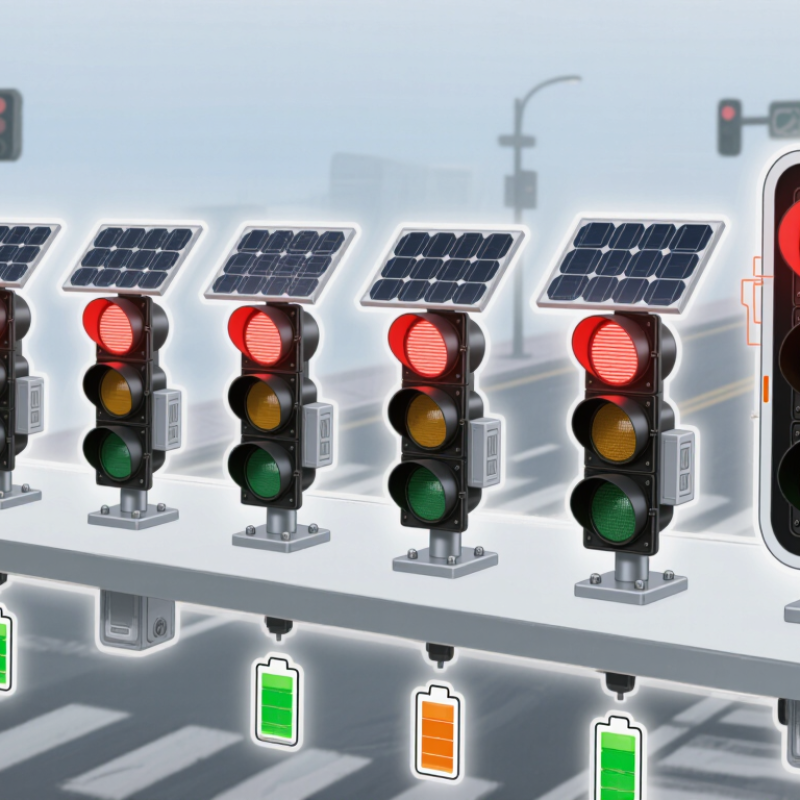
2026 Top Solar Traffic Signal Blinkers for Sale

What Solar Traffic Signal Blinkers Are and How They Work

2026 Top Solar Traffic Signal Blinkers for Sale

What Solar Traffic Signal Blinkers Are and How They Work

Solar traffic signal blinkers are warning lights powered by a small photovoltaic panel, rechargeable battery, and controller. The panel converts daylight into electricity, which the controller stores in the battery. After dark, the battery runs flashing LED lamps. A sensor or timer manages operation, while the controller helps prevent overcharging and excessive discharge. The result is a self-contained warning unit, often mounted on a sign, post, or roadside barrier.

The details matter. Panel size, battery capacity, shade, and local winter sunlight all affect how reliably a unit flashes overnight. The U.S. Department of Energy’s Energy Saver guidance says LEDs use at least 75% less energy than incandescent lighting and can last up to 25 times longer. Those are general lighting comparisons, not a guarantee for every traffic beacon. Still, efficient LEDs help a small solar system stretch stored energy. In practice, inspect the panel for dust, check battery condition, and confirm the flash pattern remains visible from the intended approach. A shaded corner can change the outcome.

Solar power is not maintenance-free. NREL’s PVWatts tool estimates solar output using location and system details, illustrating why one panel specification cannot suit every site. Check winter exposure and expected operating hours before choosing equipment. That matters. A little oversizing may be sensible, though it cannot fix poor placement.

2026 Top Solar Traffic Signal Blinkers for Sale — What They Are and How They Work

Illustrative daily energy balance for a solar-powered warning blinker

How to read this: Solar traffic signal blinkers use a photovoltaic panel to charge a battery that powers flashing warning lights. This example estimates daily harvest from a 20 W panel at 75% system efficiency and compares it with an assumed 36 Wh daily load. Actual output and runtime vary with sunlight, panel orientation, equipment, and operating settings; these figures are illustrative, not product specifications.

Key Components and Operating Modes of Solar Signal Blinkers

A solar signal blinker combines a photovoltaic panel, a rechargeable battery, a charge controller, LED modules, and a weather-resistant housing. The panel converts daylight into electricity, while the controller manages charging and helps prevent excessive discharge. At dusk, a light sensor can switch the LEDs on automatically. Some systems also allow timed operation or manual control. Flash patterns and intensity vary by design. Check the product specifications rather than assuming every unit offers the same settings.

The battery supplies power after sunset and during cloudy periods, so its capacity matters as much as the panel’s output. Mounting angle matters too. Nearby trees, signs, or building shadows can reduce charging, even when the location seems bright. There is a trade-off, though: a larger panel may need more mounting space. Look for clear information on operating time, battery replacement, visibility distance, and temperature limits. Inspect the lens and panel regularly for dust, moisture, or damage. A small detail, but important. Real-world performance can differ from estimates, so site conditions should guide equipment selection.

Common Types and Specifications Available in 2026

Solar traffic signal blinkers in 2026 generally fall into three groups: compact single-sided beacons, dual-sided units for wider approaches, and warning assemblies paired with signs. Buyers can compare 200 mm and 300 mm LED signal faces, steady or programmed flash patterns, and 12 V or 24 V control systems. These are common configuration options, not universal requirements; confirm local specifications before ordering.

Solar packages typically pair a photovoltaic panel with a charge controller, rechargeable battery, and LED head. Ask suppliers to state panel wattage, battery chemistry, operating temperature, and documented autonomy without sunlight. Three to five days of backup is a useful comparison range, but actual runtime depends on flash rate, battery age, and winter conditions. Small details matter. A shaded pole can reduce charging, even when the panel looks adequate at noon.

The IEA PVPS Trends in Photovoltaic Applications 2024 report put global installed solar capacity above 1.6 terawatts by the end of 2023, reflecting a mature supply base, not guaranteed performance for any beacon. The IEA Renewables 2023 report also projected solar PV would provide nearly 80% of renewable capacity growth through 2028. Those figures support solar’s expanding role, but site-level sunlight and maintenance still decide whether a specific unit performs reliably.

How to Compare Solar Traffic Signal Blinkers for Sale

When comparing solar traffic signal blinkers for sale, start with the road setting: approach speed, viewing distance, lane width, and shade. A unit beside a tree-lined junction may receive far less sunlight than one on an open rural road. Compare documented flash intensity, flash rate, viewing angle, and lens color, not just advertised brightness. Ask for test reports and confirm the device meets the specifications required by the relevant road authority. Details matter.

Next, compare the solar panel’s rated output with battery capacity and stated autonomy during cloudy weather. Request the conditions behind any runtime claim; a result from mild weather may not reflect winter performance. Check the enclosure’s ingress-protection rating, operating-temperature range, mounting hardware, and availability of replaceable batteries. IRENA’s Renewable Capacity Statistics 2025 reports that global solar capacity grew by 452.1 GW in 2024. That signals a rapidly expanding solar sector, but it does not establish how well a particular blinker performs. For a fair comparison, review each unit’s test data and warranty terms, then check its charging and flashing operation at the intended site. Small discrepancies between brochure claims and field conditions are possible.

Installation, Maintenance, and Safety Considerations

Solar traffic signal blinkers need a clear view of the sun and the road. During a site walk, check for tree shade, roof shadows, and glare from nearby signs. A panel that looks sunny at noon may be shaded by late afternoon. Small details matter.

Mount the unit firmly on a sound pole, with the lens aimed toward approaching drivers. Keep the panel clear of branches and avoid placing it where headlights or streetlights obscure the warning flash. Use the manufacturer’s installation instructions and the road authority’s requirements. A qualified installer should secure wiring, seal outdoor connections, and confirm that the mounting hardware can handle local wind and weather. Test after dark. Check that the blink pattern is visible from a safe distance and does not distract or confuse drivers.

Plan maintenance before the first storm. Inspect the panel, lens, fasteners, and wiring every few months, and after severe weather. Remove dust, leaves, and bird residue with materials suitable for the equipment; abrasive cleaners can scratch surfaces. Check battery condition and charging performance, since a bright daytime display can hide weak overnight operation. Record inspection dates and any repairs. Even a careful plan can miss a changing tree canopy, so revisit the site as nearby landscaping grows.

FAQS

What is a solar traffic signal blinker?

It is a warning light powered by a solar panel and rechargeable battery. A controller manages charging and flashing LEDs.

How does it work after dark?

The panel stores energy in the battery during daylight. After dark, a sensor or timer switches on the flashing lamps.

What affects overnight performance?

Panel size, battery capacity, shade, and winter sunlight all matter. Shade changes everything. Dust on the panel can also reduce charging.

Are solar blinkers maintenance-free?

No. Inspect the panel, battery, mounting hardware, and flash pattern regularly. A quick check can catch problems, but it cannot guarantee reliable operation.

How should I compare different units?

Compare documented flash intensity, rate, viewing angle, and lens color. Ask for test data, not just a brightness claim.

What should I check about battery runtime?

Review the stated autonomy and the weather conditions behind it. Mild-weather results may not reflect a cloudy winter week.

Which site details matter before installation?

Consider approach speed, viewing distance, lane width, and nearby trees. Confirm the unit suits the intended viewing direction.

Can a larger panel solve every performance problem?

A little oversizing may help with limited sunlight. It cannot fix poor placement. I would still verify performance at the actual site.

Conclusion

A Solar Traffic Signal Blinker is a flashing warning device powered by sunlight, designed to improve visibility at locations such as crossings, intersections, and work zones. Its solar panel charges a battery, which supplies energy to the light and control system. Key components may include high-visibility LED lamps, a rechargeable battery, a controller, a mounting structure, and optional sensors or timers. Depending on the application, blinkers can operate continuously, follow a programmed schedule, or activate in response to detected movement.

When comparing models available in 2026, consider light output, flash patterns, panel and battery capacity, operating time, weather resistance, mounting options, and ease of servicing. Choose specifications suited to local sunlight, traffic conditions, and the intended location rather than relying on price alone. Safe installation should provide a clear view of the signal without obstructing pedestrians or drivers. Regularly check the panel, battery, lights, fasteners, and wiring, and follow the manufacturer’s maintenance guidance to support reliable operation.

Olivia

Olivia

Olivia is a dedicated marketing professional with extensive experience in developing clear, engaging, and insight-driven content for business audiences. As a key contributor to our company’s website, she regularly publishes professional blog articles that explain industry trends, practical......
Online Enquiry Contact Sales