
Export Sales: +91 96012 58123 [email protected] Exporting to 20+ Countries
0%

Global buyers are paying closer attention to Solar Amber Blinker Light suppliers. The reason is practical. Safer roads, construction zones, parking areas, and remote facilities need visible warning systems that operate without grid power. A compact amber beacon can flash through rain, dust, and nighttime traffic. Yet appearance alone proves very little.

IRENA’s Renewable Capacity Statistics 2024 reported 473 gigawatts of renewable capacity added worldwide in 2023. Solar power contributed approximately 346 gigawatts. This rapid expansion strengthens demand for dependable solar-powered safety equipment. IRENA Director-General Francesco La Camera stated, “Renewables accounted for 86% of all new power capacity added globally in 2023.” His observation reflects a wider shift toward decentralized energy solutions, including solar warning lights.

Procurement teams should examine more than unit price. They need verified lumen output, battery chemistry, charging performance, IP protection, operating temperature, and flashing visibility. Certifications and factory quality records matter. So does after-sales support.

A bright lamp is not automatically a reliable lamp.

Top Solar Amber Blinker Light suppliers should provide test reports, sample units, traceable specifications, and realistic delivery schedules. Buyers should also compare panel size with local sunlight conditions. A product tested in strong summer sunlight may perform differently during winter rain or persistent cloud.

This overview evaluates suppliers through an experience-based and evidence-led lens. It considers product durability, customization, export capability, and technical transparency. Some market claims remain difficult to verify. That is worth admitting. Careful buyers should request independent testing before placing large orders.
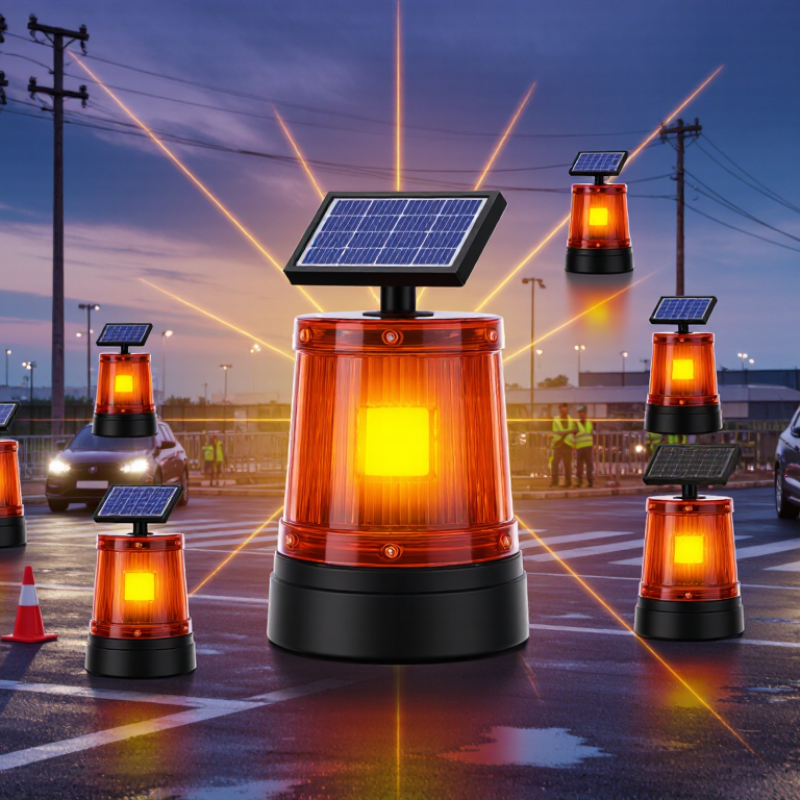
Top Solar Amber Blinker Light Suppliers for Global Buyers

What Amber Blinker Lights Are and Where They Are Used

Amber blinker lights are warning devices that emit repeated yellow-orange flashes. Most solar models combine an LED array, photovoltaic panel, rechargeable battery, controller, and weather-resistant housing. The flash attracts attention without creating a harsh beam. They are commonly installed on road barriers, construction entrances, bridge approaches, farm gates, marine edges, and temporary hazard points.

They work best where grid access is limited. A clear lens, raised mounting position, and correct flashing pattern matter. IEA PVPS Trends 2024 reported more than 400 GW of new photovoltaic capacity installed worldwide in 2023. That growth supports wider access to compact solar power components, including warning equipment. The World Bank’s Global Solar Atlas also helps buyers compare solar irradiation before selecting panel size and battery capacity. A bright panel does not guarantee reliable operation. Poor winter exposure can still reduce nighttime runtime.

For global buyers, check IP protection, operating temperature, battery chemistry, charging efficiency, and LED visibility at the intended distance. Amber is useful for attention, but local traffic rules may define its acceptable use. Do not assume one configuration fits every country. Field testing is still necessary. Some specifications look impressive on paper. A shaded roadside unit may perform very differently. Seasonal data, mounting height, and maintenance access should guide supplier evaluations.

How to Define Requirements for Global Amber Blinker Lights

How to Define Requirements for Global Amber Blinker Lights

Global buyers should define the operating environment before comparing amber blinker light suppliers. IRENA’s Renewable Capacity Statistics 2024 reported 1,419 GW of global solar capacity at the end of 2023. This expansion increases demand for visible warning equipment around remote sites, service vehicles, and battery systems. However, a solar project does not automatically require one standard light. Specify the supply voltage, daily operating hours, flash pattern, mounting position, and expected service life.

Visibility must be measurable, not described as “bright.” Request photometric data, beam angle, effective luminous intensity, and lens color coordinates. Check IP protection for dust and water exposure. Confirm operating temperatures, vibration resistance, connector type, and electromagnetic compatibility. Regional transport and workplace rules may also define color, flashing frequency, or installation height. Requirements differ. Treating every market alike creates avoidable delays.

Tips: Ask suppliers for test reports, wiring diagrams, dimensional drawings, and sample units. Test the light at low voltage and after repeated thermal cycles. A useful field check is visibility at dawn, rain, and direct sunlight. Do not judge performance only inside a warehouse. I have seen specifications look complete while omitting cable length and surge protection. That omission can change installation cost significantly. Also, confirm whether quoted lifetime means LED lifespan or the complete lamp’s reliable operating period. These are not always the same.

Key Criteria for Comparing International Suppliers

For global buyers, supplier comparison should begin with product evidence, not attractive catalog photos. Confirm amber wavelength, flash pattern, brightness, operating temperature, and solar charging performance. Ask for samples. Test them outdoors after cloudy nights, not only under showroom lights. Check battery type, cycle life, ingress protection, and mounting strength. A reliable supplier provides test reports, production traceability, and clear technical drawings. Vague answers deserve careful attention.

International purchasing adds technical and logistical risks. Verify certifications required in the destination market, along with factory quality procedures and batch inspection records. Request a pre-shipment inspection or independent laboratory test. Compare minimum order quantities, tooling charges, lead times, warranty terms, and spare-part availability. Price alone misleads. A low quote may exclude packaging, duties, or replacement units. Confirm delivery terms, payment stages, carton dimensions, and pallet limits before ordering. Small details become expensive at the port.

Communication quality is practical evidence of supplier reliability. Evaluate response accuracy, engineering support, sample revisions, and escalation procedures. Ask how failures are recorded and corrected. Suppliers should explain light decay, battery replacement, and seasonal performance honestly. References from similar climates can help, though they require verification. No comparison is perfect. A scoring sheet improves consistency, but it can still miss production changes or delayed support. Leave room for doubt. Share written specifications, approve a controlled sample, and recheck quality before every major shipment.

Quality, Certification, and Compliance Checks

Top Solar Amber Blinker Light Suppliers for Global Buyers

Quality, Certification, and Compliance Checks

Solar lighting demand is expanding with photovoltaic deployment. The IEA PVPS Trends 2024 report recorded more than 1.6 terawatts of global PV capacity by the end of 2023. This growth increases sourcing pressure. Buyers need more than bright amber output. They need stable charging, reliable flashing, and traceable production records.

Ask suppliers for complete test files, not certificate images alone. For solar modules, review IEC 61215 and IEC 61730 evidence. For the assembled light, check relevant IEC 60598 requirements, EMC testing, and IEC 62471 photobiological safety results. IEC 60529 ratings should match the installation environment. An IP65 rating may suit dust and rain, but coastal exposure needs additional corrosion testing. The battery also deserves attention. Review cycle-life data, thermal protection, and transport documentation such as UN 38.3 where applicable.

Look closely at photometric reports. Amber intensity should remain visible after cloudy charging days, while flash timing should stay consistent across production batches. Request samples from different lots. Measure charging current, nighttime runtime, lens color, and sealing around cable entries. ISO 9001 can indicate controlled processes, but it does not guarantee product quality. I have seen polished documents hide weak battery performance. That is a useful warning. Factory audits, incoming-material records, and corrective-action reports provide stronger evidence. Country-specific road and workplace rules still apply, so local compliance review remains necessary.

How to Choose and Manage a Reliable Global Supplier

The solar lighting market is expanding quickly. IRENA reported 346 GW of new solar capacity in 2023. The IEA PVPS Trends 2024 report estimated more than 400 GW. Different methods explain the gap. Both figures indicate rising demand for autonomous warning equipment. That growth does not guarantee dependable amber blinker lights. Supplier control matters more than catalog photos.

For global buyers, request a traceable sample before negotiating volume. Check panel power, battery chemistry, charging time, and nighttime runtime. Ask for test records under cold temperatures, rain, dust, and repeated flash cycles. IEC 60598-1 safety testing, electromagnetic compatibility evidence, and a suitable IP rating should match the installation environment. The exact IP claim needs verification. Do not accept a copied certificate. That shortcut becomes expensive.

Use a written specification covering amber wavelength, flash pattern, mounting dimensions, warranty terms, and spare parts. The World Bank’s Logistics Performance Index 2023 shows shipment reliability differs sharply across markets. Delivery promises therefore need measurable milestones. Set inspections at sample approval, pre-shipment, and arrival. Keep photos, serial records, and battery test results. A small failure log helps. Still, my first checklist was too short. I missed connector corrosion. That mistake supports quarterly audits, not blind loyalty. Reliable sourcing is maintained, not assumed.

Top Solar Amber Blinker Light Suppliers for Global Buyers - How to Choose and Manage a Reliable Global Supplier

Evaluation Dimension Recommended Procurement Benchmark What the Buyer Should Verify Relevant Standard, Test or Record Supplier Management Action
Amber Light Output Confirm the required luminous intensity and viewing distance for the intended road, site, or equipment application. Request photometric test data for the complete lamp assembly, not only the LED component. Photometric test report; applicable local traffic, construction, or industrial safety requirements. Approve a production sample only after checking flash visibility, amber color, and viewing angle.
Amber Color Consistency Use a defined amber color specification and acceptance sample for every production batch. Check color measurement conditions, LED bin control, lens material, and batch-to-batch variation. Applicable photometric or vehicle-lighting requirements, such as SAE J578 where relevant. Include color tolerances and inspection method in the purchase specification.
Ingress Protection For outdoor equipment, commonly evaluate IP65 or IP67 according to the exposure level and installation method. Verify that the tested configuration includes the final housing, lens, seals, cable glands, and mounting hardware. IEC 60529 IP-code test report. Repeat sealing checks after any housing, connector, or battery-compartment change.
Solar Charging System Match panel capacity, charge controller, and battery storage to the buyer’s solar resource, operating schedule, and seasonal conditions. Request charging curves, low-light behavior, overcharge protection, and operating assumptions used for autonomy claims. Product specification, charging test record, and site-specific solar assessment. Define a minimum operating period after several low-sunlight days rather than relying only on nominal battery capacity.
Battery Safety and Service Life Specify battery chemistry, rated capacity, permitted temperature range, protection circuit, and replaceability. Verify cell traceability, battery protection, cycle-life test conditions, and replacement instructions. IEC 62133-2 where applicable; UN 38.3 transport test summary for lithium batteries. Keep battery documentation and define a controlled replacement process for field service.
Flash Pattern and Controls Document flash frequency, duty cycle, start-up behavior, day/night control, and any remote-control function. Test all selectable modes and confirm that the delivered firmware matches the approved sample. Approved control specification, firmware revision record, and functional test checklist. Lock firmware and control parameters before mass production.
Environmental Durability Assess temperature, humidity, corrosion, vibration, and impact conditions based on the installation environment. Review test severity, test duration, product mounting position, and post-test electrical and sealing results. IEC 60068 environmental test methods; application-specific corrosion and vibration requirements. Use a qualification sample and require corrective action for failures before approval.
Electrical Compatibility Confirm nominal voltage, charging behavior, connector polarity, protection against reverse connection, and electromagnetic compatibility needs. Check electrical drawings, current consumption, transient protection, and compatibility with any external controller. Electrical safety and EMC requirements applicable in the destination market. Require a signed configuration sheet for every purchase order.
Quality Assurance System Prefer documented incoming inspection, process control, final inspection, calibration, and corrective-action procedures. Request quality-process documents, sample inspection records, calibration certificates, and nonconformity records. ISO 9001 certificate where claimed; internal quality records and audit evidence. Conduct a remote or on-site audit before approving strategic volume orders.
Production Capacity and Lead Time Evaluate capacity against forecast demand, peak-season requirements, component availability, and agreed replenishment time. Confirm realistic sample, pilot, and mass-production schedules with documented production constraints. Capacity statement, production plan, order history, and on-time-delivery records. Use rolling forecasts, milestone reviews, and escalation contacts for delayed orders.
Packaging and International Transport Packaging should protect lenses, solar panels, switches, connectors, and battery compartments during multimodal transport. Review carton dimensions, drop-test approach, moisture protection, palletization, and lithium-battery shipping documents. UN 38.3 documentation where lithium batteries are shipped; destination-country packaging and customs requirements. Approve packaging through a transport simulation or controlled shipment before full-scale purchasing.
Traceability and Change Control Every shipment should be traceable to a production batch, component lot, firmware version, and inspection record. Verify batch labels, retention samples, bill of materials, and notification procedures for design changes. Batch records, engineering-change notices, inspection reports, and approved drawings. Require written approval before changes to LEDs, batteries, solar panels, housing, or firmware.
Warranty and After-Sales Support Define warranty duration, exclusions, response time, spare-parts availability, and field-failure handling before signing the contract. Assess technical response capability, failure-analysis quality, replacement process, and long-term component availability. Warranty terms, service-level agreement, failure-analysis report, and spare-parts list. Track return rate, repeat failure rate, response time, and corrective-action closure by quarter.
Buyer’s note: Final product requirements should be matched to the destination country, installation environment, transport regulations, and intended safety application. Standards and test methods should be confirmed with the relevant authority or qualified testing laboratory before purchase.

FAQS

What is a solar amber blinker light?

It is a warning device with repeated yellow-orange LED flashes. Most models include a solar panel, battery, controller, and weather-resistant housing. The light attracts attention without producing a harsh beam.

Where are amber blinker lights commonly installed?

They are used near road barriers, construction entrances, bridge approaches, farm gates, and marine edges. Temporary hazard points may also need them. Mounting height affects visibility.

When are solar amber blinkers most useful?

They suit locations with limited or unavailable grid power. Remote gates and roadside barriers are practical examples. However, shaded locations may perform poorly.

Can a bright solar panel guarantee reliable nighttime operation?

No. A bright panel does not guarantee dependable runtime. Winter shade, weak sunlight, and poor charging efficiency can reduce nighttime operation. It depends.

Which technical details should buyers compare?

Check weather protection, operating temperature, battery chemistry, charging efficiency, and LED visibility distance. Also review flash timing and lens color. Paper specifications can mislead.

How should suppliers prove product quality?

Request complete test files, production records, and samples from different batches. Measure charging current, nighttime runtime, sealing, and flash consistency. Certificate images alone are insufficient.

Is an IP65 rating enough for every outdoor location?

Not always. It may suit dust and rain, but coastal sites need corrosion testing. Inspect cable entries, housing joints, and exposed metal parts. Small gaps matter.

What should be tested before large-scale purchasing?

Test units in the actual mounting position. Observe cloudy-day charging, nighttime brightness, battery runtime, and flash timing. Seasonal testing is better, though often overlooked.

Conclusion

Amber blinker lights are signaling devices designed to provide clear, highly visible warning flashes in situations such as road maintenance, construction, emergency response, industrial operations, and temporary traffic control. A Solar Amber Blinker Light combines energy-efficient LEDs with solar charging and battery storage, making it suitable for locations where grid power is unavailable or costly. Global buyers should define requirements carefully, including brightness, flash pattern, operating hours, weather resistance, mounting method, battery performance, solar charging efficiency, and installation environment.

When comparing international suppliers, buyers should evaluate product consistency, customization capability, production capacity, delivery reliability, communication, and after-sales support. Quality checks should cover materials, waterproofing, impact resistance, photometric performance, battery safety, and operational durability. Suppliers should also provide accurate test reports and documentation relevant to the destination market’s applicable standards and import requirements. A reliable supplier is one that communicates transparently, supports sample testing, maintains stable quality control, protects packaging during shipment, and works with buyers to manage inspections, replenishment, and long-term cooperation.

Amelia

Amelia

Amelia is a professional marketing specialist with a strong understanding of our company’s products, services, and customer-focused approach. With extensive experience in market research, content strategy, and business communication, she transforms complex product information into clear, practical,......
Online Enquiry Contact Sales