Choosing a Solar Arrow Blinker Light involves more than comparing brightness and price. The device must remain visible through rain, dust, winter shade, and long nights. A narrow roadside shoulder can expose weak mounting, poor battery protection, and limited service access.
The market deserves attention. The IEA Photovoltaic Power Systems Programme reported approximately 456 gigawatts of new solar capacity worldwide in 2023. That growth supports better photovoltaic components, but it does not guarantee a dependable warning beacon. Solar expert Professor Martin Green has described solar energy as “the most abundant energy resource on Earth.” His point is useful, though incomplete here. Abundant sunlight cannot compensate for a shaded panel or undersized battery.
A practical evaluation should examine LED intensity, flash pattern, solar-panel efficiency, battery chemistry, charging time, operating temperature, and ingress protection. Check the product’s tested visibility distance, not only its marketing language. Look for documented performance under low irradiance. Ask whether the arrow remains clear after several cloudy days.
Roadside safety guidance, including the Federal Highway Administration’s traffic-control standards, places emphasis on conspicuity, consistency, and correct placement. Local authorities may also require approved dimensions, colors, and mounting heights. Compliance matters.
Small details matter most. A tilted panel may collect less winter sun. A loose bracket may turn a clear arrow into a trembling blur. This guide will compare those factors and identify where product claims need closer testing. Some selections will still involve judgment. That is the honest part.
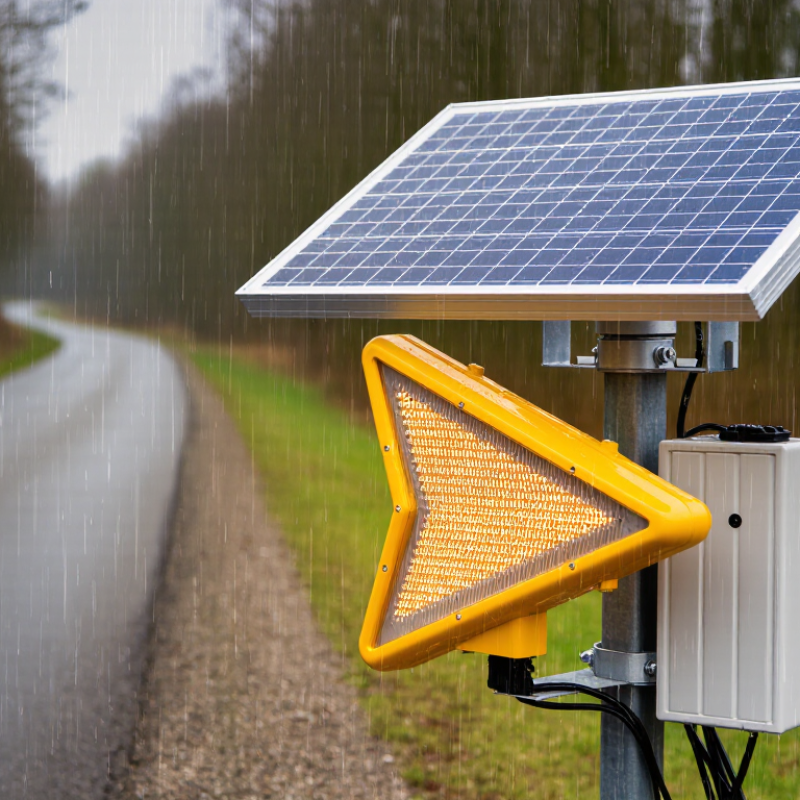
Solar Arrow Blinker Lights: Types and Traffic-Safety Functions
Solar arrow blinker lights use photovoltaic panels, rechargeable batteries, and high-visibility LEDs. Their main job is simple: guide drivers toward a safer movement path. A fixed single-arrow light points traffic left or right. A double-arrow unit can warn drivers about changing lanes or divided routes. Sequential arrow models illuminate LEDs in a moving pattern, making direction easier to recognize at night.
Portable barricade-mounted lights suit road repairs, temporary closures, and lane shifts. Trailer-mounted arrow boards cover larger work zones and remain visible from greater distances. Amber LEDs are common because they attract attention without resembling ordinary vehicle headlights. Some units offer steady, flashing, or sequential modes. The correct mode depends on road speed, background lighting, and the distance available for driver response.
Visibility is not only about brightness. A clean solar panel keeps charging reliable after dust, rain, or roadside fumes. The battery should support overnight operation, especially during long winter nights. Installers should check the viewing angle, mounting height, flash rate, and physical stability. A light hidden behind a sign is nearly useless. An arrow facing the wrong lane is worse. Traffic-control professionals should follow local standards and inspect the unit regularly. Field checks often expose small weaknesses, such as glare, weak battery output, or unclear arrow direction. A brighter lamp is not always safer. Misleading movement still creates hesitation.
| Solar Arrow Blinker Type | Typical Arrow Pattern | Primary Traffic-Safety Function | Recommended Applications | Key Selection Factors | Main Limitation |
|---|---|---|---|---|---|
| Single-Arrow Blinker | One fixed-direction arrow flashes on and off. | Provides a clear, simple warning or directional cue with minimal visual distraction. | Temporary hazards, lane restrictions, work zones, gate entrances, and private roads. | Arrow direction, viewing distance, LED brightness, flash rate, and mounting height. | It cannot indicate changing directions unless the unit is manually repositioned. |
| Left- or Right-Pointing Arrow | A flashing arrow points specifically to the left or right. | Directs road users toward an available path and helps identify the side of an obstruction. | Roadside work, blocked shoulders, detours, driveway access, and temporary traffic control. | Correct arrow orientation, sign placement, solar exposure, and visibility in the intended approach direction. | A wrongly oriented arrow can mislead drivers and create a safety risk. |
| Sequential Arrow | LED segments illuminate in sequence toward the arrow tip. | Creates a strong directional movement that can attract attention and reinforce a lane shift. | Lane merges, temporary diversions, construction approaches, and controlled traffic transitions. | Segment visibility, sequence speed, flash consistency, viewing angle, and compliance with local regulations. | More complex electronics may require greater power-management capacity than a basic flasher. |
| Alternating Double-Arrow | Two arrows flash alternately, commonly pointing in opposite directions. | Warns that traffic conditions are changing or that drivers must exercise extra caution at a conflict point. | Narrow lanes, reversible access areas, crossing points, entrances, and temporary traffic-control zones. | Intended traffic movement, arrow spacing, flash timing, sign size, and whether two-way traffic is permitted. | It may be confusing where only one direction of travel is legally or physically available. |
| Chevron Arrow Blinker | Several illuminated chevrons form a bold left- or right-pointing arrow. | Improves recognition of a required change in direction, especially at curves or around obstacles. | Sharp bends, roadway curves, bridge approaches, crash barriers, and work-zone tapers. | Chevron size, contrast, placement along the curve, night visibility, and resistance to weather. | Requires adequate installation space and may not be suitable for narrow poles or small signs. |
| Arrow with Warning Flashers | A directional arrow operates with one or more flashing warning lamps. | Combines directional guidance with increased conspicuity at hazardous or unexpected locations. | Emergency access, roadside hazards, work vehicles, road closures, and high-risk intersections. | Warning-light color, flash synchronization, arrow clarity, legal requirements, and nighttime glare control. | Excessive flashing or glare can reduce comfort and may distract road users. |
| Solar Arrow with Light Sensor | The arrow activates automatically in low-light conditions and remains off or dimmer in daylight. | Maintains nighttime visibility while conserving stored battery energy during daylight. | Remote roads, unattended signs, parking areas, rural access routes, and long-term installations. | Sensor threshold, battery capacity, winter sunlight availability, panel orientation, and automatic control reliability. | Heavy shade, dirt, snow, or prolonged overcast weather can reduce charging performance. |
| Solar Arrow with Steady Mode | The arrow can remain continuously illuminated instead of flashing. | Provides constant visual guidance where a stable directional indication is more suitable than a warning flash. | Private facilities, pedestrian routes, parking guidance, controlled entrances, and low-speed areas. | Operating duration, energy consumption, local sign standards, brightness, and required visibility distance. | Continuous operation consumes more stored energy than intermittent flashing. |
| Portable Folding Arrow Board | A foldable panel displays a large arrow and may support multiple directional patterns. | Offers highly visible temporary guidance and can be moved as traffic conditions change. | Mobile work zones, maintenance operations, event traffic, emergency response, and short-term closures. | Folded dimensions, deployment stability, battery reserve, wind resistance, control modes, and transport weight. | Portable units may need additional stabilization in strong wind or uneven locations. |
Check brightness from 0°, 45°, and 90°. A bright center may look weak from a side road. Compare visibility at dusk and in daylight. Dust and rain reduce contrast. One nighttime photo is not enough.
No. Lumen figures describe total light output. Candela readings show intensity in specific directions. Ask for measurements across several viewing angles. Optical distribution matters more than one impressive number.
A rate near 50–60 flashes per minute supports steady recognition. The arrow should remain clear during every on-cycle. Very fast flashing may attract attention but weaken direction clarity. Test the actual pattern.
Not always. Wide viewing can improve visibility from side approaches. However, it may reduce forward intensity. Choose the pattern that matches approaching traffic. A roadside curve needs different coverage than a straight entrance.
It is a laboratory reference, not a daily output guarantee. The test assumes clear light, a fixed spectrum, and a 25°C cell temperature. Clouds, dust, shadows, and poor angles reduce charging. Winter afternoons can be surprisingly weak.
Review panel power, battery capacity, and expected daily energy together. The battery should support flashing after several cloudy days. Test the light through a cloudy weekend. Bright at noon, dead at midnight.
IP65 indicates dust resistance and protection from water jets. It does not permit flooding or permanent immersion. Inspect the gasket, lens joint, cable entry, and screw heads. Request test documentation instead of trusting printed claims alone.
Keep the arrow visible without branches, signs, or roof shadows. Use corrosion-resistant hardware and tighten fasteners carefully. Clean the panel with water and a soft cloth every few months. Check wiring, seals, bolts, and vegetation regularly. I once blamed dirt, but a loose battery connection caused the failure.
Choosing the right Solar Arrow Blinker Light requires evaluating both visibility and long-term reliability. First, identify the intended arrow blinker type and its traffic-safety function, such as directing vehicles, warning pedestrians, or highlighting temporary hazards. Select bright LEDs with suitable flash rates and a wide viewing angle, ideally supporting clear 360° visibility in changing weather and traffic conditions. The light should remain noticeable during daytime while avoiding confusing or excessive flashing at night.
Solar performance is equally important. Check whether the panel is tested under the 1,000 W/m² STC rating and can collect sufficient energy in the available conditions. A dependable battery should offer adequate capacity, at least 2,000 charge cycles, and enough nighttime runtime for the required operating schedule. Also verify IP65 protection, relevant IEC compliance, secure mounting options, and simple maintenance requirements. A well-designed Solar Arrow Blinker Light should be easy to install, resistant to dust and water jets, and capable of providing consistent directional warnings with minimal servicing.